

Most pasta salads taste like sad, mushy disappointments that somehow manage to be both bland and overwhelming at the same time. But what if someone told you there’s actually a way to make pasta salad that people fight over at potlucks? The secret isn’t some fancy ingredient or complicated technique – it’s all about getting the right balance of tangy dressing, fresh vegetables, and knowing exactly when to add each component.
Why most pasta salads fail miserably
Ever wondered why restaurant pasta salads taste so much better than homemade ones? Most home cooks make the same critical mistake: they dump everything together at once and expect magic to happen. The pasta gets soggy, the vegetables lose their crunch, and the dressing either disappears completely or pools at the bottom of the bowl like a sad, oily puddle.
The real problem starts with timing and temperature. When hot pasta meets cold ingredients, everything goes wrong. The heat wilts the vegetables, melts the cheese into a gooey mess, and breaks down the dressing. Smart cooks know to let the pasta cool completely before adding anything else. This Italian pasta salad approach prevents all those common disasters that turn a promising dish into cafeteria food.
Rotini pasta works better than any other shape
Forget what you think you know about pasta shapes – rotini isn’t just prettier than regular macaroni, it’s actually engineered for maximum dressing retention. Those spiral ridges grab onto every drop of Italian dressing and hold it there, ensuring each bite delivers the same punch of tangy goodness. Penne works too, but those smooth tubes let the dressing slide right off like water off a duck’s back.
The tri-color version isn’t just for looks either – the different colored pastas actually have slightly different textures that add interest to every forkful. Cook it al dente according to the package directions, then immediately rinse with cold water to stop the cooking process. This prevents that mushy, overcooked texture that makes pasta salad feel like baby food. Salt the cooking water generously – about one tablespoon per pound of pasta makes a noticeable difference in the final taste.
Fresh mozzarella balls beat shredded cheese every time
Those little mozzarella pearls aren’t just Instagram-worthy – they’re the difference between amateur hour and restaurant-quality pasta salad. Shredded mozzarella turns into rubbery bits that stick to your teeth, while fresh mozzarella balls stay creamy and burst with milky sweetness in every bite. Look for them in the specialty cheese section, usually packed in water or brine.
If mozzarella pearls aren’t available, cube up a block of fresh mozzarella instead of reaching for the pre-shredded stuff. The moisture content makes all the difference – fresh cheese adds creaminess without turning gummy. Some people substitute feta for a sharper bite, but that changes the whole character of the dish. Stick with mozzarella for authentic Italian-style results that actually taste like they came from a good deli.
Cherry tomatoes need special handling
Here’s something most recipes won’t tell you: cherry tomatoes can single-handedly ruin an otherwise perfect pasta salad if you don’t prep them correctly. Those little flavor bombs are packed with juice that slowly leaks out and turns your dressing into a watery mess. The solution is simple but crucial – cut them in half and let them drain on paper towels for at least fifteen minutes before adding them to the salad.
Choose tomatoes that feel firm but give slightly when pressed – rock-hard ones taste like nothing, while mushy ones fall apart and make everything soggy. Grape tomatoes work just as well as cherry varieties, but avoid regular slicing tomatoes, which have too much water content. Some cooks even sprinkle the cut tomatoes with a pinch of salt to draw out extra moisture, then pat them dry before mixing them in. This extra step prevents diluted dressing and keeps every component distinct and flavorful.
Red onions need a cold water bath
Raw red onion can overpower everything else in the bowl if you don’t tame its bite first. The simple trick that restaurant chefs use is soaking sliced onions in ice water for ten to fifteen minutes before adding them to the salad. This removes the harsh sulfur compounds that make your eyes water and your mouth burn, leaving behind just the sweet, crisp crunch that makes pasta salad interesting.
After the cold water soak, pat the onion slices completely dry with paper towels. Wet onions dilute the dressing and don’t distribute evenly through the salad. Some people skip onions entirely because they find them too strong, but properly prepared red onions add a sharp contrast that balances the rich cheese and tangy dressing. White or yellow onions work in a pinch, but red onions have the perfect level of sweetness for this style of pasta salad.
Bell peppers add the perfect crunch factor
The combination of red and green bell peppers isn’t just about color – it’s about creating layers of taste that keep things interesting. Green peppers bring a slightly bitter, earthy bite that cuts through the richness of the cheese and dressing, while red peppers add natural sweetness that complements the tangy tomatoes. Yellow or orange peppers work too, but the classic red-and-green combo delivers the most balanced results.
Cut the peppers into uniform pieces about the same size as your pasta – too big and they dominate every bite, too small and they disappear entirely. Remove all the white membrane and seeds, which can add unwanted bitterness. Fresh, crisp peppers should snap when you bite them, not bend or feel rubbery. This textural contrast is what makes each forkful satisfying instead of monotonous. Store any leftover chopped peppers in the refrigerator for up to three days for your next batch.
Black olives vs kalamata makes a huge difference
Most grocery store pasta salads use those mushy canned black olives that taste like salty nothing. Upgrade to kalamata or other brine-cured olives and watch the entire dish transform from boring to restaurant-worthy. The difference is night and day – real olives have complex, fruity undertones that complement the Italian dressing instead of just adding generic saltiness.
If canned black olives are all you can find, at least buy whole ones and slice them yourself – pre-sliced olives turn to mush faster and have less flavor. Drain them well and pat dry to prevent extra liquid from thinning out the dressing. Some people love green olives in pasta salad too, which add a sharper, more acidic punch. Whatever type you choose, don’t skimp on quality – olives are one of those ingredients where spending a little extra makes a massive difference in the final result.
Homemade Italian dressing changes everything
Store-bought Italian dressing is fine in a pinch, but homemade dressing turns ordinary pasta salad into something people actually request the recipe for. The base is simple: extra virgin olive oil, red wine vinegar, lemon juice, and a blend of dried herbs including oregano, basil, and parsley. The secret ingredient that most home cooks skip is freshly grated Parmesan cheese whisked right into the dressing.
Mix the dressing ingredients in a mason jar and shake vigorously, or whisk them together in a bowl until emulsified. Taste and adjust – more vinegar for tang, more oil for richness, a pinch of sugar to balance acidity. Make it at least thirty minutes before using to let the dried herbs rehydrate and the ingredients meld together. The homemade approach costs less than bottled versions and tastes infinitely better because you control every element.
Timing the assembly prevents soggy disasters
Here’s the make-or-break moment that separates great pasta salad from mediocre mush: when and how you combine everything. Never dump all the dressing on at once – use about half initially to coat the cooled pasta, then add the vegetables and remaining ingredients. The pasta needs time to absorb some dressing before the other components compete for attention.
Reserve the final portion of dressing to add just before serving, because pasta continues to absorb liquid as it sits in the refrigerator. This prevents the dreaded dry pasta salad that tastes like cardboard, while also ensuring the vegetables don’t get soggy from sitting in too much liquid. Chill the assembled salad for at least two hours before serving – this gives all the ingredients time to marry while maintaining their individual textures and tastes.
Making great pasta salad isn’t about following complicated techniques or using exotic ingredients – it’s about respecting each component and giving them the treatment they deserve. When you take the time to properly prepare the vegetables, choose quality ingredients, and assemble everything in the right order, you end up with something that actually tastes good instead of just filling space on the table.
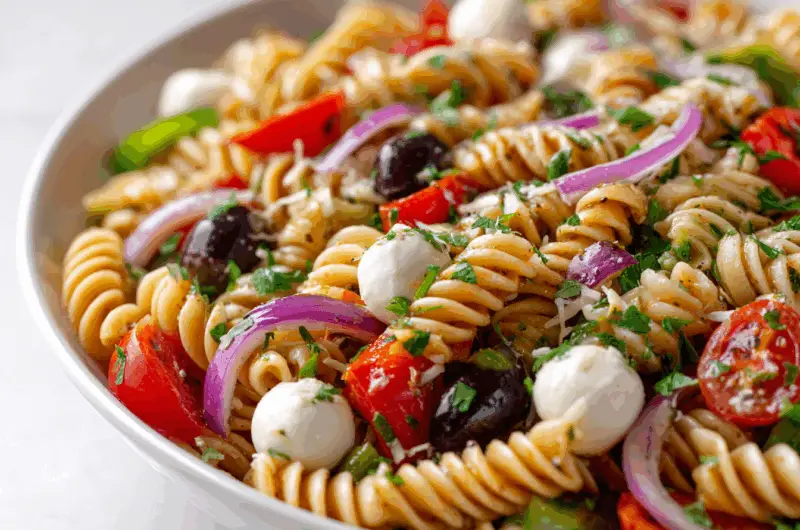
Italian Pasta Salad with Homemade Dressing
Course: Side DishCuisine: Italian12
servings20
minutes10
minutes285
kcalThis vibrant pasta salad combines tender rotini with crisp vegetables, fresh mozzarella, and a tangy homemade Italian dressing that actually tastes amazing.
Ingredients
1 pound tri-color rotini pasta
1 red bell pepper, chopped
1 green bell pepper, chopped
2 cups cherry tomatoes, halved
1/2 red onion, thinly sliced
1 cup black olives, sliced
8 ounces fresh mozzarella pearls
1/2 cup extra virgin olive oil
1/4 cup red wine vinegar
2 tablespoons fresh lemon juice
1/4 cup freshly grated Parmesan cheese
2 teaspoons dried oregano
1 teaspoon dried basil
1 teaspoon garlic powder
1/2 teaspoon salt
1/4 teaspoon black pepper
2 tablespoons fresh parsley, chopped
Directions
- Bring a large pot of salted water to boil and cook the rotini pasta according to package directions until al dente. Drain the pasta and rinse immediately with cold water to stop the cooking process. Transfer the cooled pasta to a large serving bowl and set aside.
- While the pasta cooks, prepare the vegetables by chopping the bell peppers into bite-sized pieces and halving the cherry tomatoes. Place the sliced red onions in a bowl of ice water for 10 minutes to remove the sharp bite, then drain and pat completely dry with paper towels.
- Make the Italian dressing by combining olive oil, red wine vinegar, lemon juice, grated Parmesan, oregano, basil, garlic powder, salt, and pepper in a mason jar. Shake vigorously until well combined, or whisk together in a bowl until emulsified. Taste and adjust seasonings as needed.
- Pour half of the prepared dressing over the cooled pasta and toss to coat evenly. This allows the pasta to absorb some dressing before adding the other ingredients. Let the dressed pasta sit for 5 minutes at room temperature.
- Add the prepared bell peppers, drained cherry tomatoes, red onions, sliced olives, and mozzarella pearls to the pasta. Gently toss all ingredients together until evenly distributed throughout the salad. Be careful not to break the mozzarella pearls.
- Cover the pasta salad tightly with plastic wrap or transfer to an airtight container. Refrigerate for at least 2 hours or overnight to allow the ingredients to marinate and the dressing to be absorbed. The salad tastes best when chilled completely.
- Before serving, add the remaining dressing and toss gently to refresh the salad. The pasta will have absorbed some liquid during chilling, so this final addition ensures optimal taste and texture. Taste and adjust seasoning if needed.
- Garnish with freshly chopped parsley and additional grated Parmesan cheese just before serving. Give the salad one final gentle toss and serve chilled. Store any leftovers covered in the refrigerator for up to 4 days.
Notes
- Make the dressing at least 30 minutes ahead to let the dried herbs rehydrate and the ingredients blend
- Always reserve some dressing to add before serving – pasta absorbs liquid as it chills
- For best results, cut cherry tomatoes in half and let them drain on paper towels for 15 minutes before adding
- This salad can be made up to 24 hours ahead and actually improves in taste as it marinates
Frequently asked questions
Q: Can I make this pasta salad the night before?
A: Absolutely! This pasta salad actually tastes better when made ahead because the ingredients have time to marinate together. Just remember to save some dressing to add right before serving, since the pasta will absorb liquid overnight.
Q: What other pasta shapes work besides rotini?
A: Penne, fusilli, and bow-tie pasta all work well because they have ridges or shapes that hold onto dressing. Avoid smooth pastas like spaghetti or angel hair since the dressing will just slide right off.
Q: How long does leftover pasta salad stay fresh?
A: Store covered in the refrigerator for up to 4-5 days. If the salad looks dry, just add a little more dressing to freshen it up before serving.
Q: Can I substitute different vegetables or add protein?
A: Definitely! Try adding cucumbers, artichokes, pepperoni, salami, or grilled chicken. Just maintain the same ratio of pasta to other ingredients so the salad doesn’t become too heavy with add-ins.