

Tuna salad is one of those meals that feels almost impossible to mess up. Open a can, add some mayo, toss in a few extras, and lunch is ready. But here’s the thing — a lot of people are adding condiments that actually make their tuna salad worse without even realizing it. That bottle of ketchup or that jar of fancy mustard might seem like a good idea, but they can completely throw off the whole dish. Knowing what to leave out is just as important as knowing what to put in.
Ketchup turns tuna salad into a sweet mess
Ever run out of ideas and just start grabbing whatever’s in the fridge? That’s how most people end up squeezing ketchup into their tuna salad. It seems like it could work — ketchup has some tang, and tomatoes go with fish in other dishes, right? But the problem is that ketchup packs about 4 grams of sugar per tablespoon. That sweetness takes over fast. Instead of a nice, savory lunch, the whole thing starts tasting like a confused dessert. It also turns your tuna salad an odd pinkish color that honestly looks like something went wrong.
The sugar content in ketchup completely clashes with tuna’s natural taste. Even low-sugar versions are still noticeably sweet on the tongue. If it’s tang or moisture that’s missing, a squeeze of lemon juice or a splash of pickle juice does a much better job. These add brightness without drowning everything in sweetness. Mayo should always be the base doing the heavy lifting. Ketchup belongs on fries and burgers — not anywhere near a can of tuna. Once it’s left out, the difference is night and day.
Dijon mustard fights with everything else
A lot of recipes online call for Dijon mustard in tuna salad. It sounds fancy and sophisticated. But Dijon has a complex, almost fruity taste that doesn’t sit right next to tuna. It contains wine and a blend of ingredients that create these strong, layered notes. Those notes are great on a steak or in a vinaigrette, but in tuna salad, they just take over. It’s like that one person at a dinner table who won’t stop talking — everything else gets drowned out.
Plain yellow mustard is a much better choice if a mustard kick is what’s needed. It adds a simple tang without all the competing notes. A small squeeze goes a long way. If mustard isn’t even necessary, fresh lemon juice or a tiny bit of white vinegar gives tuna salad a clean, bright lift. The goal is to support the tuna, not overpower it. Dijon has plenty of great uses in the kitchen, but tuna salad just isn’t one of them. Keep it simple and the results will always be better.
Honey mustard adds way too much sugar
What happens when the only mustard left in the fridge is honey mustard? Most people shrug and use it anyway. That’s a mistake. Honey mustard brings a wave of sweetness that has no place in tuna salad. The honey taste is strong and distinct, and it masks whatever natural taste the tuna has. It creates the same problem as ketchup — too much sugar making the whole bowl taste off. Some things just don’t belong together, and honey with canned fish is one of them.
Honey mustard also clashes badly with other common tuna salad additions like raw onion or pickles. Those sharp, savory ingredients need something equally sharp to tie them together, not something sugary. If the pantry is bare and mustard is a must, it’s better to skip it entirely and reach for vinegar or lemon juice instead. Finely chopped pickles can also add that tangy kick without any sweetness at all. The tuna should always be the star of the bowl, and honey mustard pushes it right off the stage.
BBQ sauce completely overpowers the tuna
BBQ sauce was made for ribs, brisket, and maybe grilled chicken. It was not made for a can of tuna. The smoky, sweet, and tangy punch of barbecue sauce is designed to stand up to big, bold meats. Tuna is delicate by comparison and just can’t compete. One squirt of BBQ sauce and the tuna might as well not even be there. The whole thing ends up tasting like barbecue with a weird fishy undertone, which is not a combination anyone is craving.
Most BBQ sauces also come loaded with added sugar, creating that same unwanted sweetness that keeps popping up on this list. If a smoky note sounds appealing, a tiny pinch of smoked paprika does the trick without bulldozing everything else. Minced green onions or a few drops of hot sauce can also add some zing in a much more balanced way. The point is to enhance what’s already in the bowl, not replace it entirely. Save the BBQ sauce for the next cookout and keep it far away from tuna salad.
Cheap mayo makes a bigger difference than expected
Mayo is the backbone of any good tuna salad. It holds everything together and gives the dish its creamy, rich feel. But not all mayo is the same. Grabbing the cheapest jar on the shelf can lead to a watery, loose tuna salad that falls apart on bread and tastes slightly off. Low-quality brands sometimes mess with the oil-to-egg ratio or add fillers like high-fructose corn syrup. Miracle Whip, for example, isn’t even technically real mayonnaise because it has less oil and more water.
A good quality mayo like Hellmann’s or Kewpie makes a noticeable difference. Kewpie is a Japanese mayo that uses only egg yolks, which gives it an extra-smooth feel and a touch of umami. It pairs perfectly with tuna. Even if sticking with a regular American brand, checking the ingredient list for unnecessary additives is worth the extra few seconds. A tablespoon or two of quality mayo beats a quarter cup of the cheap stuff every single time. Think of it as the foundation — if it’s weak, the whole dish suffers.
Pickle relish makes everything too soggy
Pickle relish seems like an easy win for tuna salad. It’s already chopped up and ready to go. But the problem with relish is all the extra liquid hiding in that jar. That moisture seeps into the tuna salad and makes the whole thing watery. Sandwiches made with relish-loaded tuna tend to get soggy fast. The bread turns to mush, the filling slides around, and lunch becomes a disappointing experience. Sweet relish is even worse because it adds sugar on top of all that extra liquid.
The better move is to chop up fresh pickles instead. Diced dill pickles give tuna salad a satisfying crunch that relish simply can’t deliver. They also add a clean, tangy bite without bringing along a puddle of liquid. Patting the chopped pieces dry with a paper towel before adding them removes any extra moisture. The crunch factor in tuna salad is hugely important — nobody wants a bowl of mush. Fresh pickles solve the tang and the crunch problem at the same time. It’s a small extra step that makes a big difference.
Greek yogurt is not a good mayo swap
Swapping mayo for Greek yogurt is one of those tips that sounds smart in theory but disappoints in practice. Greek yogurt just doesn’t have the richness that mayo brings to the table. It’s tangy and a bit chalky, and it creates a mixture that tastes like diet food. The sour taste of the yogurt also competes with the tuna instead of supporting it. Even full-fat Greek yogurt can’t come close to replicating what a good mayo does in this dish.
If cutting back on mayo is the goal, using less of it works better than replacing it entirely. A 50/50 mix of mayo and mashed avocado keeps things creamy while adding some good fats. Adding a splash of lemon juice can also bring in moisture without sacrificing richness. Some folks even mix a small amount of hummus with lemon as a binding agent, which works surprisingly well. The key is maintaining that satisfying, smooth feel that makes tuna salad worth eating. Greek yogurt just can’t deliver that, and the results always feel like something is missing.
Olive oil doesn’t belong in tuna salad
Adding a drizzle of olive oil to tuna salad feels like something a cooking show host would do. But in reality, it usually backfires. Extra virgin olive oil has a strong, pungent taste that sticks out in a bad way when mixed with tuna and mayo. The bitterness of the olives becomes even more noticeable once it’s stirred into the salad. And since nobody is blending their tuna salad into a smooth paste, the oil just makes everything runny and greasy without adding any real benefit.
Most store-bought mayos already use neutral oils like canola or safflower, which work well because they don’t compete with the tuna. Adding olive oil on top of mayo is just adding oil to oil, which is unnecessary. If using tuna packed in oil, there’s already plenty of fat in the mix. Extra olive oil at that point is overkill. It won’t make the salad taste fancier — it’ll just make it oily. Keep the olive oil for cooking or drizzling on bread, and let the mayo handle the fat in tuna salad.
Celery salt is a lazy shortcut that falls flat
Celery salt is just ground celery seeds mixed with salt. It shows up in things like Old Bay seasoning and Bloody Mary rims, and some people sprinkle it into tuna salad thinking it’ll add that familiar celery taste. But here’s the thing — why use a powdered version when fresh celery is sitting right there in the produce aisle? Celery salt can’t give tuna salad any crunch, and crunch is one of the most important things tuna salad needs. Without it, every bite feels flat and mushy.
Diced fresh celery brings a juicy snap to each bite that no seasoning can replicate. It also adds a natural brightness that wakes up the whole dish. Another risk with celery salt is accidentally going overboard and making the salad way too salty. A dash or two might seem harmless, but it adds up fast. Regular salt can always be sprinkled on at the end if needed. Fresh celery does what celery salt tries to do but fails — it adds real taste, real crunch, and real life to a bowl of tuna salad.
Making great tuna salad doesn’t require fancy ingredients or complicated tricks. It’s really about keeping things simple and knowing which condiments help and which ones hurt. Ketchup, honey mustard, BBQ sauce, and cheap mayo are some of the biggest offenders that can wreck an otherwise easy meal. Stick with quality mayo, fresh add-ins like celery and diced pickles, and a squeeze of lemon juice. Sometimes the best thing to add to tuna salad is restraint.
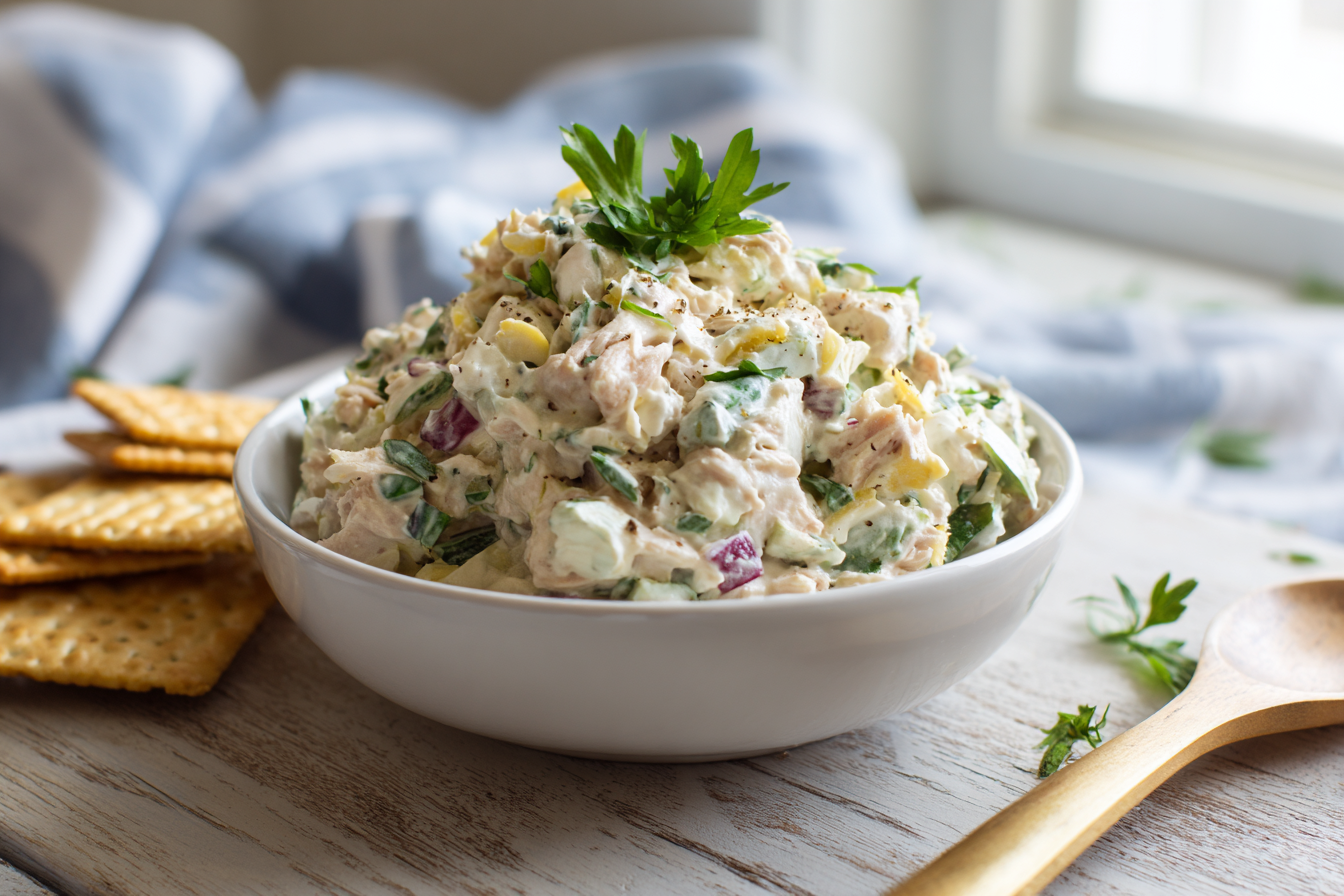
Perfect Classic Tuna Salad
Course: LunchCuisine: American4
servings10
minutes250
kcalThis simple tuna salad comes together in minutes and tastes better than anything from a deli counter.
Ingredients
2 (5-ounce) cans of tuna, drained well
3 tablespoons quality mayonnaise (Hellmann’s or Kewpie)
2 stalks celery, finely diced
2 tablespoons red onion, finely minced
1 small dill pickle, finely diced and patted dry
1 tablespoon fresh lemon juice
1 tablespoon fresh dill or parsley, finely chopped
Salt and black pepper to taste
1/2 teaspoon yellow mustard (optional)
Directions
- Open the two cans of tuna and drain all the liquid thoroughly. Use a fork to press the tuna against a fine mesh strainer or tilt the can and squeeze out as much water or oil as possible. Transfer the drained tuna to a medium mixing bowl.
- Use a fork to break apart the tuna into small, even flakes. Don’t mash it into a paste — keep some small chunks for a better feel in every bite. Spend about 30 seconds flaking until no large pieces remain.
- Finely dice the celery stalks into small, uniform pieces about the size of a pea. The celery adds crunch to every bite, so spread the pieces evenly. Add the diced celery to the bowl with the tuna.
- Finely mince the red onion and dice the dill pickle into small pieces. Pat the diced pickle dry with a paper towel to remove any excess liquid that could make the salad watery. Add both to the mixing bowl.
- Add the mayonnaise, lemon juice, and yellow mustard (if using) to the bowl. Start with 3 tablespoons of mayo and add more only if needed — it’s easier to add than to take away. The lemon juice brightens everything up without adding sweetness.
- Gently fold all the ingredients together with a fork or spatula until everything is evenly coated in mayo. Avoid stirring too aggressively — overmixing can turn the salad mushy. The goal is an even mix with visible pieces of celery and pickle throughout.
- Sprinkle the chopped fresh dill or parsley over the salad and fold it in gently. Fresh herbs add a brightness that dried herbs simply cannot match. Taste the salad and season with salt and pepper as needed.
- Serve the tuna salad immediately on toasted bread, with crackers, or on a bed of lettuce. For the best results, let it chill in the fridge for 15 to 20 minutes before serving so the ingredients meld together. Store any leftovers in an airtight container in the refrigerator for up to 3 days.
Notes
- Use tuna packed in oil for a richer, more moist salad, or tuna packed in water for a lighter version. Either works, but drain well regardless.
- Always pat diced pickles dry before adding them. Excess pickle juice can make the entire salad watery and soggy.
- Kewpie mayo adds a subtle umami note that pairs especially well with tuna, but any quality mayo like Hellmann’s works great too.
- Fresh herbs are always better than dried in this recipe. Dried herbs can taste dusty and sharp when eaten raw in a cold salad.
Frequently Asked Questions
Q: Can I use Miracle Whip instead of mayo in tuna salad?
A: Miracle Whip is technically not real mayonnaise because it contains less oil and more water and high-fructose corn syrup. It tends to make tuna salad runnier and sweeter than most people want. A quality mayo like Hellmann’s or Kewpie will give much better results with a creamier and more balanced taste.
Q: What can I use instead of mustard in tuna salad?
A: If mustard isn’t available or preferred, a tablespoon of fresh lemon juice or a small splash of white vinegar adds a nice bright tang. Both options complement tuna well without adding sweetness or competing with other ingredients in the salad.
Q: Is it better to use tuna packed in oil or water?
A: Tuna packed in oil tends to be more moist and has a richer taste, which many people prefer for tuna salad. Tuna packed in water is lighter but can sometimes taste a bit dry. Either works — just make sure to drain it well before mixing.
Q: How long does homemade tuna salad last in the fridge?
A: Homemade tuna salad stays good in the refrigerator for up to 3 days when stored in an airtight container. After that, the quality starts to drop and the ingredients can become watery. For the best taste, try to eat it within 1 to 2 days of making it.