

I need to tell you about the moment I stopped making regular grilled cheese. I was standing in my kitchen, holding a sandwich that had been dipped in egg batter, coated in breadcrumbs, and fried in oil until the outside was shattering-crisp and the mozzarella inside was pulling apart in long, ridiculous strings. It was called mozzarella in carrozza — which translates to “mozzarella in a carriage” — and it ruined normal grilled cheese for me permanently.
This is a Neapolitan street food that’s been around for centuries, originally invented as a way to use up stale bread and leftover mozzarella. Peasant food. The kind of recipe that exists because someone was broke and hungry and brilliant. The concept is dead simple: stuff mozzarella between two slices of bread, batter it like you’re making French toast, coat it in breadcrumbs, and fry it. The result is something that makes a regular grilled cheese feel like a rough draft.
Why This Works Better Than a Regular Grilled Cheese
A standard grilled cheese has one layer of crispiness — the buttered bread. That’s it. Mozzarella in carrozza has the bread itself, then a layer of egg batter, then a coating of breadcrumbs, all sealed together and fried. You’re getting three layers of texture working together on the outside while the inside stays molten and gooey. The egg batter also acts as a seal, locking the melted cheese inside so it doesn’t leak out into the pan. That’s the engineering that makes this thing work so well.
The name “mozzarella in a carriage” supposedly comes from how the melted mozzarella stretching out of the sandwich looks like the reins of a horse and carriage. I don’t know if I totally see it, but I appreciate the poetry. What I really appreciate is how something this good requires about six ingredients you probably already own.
The Ingredients You Need
Here’s what you’re working with: white bread (8 slices), mozzarella cheese (one block, about 8 ounces), 5 eggs, 2 tablespoons of milk, flour, breadcrumbs, and oil for frying. That’s the base. For seasoning, you’ll want 1/2 teaspoon kosher salt, 1/2 teaspoon black pepper, 1/4 cup of grated Pecorino Romano, and 1/4 cup of minced fresh parsley mixed into the egg batter. The Pecorino and parsley aren’t strictly traditional, but they add a savory punch that makes the egg batter taste like something instead of just acting as glue.
Now, about the cheese. Traditional recipes call for fresh mozzarella — the soft, wet kind that comes in water. And yeah, it’s delicious. But here’s the honest truth: block mozzarella (the kind you grab from the cheese section at Kroger or Walmart) is actually easier to work with here. It slices cleaner, melts more predictably, and stays melted longer, which gives you more time between cooking and serving. If you’re using fresh mozzarella, blot it dry with paper towels before slicing. Too much moisture and the cheese can start to dissolve at high temperatures instead of getting stringy.
How to Build and Fry These Sandwiches
Slice your mozzarella about 1/4-inch thick. Cut the crusts off your bread if you want clean edges (or leave them on for a more rustic look — both work). Lay slices of mozzarella on one piece of bread, trim or arrange the cheese so none of it hangs over the edges, then press the second slice of bread on top firmly. You want a good seal. Cut each sandwich diagonally into triangles.
Set up a three-station breading assembly: flour on one plate, egg mixture in a shallow bowl, breadcrumbs on another plate. Dust each triangle in flour, shaking off the excess. Dip it into the egg mixture, making sure you coat all sides — including the edges where the cheese could escape. Then press it into the breadcrumbs, covering everything evenly. For extra crunch, use panko breadcrumbs instead of regular ones. They’re available at any grocery store, usually in the Asian food aisle.
Here’s a step a lot of people skip that makes a real difference: after breading, put the sandwiches on a parchment-lined plate and refrigerate them for 20 to 30 minutes. This lets the coating firm up and stick properly so it doesn’t fall apart in the oil. If you’re impatient (I get it), at least give them 15 minutes.
Getting the Oil Temperature Right
This is where most people mess up, so pay attention. Pour enough oil into a large skillet so it’s about 1/4-inch deep. You’re shallow frying, not deep frying. Heat the oil to 340-350°F. If you don’t have a thermometer, drop a small piece of bread crust into the oil — if it sizzles and floats immediately, you’re ready to fry.
If the oil is too hot, the outside will burn dark brown before the cheese inside has a chance to melt. You’ll cut into it and find solid, unmelted mozzarella in the middle, which is a sad experience. Keep the flame at medium to medium-low and be patient. Each side needs about 2-3 minutes to turn golden. If you do end up with a sandwich that got too dark too fast, you can rescue it by putting it in a 325°F oven for a few minutes to finish melting the cheese inside.
As for which oil to use: vegetable oil or sunflower oil both work great. You’d think olive oil would be the obvious Italian choice, but seed oils actually fry cleaner and don’t leave as strong a flavor. If you do want to use olive oil, keep the temperature around 350°F — that stays safely below its smoke point.
Keeping Them Warm While You Fry in Batches
Unless you have a very large skillet, you’ll be frying in batches. Nobody wants to eat a cold one while the second batch is still sizzling. The fix is easy: preheat your oven to 175-200°F, set a wire rack on a baking sheet, and place each finished sandwich on the rack as it comes out of the oil. The wire rack keeps the bottom from getting soggy. They’ll stay hot and melty for a good 15-20 minutes this way. Drain each one on paper towels for about 30 seconds first to blot off excess oil, then transfer to the oven.
What to Serve Alongside
Marinara sauce is the classic dipping partner here, and it works perfectly — the acidity of the tomato cuts through all that richness. Warm up a jar of your favorite marinara (Rao’s, if you’re feeling fancy) in a small pot while you fry. A simple tomato soup works just as well and turns this into a complete meal.
In Naples, these are traditionally served with an anchovy sauce. If that sounds good to you, chop up a small tin of anchovy fillets and heat them on low with about 1/4 cup of water until they dissolve into a salty, savory sauce. It’s intense but addictive. Lemon wedges squeezed over the top are another traditional option — the brightness is really nice against all that fried cheese. A simple green salad or some pickles on the side add crunch and help balance things out.
Variations Worth Trying
Once you’ve got the basic version down, you can start playing around. In Rome, they tuck anchovies or sardines inside the sandwich. Prosciutto is another common addition — just lay a thin slice on top of the mozzarella before closing the sandwich. Sun-dried tomatoes work great as a vegetarian add-in. Some people spread a thin layer of pesto on the bread before adding the cheese.
You can also mix cheeses. A little grated Pecorino Romano or Parmesan mixed in with the mozzarella adds a sharper, saltier bite. And if you want to get really decadent, a thin smear of mayo on the inside of the bread adds richness without changing the flavor profile much. The beauty of this recipe is that it’s built to be adapted to whatever you have in the fridge.
Don’t Want to Fry? There’s an Oven Version
If frying isn’t your thing — maybe you don’t love the cleanup, maybe you don’t want the oil smell in your kitchen — you can bake these instead. Preheat your oven to 400°F. Assemble and bread the sandwiches exactly the same way. Place them on a parchment-lined baking sheet, drizzle with a little olive oil, and bake for about 20 minutes in a static oven, flipping them over halfway through. They won’t be quite as crispy as the fried version, but they’ll still have a satisfying crunch and that gorgeous melted cheese pull.
Honestly, this sandwich makes me wonder why American grilled cheese never evolved past butter and a hot skillet. The Italians figured out something better centuries ago using stale bread and leftover cheese. Sometimes the simplest ideas are the ones that hit the hardest.
Frequently Asked Questions
Q: Can I make mozzarella in carrozza ahead of time?
A: You can bread the sandwiches and refrigerate them for up to several hours before frying. In fact, chilling them for at least 20-30 minutes is recommended because it helps the coating stick. Just don’t fry them until you’re ready to eat — they’re best served hot.
Q: What kind of bread works best?
A: Plain white sandwich bread is the most common and easiest to work with. It gives you clean, even shapes. But stale homemade bread or any sturdy artisan loaf sliced thin is actually the most traditional option. Stale bread holds up better during frying and doesn’t get soggy from the egg batter.
Q: Can I use an air fryer instead of pan frying?
A: You can, though the results are a little different. Spray the breaded sandwiches generously with cooking spray on all sides and air fry at 375°F for about 8-10 minutes, flipping halfway through. The coating won’t get quite as evenly golden as pan frying, but it works in a pinch and uses way less oil.
Q: Why is my cheese leaking out during frying?
A: Two likely reasons. First, the cheese might be hanging over the edges of the bread — make sure the mozzarella is trimmed to fit within the bread slices. Second, you may not have coated the edges well enough with egg batter and breadcrumbs. The coating needs to completely seal the sandwich on all sides, including the crust edges, to keep the cheese locked inside.
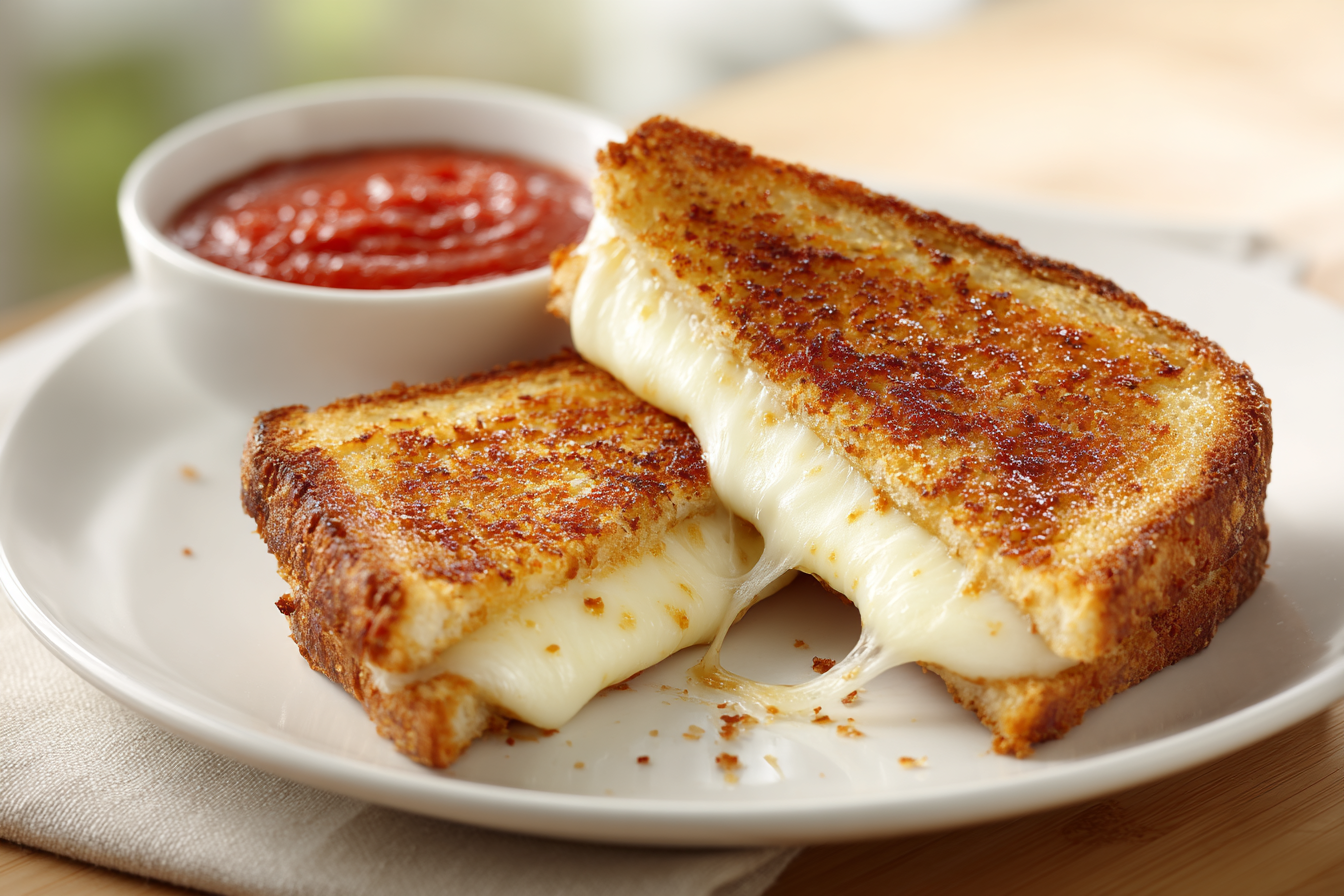
Mozzarella in Carrozza (Italian Fried Grilled Cheese)
Course: AppetizerCuisine: Italian4
sandwiches20
minutes15
minutes380
kcalCrispy, golden, egg-battered sandwiches stuffed with stretchy melted mozzarella — the Italian street food version of grilled cheese that puts the original to shame.
Ingredients
8 slices white sandwich bread
8 oz block mozzarella cheese, sliced 1/4-inch thick
5 large eggs
2 tablespoons whole milk
1/4 cup grated Pecorino Romano cheese
1/4 cup fresh parsley, minced
1/2 cup all-purpose flour
1 cup panko breadcrumbs
Vegetable or sunflower oil for frying, plus 1/2 teaspoon kosher salt and 1/2 teaspoon black pepper
Directions
- Beat the eggs in a shallow bowl with the milk, Pecorino Romano, minced parsley, salt, and black pepper until well combined. Set up your breading station with flour on one plate, the egg mixture in the bowl, and panko breadcrumbs on a separate plate.
- Trim the crusts from the bread if desired. Slice the mozzarella into 1/4-inch thick pieces. Arrange mozzarella slices on 4 pieces of bread, trimming the cheese to fit so none hangs over the edges. Top each with the remaining 4 slices of bread and press down firmly to compact.
- Cut each sandwich diagonally to make triangles. Dust each triangle in flour on all sides, shaking off excess. Dip into the egg mixture, making sure to coat all sides including the edges where cheese could escape.
- Press each egg-coated triangle into the panko breadcrumbs, turning to coat all sides evenly. Place the breaded triangles on a parchment-lined plate or baking sheet.
- Refrigerate the breaded sandwiches for 20-30 minutes. This step is important — it allows the coating to set so it stays intact during frying.
- Preheat your oven to 175°F and place a wire rack on a baking sheet inside to keep finished sandwiches warm. Pour oil into a large skillet to a depth of about 1/4 inch and heat over medium to medium-low until the oil reaches 340-350°F. To test without a thermometer, drop a small piece of bread crust into the oil — if it sizzles and floats, you’re ready.
- Fry the sandwiches in batches, about 2-3 minutes per side, until golden brown and crispy. Don’t overcrowd the pan — give each triangle enough room so the oil temperature stays consistent. Adjust the heat as needed to prevent burning.
- Transfer fried sandwiches to paper towels to blot excess oil for about 30 seconds, then move them to the wire rack in the warm oven. Serve hot with warm marinara sauce, lemon wedges, or anchovy sauce for dipping.
Notes
- Block mozzarella (low-moisture) is easier to slice and stays melted longer than fresh mozzarella. If using fresh mozzarella, pat it very dry with paper towels before slicing to prevent excess moisture from ruining the coating.
- If the outside gets too dark before the cheese melts inside, transfer the sandwich to a 325°F oven for a few minutes to finish melting the cheese without further browning.
- For a baked version, preheat oven to 400°F, place breaded sandwiches on a parchment-lined baking sheet, drizzle with olive oil, and bake for about 20 minutes, flipping halfway through.