

Sunday dinners used to mean something. Families gathered around the table for big, slow-cooked meals that filled the whole house with amazing smells. But somewhere along the way, a lot of those classic recipes just stopped showing up. Maybe it was faster lifestyles or changing tastes, but an entire generation of comfort food has quietly faded. The good news? Most of these meals are simple to make and totally worth bringing back. Here’s a look at nine old-school Sunday dinners that deserve another turn at the table — plus a full recipe for one of the best.
Salisbury steak smothered in mushroom gravy
Remember those frozen TV dinners with the little compartments? Salisbury steak was almost always in one of them. But the homemade version was on a completely different level. Real ground beef patties, seasoned well and pan-seared until golden, then covered in a rich mushroom and onion gravy. It was the kind of meal that made mashed potatoes absolutely necessary. Families in the 1960s and 1970s served this regularly, and it was always a crowd-pleaser on Sunday nights when everyone was home.
The dish actually has roots going all the way back to the Civil War. A doctor named James Salisbury promoted ground beef patties as part of a high-protein diet for soldiers. Over the decades, it became a household staple through both World Wars and into the postwar era. Today, most people only know it from frozen dinners, which is a shame. When made from scratch with real gravy, Salisbury steak is honest, hearty comfort food. It’s also incredibly budget-friendly, since ground beef and mushrooms won’t break the bank. This one is long overdue for a comeback, and the full recipe is below.
Tuna noodle casserole was a weeknight hero
If there’s one dish that defined easy home cooking in the mid-1900s, it’s tuna noodle casserole. A can of tuna, a can of cream of mushroom soup, some egg noodles, and frozen peas — that was pretty much the whole recipe. It showed up on dinner tables across the country from the 1930s all the way through the 1990s. School cafeterias served it too, which might explain why some people have mixed feelings about it. But done right, it’s warm, creamy, and genuinely satisfying.
Campbell’s Soup deserves a lot of credit for making this dish so popular. The company basically turned condensed soup into a sauce shortcut that millions of home cooks relied on. The first known recipe traces back to the Pacific Northwest in the 1930s, and it hit peak popularity in the 1950s. These days, some people dress it up with panko breadcrumbs or fresh herbs. Others keep it exactly the way grandma made it. Either way, it’s a dump-and-bake dinner that feeds a family for just a few dollars, and it deserves more respect than it currently gets.
Chicken a la king over toast or rice
Chicken a la king sounds fancy, but it’s really just chicken in a creamy sauce with some vegetables. The original version included a homemade white sauce with pimentos, mushrooms, peppers, and sometimes a splash of sherry. It was served over toast, rice, or egg noodles. This dish made regular appearances at Sunday dinners from the 1950s through the 1970s, and it was one of those meals that could stretch to feed a big group without much effort. What’s not to love about that?
The origins are a bit fuzzy — some say it came from a New York hotel, others point to a restaurant in Philadelphia or even London. Regardless of where it started, it became a go-to comfort meal for families everywhere. Over time, many cooks swapped the homemade sauce for condensed cream soup, which made it faster but not quite as good. The best way to bring this one back is to make the sauce from scratch. A simple roux with butter, flour, and chicken broth takes about five minutes and makes all the difference.
Liver and onions used to be normal
This one divides people more than just about any other old-school dinner. Liver and onions was a regular meal in many households during the 1960s, and restaurants served it well into the 2000s. Beef liver, sliced thin and pan-fried with sweet sautéed onions, was typically served alongside mashed potatoes. The smell alone could clear a room or make someone’s mouth water, depending on how they grew up. There really is no in-between when it comes to liver.
The dish faded from popularity over the years, partly because quality liver became harder to find at regular grocery stores. But with farm-to-table sourcing becoming more common, liver is actually making a quiet return. The key to a good plate of liver and onions is not overcooking the liver — it should still be slightly pink inside. Soaking it in milk for about 30 minutes before cooking helps mellow out the strong taste. Plenty of people who grew up eating it still crave it, even if their families won’t let them cook it at home.
Jell-O mold salads at every gathering
It’s hard to overstate how popular Jell-O molds were from the 1950s through the 1970s. They showed up at holiday dinners, church potlucks, and Sunday suppers in every shape and color imaginable. Some were sweet, filled with fruit and topped with whipped cream. Others were surprisingly savory, using aspic to suspend things like tuna, salmon, or vegetables in a wobbly gelatin base. Orange Jell-O with shredded carrots and crushed pineapple was a common combination that many people remember fondly.
These days, Jell-O salads are mostly considered out of style. But in some parts of the Midwest, they’re still alive and well. One person shared online that at a funeral lunch in a small rural town, there were five different Jell-O salad varieties on the table — and they were all delicious. The savory versions might be a harder sell for modern eaters, but the sweet fruit-filled ones still work great as a light side dish or dessert. Breaking out a ring mold for a retro dinner party would definitely get people talking.
Ham with pineapple rings and cherries
A big baked ham decorated with pineapple rings and maraschino cherries is a picture that lives in a lot of people’s memories. This was a centerpiece dish at grandma’s house, especially on Sundays and holidays. The combination of salty ham and sweet pineapple created a glaze that was completely irresistible. The whole thing baked in the oven for hours, filling the house with a smell that told everyone dinner was going to be special. It wasn’t complicated, but it was always impressive.
This dish became wildly popular in the early 1900s once Dole started canning pineapple, making the tropical fruit available year-round across the country. Canned ham was sometimes used in a pinch, but the spiral-cut version from the butcher was the real deal. Why did it fade? Businesses like HoneyBaked Ham started doing the cooking for families, and fewer people bothered with the whole production at home. But there’s something deeply satisfying about making your own glazed ham from scratch. Pair it with a green bean casserole and some dinner rolls, and it feels like stepping back in time.
Dried beef gravy on toast for a crowd
This dish goes by a few different names, some of which are more polite than others. Creamed chipped beef on toast — or as many families called it, “SOS” — started as military food. American soldiers during World War II ate this regularly, and many of them brought the recipe home when the war ended. It’s simple: thin slices of dried beef simmered in a white gravy and served over toast. It feeds a lot of people cheaply, which is exactly why it spread so quickly beyond the military.
Some versions use ground beef instead of chipped beef, since it’s easier to find. The Pennsylvania Dutch call their version “Dutch frizzled beef,” and you can still find it on a few diner menus as a breakfast item. People who grew up eating this either loved it or absolutely dreaded it. But when it’s made with real butter, good quality beef, and served on thick toast, it’s genuinely comforting. It’s the kind of meal that costs almost nothing and reminds people of a time when food didn’t have to be Instagram-worthy to be good.
Chicken pot pie that made everyone pause
Few things say Sunday dinner like a golden-crusted chicken pot pie pulled straight from the oven. This was the kind of meal that made people stop what they were doing and come to the table. A creamy filling loaded with chicken, carrots, peas, and potatoes, all tucked under a flaky pastry top. It was warm, filling, and felt like someone put real care into making it. Pot pies were a staple in American homes for decades, and they earned that spot honestly.
While frozen pot pies from brands like Marie Callender’s and Banquet kept the concept alive, they’re really not the same as homemade. A from-scratch pot pie with a tarragon-infused gravy takes it to another level entirely. The herbs give it depth that frozen versions just can’t match. Some old-school recipes use leftover rotisserie chicken to save time, which is a smart shortcut. The crust can be store-bought pie dough or puff pastry — nobody’s judging. What matters is that warm, bubbling filling and the satisfaction of cutting through that golden top.
Stuffed peppers that nobody makes anymore
Stuffed peppers used to be a regular sight at the dinner table, and now they’ve almost completely vanished. Bell peppers hollowed out and filled with a mixture of ground beef, rice, tomato sauce, and cheese, then baked until everything was soft and bubbly. It was a complete meal inside a vegetable, which made it feel both practical and a little bit creative. Some families added their own twists — Italian seasoning, different meats, or even a Mexican-inspired filling with corn and black beans.
So why did stuffed peppers disappear? Part of it might be that they take a bit of prep work — scooping out peppers, cooking the filling, and then baking everything together. In an era of 30-minute meals and meal kits, that felt like too much effort. But honestly, the whole process takes about an hour, and most of that time is hands-off while they bake. If the sad shriveled peppers of childhood memory are holding anyone back, the trick is to not overbake them. A little bit of firmness is a good thing, and it makes all the difference.
These old-school Sunday dinners weren’t fancy, and they didn’t try to be. They were about feeding people well with what was on hand and making a regular weekend feel a little more special. Most of these recipes use simple, affordable ingredients that are still easy to find today. Whether it’s Salisbury steak with gravy or a Jell-O mold that gets everyone laughing, these meals connect us to something real. Pick one this weekend and give it a try — the recipe for Salisbury steak below is a great place to start.
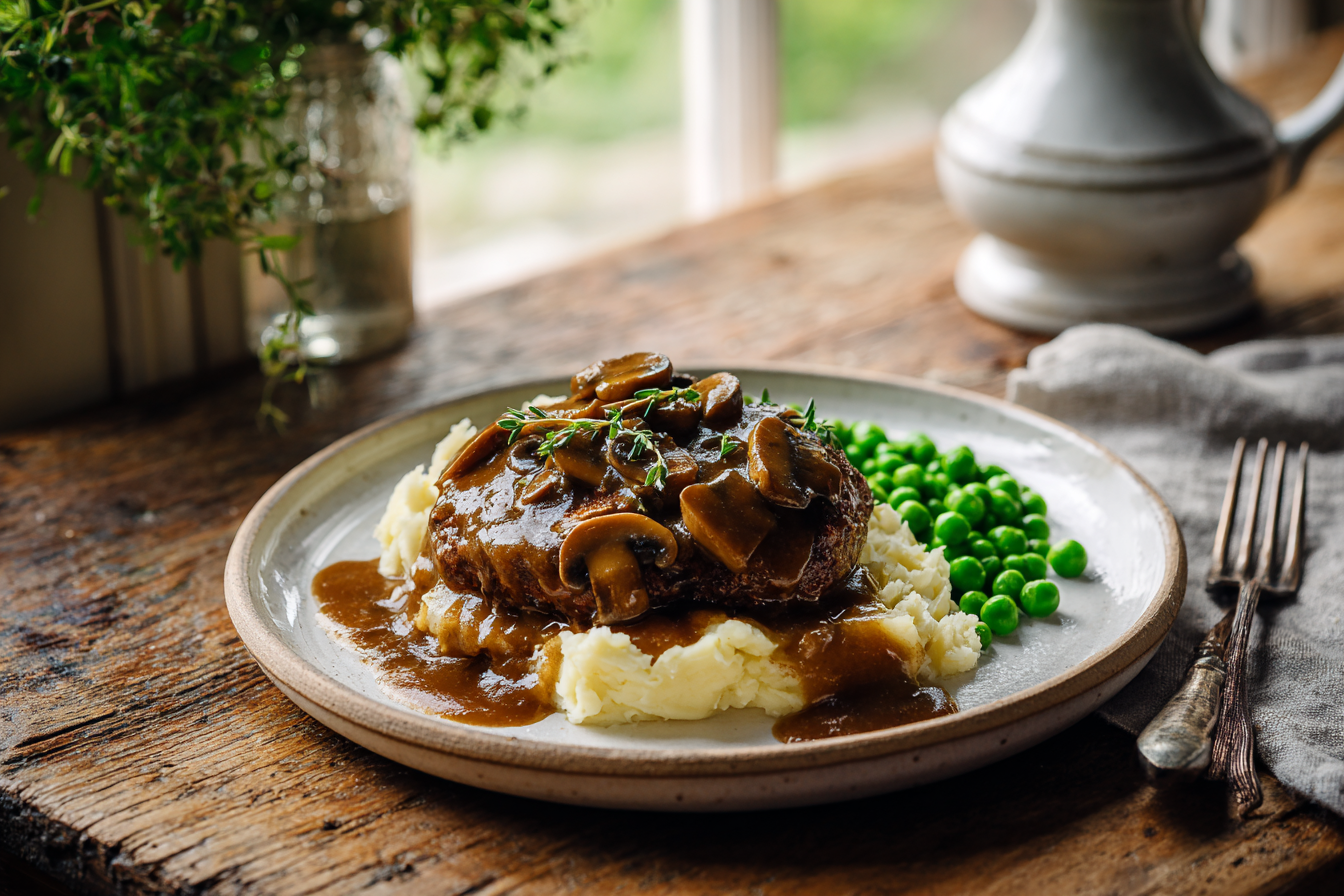
Old-Fashioned Salisbury Steak with Mushroom Gravy
Course: DinnerCuisine: American4
servings15
minutes25
minutes420
kcalJuicy ground beef patties smothered in a rich mushroom and onion gravy that tastes just like grandma used to make.
Ingredients
1 ½ pounds ground beef (80/20 blend)
⅓ cup plain breadcrumbs
1 large egg
1 tablespoon Worcestershire sauce
8 ounces cremini mushrooms, sliced
1 medium yellow onion, thinly sliced
2 tablespoons all-purpose flour
2 cups beef broth
2 tablespoons butter
1 teaspoon garlic powder
Salt and black pepper to taste
1 tablespoon olive oil
Directions
- In a large bowl, combine the ground beef, breadcrumbs, egg, Worcestershire sauce, garlic powder, and a generous pinch of salt and pepper. Mix everything together with your hands until just combined — don’t overwork the meat or the patties will turn out tough. Shape the mixture into four oval patties, about ¾ inch thick, and set them on a plate.
- Heat the olive oil in a large skillet over medium-high heat until the oil shimmers. Place the patties in the skillet and sear for about 3 to 4 minutes per side until they develop a nice brown crust. The patties don’t need to be cooked through at this point since they’ll finish cooking in the gravy. Transfer the browned patties to a clean plate and set aside.
- Lower the heat to medium and add the butter to the same skillet. Once the butter melts, add the sliced onions and cook for about 3 minutes until they start to soften. Add the sliced mushrooms and continue cooking for another 4 to 5 minutes, stirring occasionally, until the mushrooms release their liquid and begin to brown.
- Sprinkle the flour over the mushrooms and onions and stir constantly for about 1 minute to cook out the raw flour taste. This step creates the base for a thick, smooth gravy. Make sure the flour coats the vegetables evenly before adding any liquid.
- Pour in the beef broth slowly while stirring to prevent lumps from forming. Scrape up any browned bits stuck to the bottom of the skillet — those add a ton of richness to the gravy. Bring the mixture to a gentle simmer and let it cook for about 2 minutes until it starts to thicken.
- Nestle the seared patties back into the skillet, spooning some of the mushroom gravy over the tops. Cover the skillet with a lid and reduce the heat to medium-low. Let everything simmer together for about 10 to 12 minutes, or until the patties are cooked through and reach an internal temperature of 160°F.
- Remove the lid and taste the gravy, adjusting salt and pepper as needed. If the gravy is too thick, add a splash of beef broth to thin it out. If it’s too thin, let it simmer uncovered for a few extra minutes until it reaches the consistency of a thick, pourable sauce.
- Serve the Salisbury steak patties over creamy mashed potatoes or egg noodles, spooning plenty of the mushroom and onion gravy over the top. A side of steamed green peas or buttered corn rounds out the plate perfectly. Leftovers keep well in the fridge for up to 3 days and reheat nicely on the stovetop.
Notes
- Use an 80/20 ground beef blend for the juiciest patties. Leaner beef tends to dry out during cooking.
- For extra depth in the gravy, add a teaspoon of tomato paste when cooking the mushrooms and onions.
- Baby bella (cremini) mushrooms work best here, but white button mushrooms are a fine substitute.
- Don’t skip the Worcestershire sauce — it adds a savory, slightly tangy punch to the beef patties that ties the whole dish together.
- This recipe doubles easily if feeding a bigger crowd. Use a larger skillet or work in batches when searing the patties.
Frequently Asked Questions
Q: Can I use ground turkey instead of ground beef for Salisbury steak?
A: Yes, ground turkey works as a substitute, but the patties may be a bit drier since turkey is leaner. Adding an extra tablespoon of breadcrumbs and a splash of milk to the mixture helps keep them moist. The gravy also helps a lot with adding moisture back in as the patties simmer.
Q: Can I make Salisbury steak ahead of time?
A: Absolutely. You can form the patties and store them in the fridge up to a day before cooking. You can also fully cook the dish and reheat it on the stovetop over low heat. The gravy actually gets thicker and more flavorful the next day, making leftovers just as good as the first serving.
Q: What sides go best with Salisbury steak?
A: Mashed potatoes are the classic pairing because they soak up all that mushroom gravy. Egg noodles are another great option. For vegetables, steamed green peas, buttered corn, or roasted green beans all work well. A simple side salad rounds things out if something lighter is needed.
Q: How do I keep the patties from falling apart in the pan?
A: Make sure the egg and breadcrumbs are well mixed into the beef before shaping the patties. Chilling the formed patties in the refrigerator for about 15 minutes before cooking helps them hold their shape. Also, avoid flipping them too early — let a solid crust form on the first side before turning.