

Making quesadillas for a big group usually means standing at the stove for an hour, flipping one at a time while everyone else gets hungrier by the minute. What if there was a way to make crispy, golden quesadillas for eight people all at once? Sheet pan veggie quesadillas solve this dinner dilemma by using your oven to create perfectly crispy results with way less effort than the traditional stovetop method.
Why sheet pan quesadillas work better than skillet versions
Traditional quesadilla making involves heating a skillet, cooking one quesadilla at a time, and keeping the finished ones warm while making more. This process takes forever when feeding a family or group. Sheet pan quesadillas. Flip this script by using a large baking sheet to cook multiple servings simultaneously in the oven.
The oven method actually creates crispier results than stovetop cooking because the dry heat surrounds the entire tortilla surface. Plus, using a second sheet pan on top during the first part of baking acts like a giant panini press, ensuring even cooking and preventing the tortillas from puffing up. Everyone eats at the same time, and cleanup is minimal.
Setting up your tortilla foundation properly
The key to successful sheet pan quesadillas lies in how the tortillas are arranged. Start with six large burrito-sized tortillas arranged so half of each tortilla sits on the sheet pan while the other half hangs over the edges. These overhanging portions will fold over the top to seal in the filling, creating a complete quesadilla.
Brushing the sheet pan with melted butter before laying down the tortillas is crucial for achieving that golden, crispy bottom. The butter also prevents sticking and adds a rich taste. If the tortillas seem stiff or crack when folding, warm them briefly over an open flame or in a dry skillet to make them more pliable. This simple prep step prevents torn tortillas and messy filling spills.
Building layers for maximum filling distribution
Layer building makes or breaks sheet pan quesadillas. Start with half the cheese directly on the tortillas, creating a sticky base that holds everything together. Next, add the vegetables and beans, spreading them evenly across the entire surface. Bell peppers, onions, black beans, and corn make excellent choices because they hold their shape and distribute moisture evenly.
Top with the remaining cheese to create a sandwich effect that melts and binds all ingredients together. Place one tortilla in the center, then fold the overhanging edges over the top, overlapping slightly to seal everything inside. The final step involves brushing the top with more melted butter and adding spices like chili powder for extra taste depth.
Vegetable prep that prevents soggy quesadillas
Raw vegetables release moisture during cooking, which can make quesadillas soggy and cause fillings to slide out when cut. Sautéing vegetables before adding them to quesadillas removes excess water and concentrates their taste. Dice onions and bell peppers small so they cook evenly and don’t create bulky spots that make folding difficult.
Leafy greens like spinach, kale, or Swiss chard need special attention because they contain lots of water. Sauté them until wilted, then squeeze out excess moisture with paper towels before adding to the quesadilla. Canned black beans should be drained and rinsed to remove the starchy liquid that can make things mushy. These preparation techniques ensure crispy results every time.
Temperature and timing for perfect crispiness
An oven temperature of 425°F provides the sweet spot for crispy exteriors without burning. The two-stage baking process starts with 20 minutes under a second sheet pan, which acts as a weight to keep tortillas flat and ensures even heating. This covered cooking phase melts the cheese thoroughly and heats the filling without browning the top.
Removing the top pan for the final 3-5 minutes allows the surface to turn golden brown and crispy. Watch carefully during this stage because tortillas can go from perfectly golden to burnt quickly. Different ovens vary, so check after 3 minutes and add more time as needed. The finished quesadilla should be golden brown and sound hollow when tapped lightly.
Cheese choices that melt beautifully
Cheese selection affects both taste and texture in quesadillas. Mexican cheese blends work wonderfully because they combine different melting properties for optimal results. Monterey Jack melts smoothly, while pepper jack adds heat, and cheddar contributes a sharp taste. Mozzarella creates excellent stretch but can be bland on its own.
Freshly shredded cheese melts better than pre-shredded varieties because it lacks anti-caking agents that can prevent smooth melting. For dairy-free options, brands like Violife offer good melting properties, though they won’t stretch like traditional cheese. Some cooks make homemade cashew-based cheese sauce using potatoes, cashews, and tapioca starch for stretchy, melty results without dairy.
Creative filling combinations beyond basic vegetables
Standard bell pepper and onion fillings are just the beginning. Leftover roasted vegetables from dinner make excellent quesadilla fillings – try roasted zucchini, mushrooms, or sweet potatoes. Cooked rice adds heartiness and helps absorb moisture from other ingredients. Cilantro lime rice works particularly well with Mexican-inspired quesadillas.
Bean varieties beyond black beans offer different textures and tastes. Pinto beans, refried beans, or white cannellini beans all work well. For protein additions, leftover rotisserie chicken, cooked ground turkey, or seasoned tofu crumbles transform vegetarian quesadillas into heartier meals. Spice combinations like cumin, chili powder, and paprika add depth without overwhelming other ingredients.
Cutting and serving without losing filling
Let the finished quesadilla rest for 2-3 minutes before cutting to allow the cheese to set slightly. This prevents the filling from oozing out when sliced. Use a sharp pizza wheel or large knife to cut clean lines without dragging the tortilla. Cut into triangular wedges like pizza, or rectangular pieces for easier handling.
Serve immediately while still warm and crispy. Classic accompaniments include guacamole, salsa, sour cream, and hot sauce arranged on the side for customization. Fresh cilantro, diced tomatoes, or pickled jalapeños make great garnishes. For larger gatherings, set up a toppings bar so everyone can customize their portions according to personal preferences.
Storage and reheating for meal prep success
Sheet pan quesadillas store well in the refrigerator for up to three days when wrapped tightly in foil or stored in airtight containers. Individual wedges can be separated with parchment paper to prevent sticking. For longer storage, wrap portions in foil and freeze for up to one month.
Reheating in a toaster oven or regular oven at 350°F for 5-7 minutes restores crispiness better than microwaving, which makes tortillas soggy. Air fryers work excellently for reheating individual portions in just 2-3 minutes. The key is dry heat to recreate that crispy texture rather than steaming the tortillas with moist heat methods.
Sheet pan veggie quesadillas prove that feeding a crowd doesn’t have to mean compromising on quality or spending hours in the kitchen. This method delivers consistently crispy results with minimal effort, making it perfect for busy weeknights, casual entertaining, or meal prep sessions. Once the technique is mastered, endless filling combinations await experimentation.
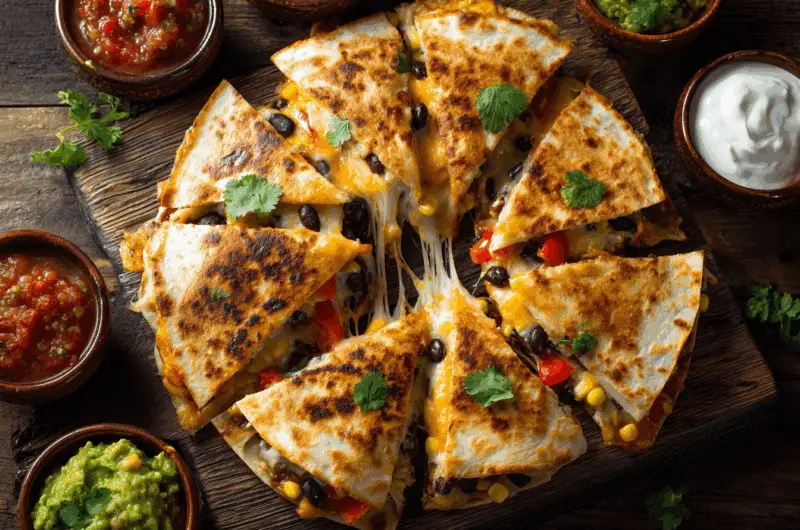
Sheet Pan Veggie Quesadillas
Course: DinnerCuisine: Mexican8
servings15
minutes25
minutes280
kcalCrispy golden quesadillas made in the oven to feed a crowd with perfectly melted cheese and seasoned vegetables.
Ingredients
3 tablespoons unsalted butter, melted and divided
8-9 large flour tortillas (10-inch burrito size)
2-3 cups shredded Mexican cheese blend
1 yellow onion, chopped and sautéed
1 sweet bell pepper, diced and sautéed
1 handful sautéed spinach or kale, excess water squeezed out
1½ cups cooked black beans, drained and rinsed
½ cup corn kernels (optional)
1 teaspoon chili powder
Directions
- Preheat the oven to 425°F. Grease a large sheet pan with 2 tablespoons of melted butter, making sure to coat the entire surface evenly. This butter layer is essential for creating the crispy golden bottom crust.
- If tortillas feel stiff, warm them briefly over an open flame or in a dry skillet to make them pliable. Arrange 6 tortillas on the sheet pan so half of each tortilla sits on the pan while the other half hangs over the edges.
- Sprinkle half of the shredded cheese evenly over the tortillas on the pan. This creates a sticky base that will hold all other ingredients together during cooking.
- Layer the sautéed onions, bell peppers, greens, black beans, and corn over the cheese. Sprinkle with chili powder, then top with the remaining cheese to create a sandwich effect that will melt and bind everything.
- Place one tortilla in the center on top of the filling. Fold the overhanging tortilla edges up and over the filling, overlapping slightly to seal everything inside completely.
- Brush the top of the quesadilla with the remaining tablespoon of melted butter. This will help create a golden, crispy top surface during the final baking stage.
- Place a second sheet pan directly on top of the quesadilla to act as a weight. Bake for 20 minutes with the top pan in place to ensure even cooking and prevent puffing.
- Remove the top sheet pan and bake for an additional 3-5 minutes until the surface is golden brown and crispy. Let rest for 2-3 minutes before cutting into wedges and serving with desired toppings.
Notes
- Adjust the number of tortillas based on your sheet pan size – smaller tortillas may require more to cover the pan properly
- Sauté vegetables beforehand to remove excess moisture and prevent soggy quesadillas
- Freshly shredded cheese melts better than pre-shredded varieties
- Leftovers can be reheated in a toaster oven at 350°F for 5-7 minutes to restore crispiness
Frequently asked questions
Q: Can I make sheet pan quesadillas ahead of time?
A: Yes, assemble the quesadillas completely and refrigerate for up to 4 hours before baking. Add 5 extra minutes to the covered baking time if cooking straight from the refrigerator.
Q: What size sheet pan works best for this recipe?
A: A standard half-sheet pan (13×18 inches) works perfectly with 10-inch tortillas. For quarter sheet pans or smaller tortillas, reduce ingredients proportionally and adjust cooking time slightly.
Q: How do I prevent the filling from leaking out during baking?
A: Make sure tortilla edges overlap when folded over the top, and don’t overfill with wet ingredients. Sautéing vegetables first removes excess moisture that can cause leaks.
Q: Can I freeze cooked sheet pan quesadillas?
A: Absolutely! Wrap individual portions in foil and freeze for up to one month. Reheat directly from frozen in a 350°F oven for 10-12 minutes until heated through and crispy.