

Nothing beats the smell of garlic sizzling in olive oil on a Tuesday night when everyone’s hungry and the fridge looks pretty bare. Greek orzo with tomatoes and feta turns a handful of pantry staples into something that tastes like it came from a Mediterranean bistro, all in one pot that cooks everything together while absorbing incredible amounts of rich, tangy goodness.
Why one pot orzo beats regular pasta every time
Regular pasta recipes usually mean boiling water in one pot, making sauce in another, and somehow timing everything to finish at the same moment while dirty dishes pile up in the sink. One pot orzo throws that whole complicated dance out the window because the pasta cooks directly in chicken broth, soaking up every drop of liquid along with all the garlic, tomato, and herb goodness that gets added along the way.
The magic happens when orzo absorbs the cooking liquid instead of getting drained like regular pasta. This Greek cooking method creates a creamy, risotto-like texture that holds onto every bit of garlic butter and lemon juice you add. Plus, orzo cooks faster than most pasta shapes, so dinner gets on the table in about 20 minutes from start to finish.
Getting the liquid ratios right prevents mushy disasters
The difference between perfect creamy orzo and a mushy mess comes down to watching your liquid levels like a hawk. Start with three cups of chicken broth for every cup and a half of dried orzo, but keep extra broth or water nearby because orzo drinks up liquid faster than expected, especially if the heat runs too high or the pot doesn’t have a tight lid.
Greek cooks prefer their orzo soft and creamy rather than al dente, which means letting it cook until tender while maintaining just enough liquid for a silky texture. If the pot starts looking dry before the orzo finishes cooking, add hot liquid a quarter cup at a time and stir gently. The finished dish should have a slightly saucy consistency that coats each grain without being soupy.
Fresh versus canned tomatoes make different dishes
Summer tomatoes that actually taste like tomatoes create a completely different dish than winter grocery store tomatoes that taste like cardboard. When good fresh tomatoes are available, chop them up and let their natural juices mingle with the orzo as it cooks, creating bright pockets of sweet acidity that contrast beautifully with the salty feta cheese.
During colder months, quality canned crushed tomatoes or tomatoes in cartons often deliver better results than pale pink fresh ones that never ripened properly. The key is using about 12 ounces of crushed tomatoes for every cup and a quarter of orzo, which provides enough tomato base without overwhelming the dish. Some cooks blend fresh tomatoes in a food processor for a smoother consistency that distributes more evenly throughout the orzo.
Real Greek feta versus supermarket blocks taste completely different
The stuff labeled “feta” in plastic containers at most grocery stores tastes nothing like actual Greek feta made from sheep’s milk. Real feta has a creamy texture with tangy, almost wine-like notes that complement the lemon and herbs, while mass-produced versions often taste like salty chalk that crumbles into sad little pieces.
Look for feta packed in brine rather than pre-crumbled packages, and check the label for sheep’s milk or a mixture of sheep and goat milk. Costco carries authentic Greek sheep’s milk feta under their Kirkland brand, and many regular supermarkets stock imported Greek feta in the specialty cheese section. The extra few dollars spent on quality feta makes a huge difference since cheese provides the main protein and much of the dish’s character.
Building layers of garlic without burning anything
Garlic burns fast and turns bitter when it hits hot oil, which ruins the whole dish before it even gets started. The secret is adding minced garlic after the butter melts and the heat gets reduced to medium-low, giving it just enough warmth to release its aroma without browning. Most recipes call for two cloves, but garlic lovers can easily bump that up to three or four.
Fresh garlic works better than pre-minced stuff from jars, which often tastes sharp and lacks the sweet undertones that develop when fresh cloves get chopped. Some cooks like to sauté sliced onions first to build an even deeper base, cooking them until translucent before adding the garlic for the final minute. This layered approach creates more complex background notes that support the tomatoes and feta.
When to add the cheese determines texture success
Adding feta too early melts it completely into the sauce, while adding it too late means it never warms through properly. The perfect timing happens after removing the pot from heat but while the orzo still steams hot enough to soften the cheese without completely melting it away. This preserves creamy pockets of tangy feta throughout the dish.
Most Greek cooks add half the feta directly into the hot orzo and save the rest for sprinkling on top before serving. The stirred-in portion creates creaminess throughout the dish, while the reserved cheese provides bursts of pure feta goodness in each bite. Grating some of the feta on the large holes of a box grater helps it distribute more evenly than large crumbled chunks.
Lemon juice timing affects the whole dish
Fresh lemon juice added at the wrong time either cooks out completely or tastes too sharp and raw. The sweet spot comes right after removing the pan from heat, when the residual warmth mellows the citrus acidity while preserving its bright, fresh character. One large lemon usually provides the right amount of juice without overwhelming the other ingredients.
Some cooks like to add lemon zest along with the juice for extra citrus punch, but this works better with organic lemons that haven’t been treated with wax or chemicals. The zest adds aromatic oils that complement the oregano and parsley, creating a more complex herb profile. Rolling the lemon on the counter while pressing down releases more juice from the pulp before cutting and squeezing.
Greek oregano versus regular oregano makes a noticeable difference
Regular oregano from the spice aisle tastes mild and slightly sweet compared to Greek oregano, which has a more intense, almost piney character that stands up to feta and lemon. Greek oregano grows in different soil and climate conditions, developing essential oils that create the authentic Mediterranean taste most people associate with Greek food.
Many supermarkets now carry Greek oregano in their international sections, usually in small containers or plastic bags. The dried version actually works better than fresh oregano in this dish because the drying process concentrates the oils while fresh oregano can taste grassy and weak. A tablespoon of dried Greek oregano provides plenty of herb presence without overpowering the delicate orzo and tomato base.
What to serve alongside without competing with the main dish
Greek orzo makes a perfect side dish for grilled chicken, fish, or lamb, but it also works as a main course with just a simple salad and some crusty bread for sopping up any leftover sauce. The dish provides enough richness from the butter and cheese that it doesn’t need heavy accompaniments that might overwhelm the bright Mediterranean character.
A basic green salad dressed with olive oil and red wine vinegar complements the orzo without competing for attention, while warm pita bread or focaccia handles the practical job of capturing every last bit of the lemony, garlicky sauce. Greek cooks often serve this as part of a mezze spread alongside other small dishes, but American families usually prefer it as either a generous side dish or a light main course for two people.
This Greek orzo recipe transforms everyday ingredients into something special enough for company but simple enough for weeknight dinners. The one-pot method eliminates most of the cleanup while creating layers of garlic, lemon, and herb goodness that make everyone think dinner took much more effort than it actually did.
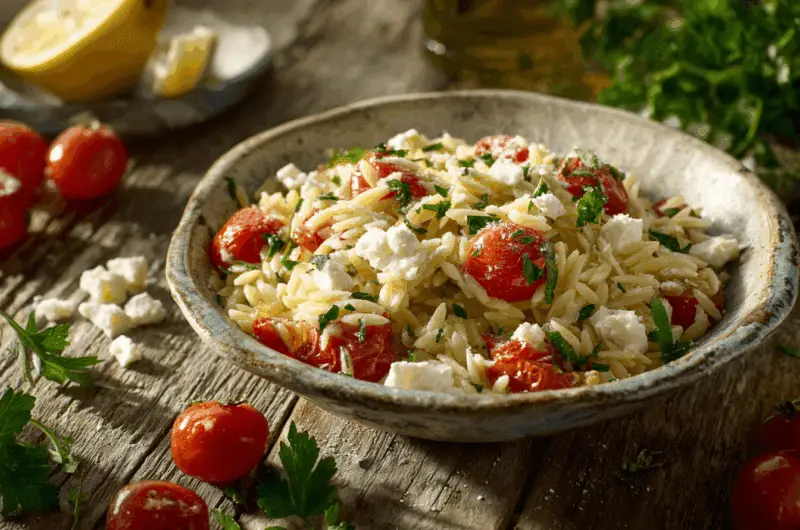
One Pot Greek Orzo with Tomatoes and Feta
Course: DinnerCuisine: Greek4-6
servings5
minutes15
minutes320
kcalCreamy orzo pasta cooked in chicken broth with garlic, tomatoes, and tangy feta cheese creates an authentic Greek dish perfect for weeknight dinners.
Ingredients
3 cups chicken broth
1½ cups dried orzo pasta
¼ cup butter
2 cloves garlic, minced
1 pint cherry tomatoes, halved
Juice of 1 lemon
½ cup freshly grated Parmesan cheese
½ cup crumbled feta cheese
¼ cup chopped fresh parsley
Directions
- Bring chicken broth to a boil in a large skillet over medium-high heat. Once boiling, add the dried orzo and cook according to package directions, usually 9-10 minutes, stirring occasionally. Add more broth or water if needed while cooking to prevent sticking.
- Once orzo is fully cooked and tender, reduce heat to medium-low and add butter, stirring until completely melted. The orzo should still have some liquid remaining, creating a creamy consistency.
- Add minced garlic and halved cherry tomatoes to the pan. Cook for 5 minutes, stirring occasionally, until tomatoes are slightly softened and garlic becomes fragrant. Be careful not to brown the garlic.
- Remove the pan from heat and immediately add fresh lemon juice, stirring to combine. Season with salt and freshly cracked black pepper to taste, keeping in mind that the feta will add saltiness.
- Stir in the grated Parmesan cheese until it melts into the warm orzo, creating additional creaminess. Add half of the crumbled feta cheese and gently fold it in, allowing some pieces to remain intact.
- Sprinkle the remaining feta cheese over the top of the orzo along with chopped fresh parsley. Serve immediately while hot, allowing guests to mix in the additional feta as desired.
Notes
- Use authentic Greek feta made from sheep’s milk for the best taste and texture
- Keep extra hot chicken broth nearby to add if the orzo absorbs liquid too quickly
- This dish works as either a generous side dish for 6 people or a main course for 4
- Leftovers can be reheated gently with a splash of broth to restore creaminess
Frequently asked questions
Q: Can I make this recipe vegetarian?
A: Yes, simply substitute vegetable broth for the chicken broth. The dish will still have plenty of rich taste from the butter, garlic, tomatoes, and feta cheese.
Q: What happens if my orzo gets too mushy?
A: Overcooked orzo happens when there’s too much liquid or the heat runs too high. Next time, watch the liquid levels carefully and reduce heat once the broth starts boiling to maintain a gentle simmer.
Q: Can I use a different type of pasta instead of orzo?
A: Small pasta shapes like ditalini or small shells work, but orzo’s rice-like size makes it perfect for absorbing the cooking liquid. Larger pasta shapes won’t create the same creamy, risotto-like texture.
Q: How do I store and reheat leftovers?
A: Store covered in the refrigerator for up to 3 days. Reheat gently in a pan with 1-2 tablespoons of hot broth or water, stirring frequently until warmed through and creamy again.