

Traditional lasagna takes forever to make, but what if there was a way to get all those same cheesy, comforting vibes without spending hours in the kitchen? This one-pot lazy lasagna breaks all the rules pasta purists usually follow, and honestly, it’s about time. Instead of layering noodles for what feels like an eternity, everything gets mixed together in one skillet and baked until bubbly and golden.
Why traditional lasagna makes people avoid cooking
Regular lasagna demands way too much from busy people. Boiling noodles, making sauce, browning meat, mixing ricotta, and then carefully layering everything in a specific order takes at least two hours. Most weeknights, the last thing anyone wants is a recipe that requires multiple pots, pans, and a PhD in pasta architecture. The whole process feels more like a weekend project than a Tuesday dinner solution.
This one-pot version throws those complicated rules out the window. Everything happens in one high-sided skillet, from browning the meat to melting the cheese. The broken lasagna noodles cook directly in the sauce, absorbing all those rich flavors while creating the perfect texture. No more juggling multiple dishes or timing everything perfectly.
Smart shortcuts that actually work
Usually, pre-shredded cheese and no-boil noodles are considered cheating, but this recipe embraces those shortcuts completely. The pre-shredded mozzarella melts perfectly when mixed with the hot sauce and pasta, creating those stretchy cheese pulls everyone loves. No-boil lasagna noodles, when broken into pieces, cook evenly in the simmering sauce without getting mushy or sticking together.
Store-bought marinara sauce becomes the base, but gets enhanced with rendered beef fat, garlic, and fresh basil. Rao’s marinara works especially well because it tastes homemade already, though any quality jarred sauce will do the job. The key is choosing a sauce that actually tastes good on its own, since it’s doing most of the heavy lifting here.
The right pan makes all the difference
A high-sided cast iron skillet is absolutely essential for this recipe. Regular skillets don’t have enough room for a full pound of broken noodles plus all that sauce and cheese. Cast iron also holds heat really well, so the bottom gets slightly crispy while the top stays creamy. The pan needs to work on both the stovetop and in the oven, which makes cast iron perfect.
If cast iron isn’t available, a deep enamel-coated pan or even a large oven-safe sauté pan can work. The important thing is having enough depth to hold everything without overflowing, plus sides that won’t warp under high heat. Whatever pan gets chosen needs to handle the transition from stovetop to oven without any drama.
How the broken noodle technique works
Breaking lasagna noodles into rough pieces might seem wrong, but it’s actually genius. The irregular shapes create different textures in every bite, and the broken edges grab onto sauce better than smooth, flat sheets. No-boil noodles are designed to absorb liquid, so they soften perfectly when simmered directly in the marinara sauce.
The noodles cook for just two minutes in the simmering sauce, which is enough time to start softening without becoming mushy. They’ll finish cooking in the oven, absorbing even more of those rich flavors. This method creates a texture that’s somewhere between traditional lasagna and baked ziti, with all the comfort of both.
Ricotta distribution secrets nobody talks about
Most people try to mix ricotta evenly throughout the dish, but that’s a mistake. The best approach is dolloping half the ricotta mixture over the pasta, then gently folding it in just enough to create pockets of creamy cheese. Overmixing turns everything into a uniform, boring texture instead of those surprise bites of rich ricotta.
The remaining ricotta gets dolloped on top before the final layer of mozzarella goes on. This creates those cloud-like pockets of cheese that make each bite different and interesting. High-quality ricotta like Calabro or Liuzzi makes a noticeable difference here, since it’s creamier and has better flavor than generic store brands.
Timing the oven phase perfectly
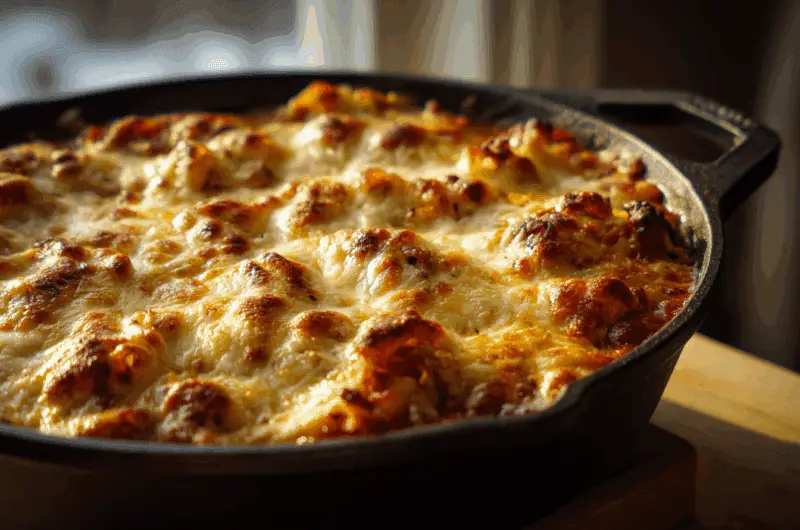
The oven does the final magic, turning a skillet full of ingredients into something that looks and tastes like real lasagna. Thirty to thirty-five minutes at 375 degrees gives the top enough time to get golden and bubbly while the noodles finish cooking through. The edges should be actively bubbling, not just warm.
Checking for doneness means looking for those golden brown spots on top and making sure the edges are bubbling enthusiastically. If the top starts browning too fast, covering with foil for part of the baking time prevents burning while everything else catches up. The whole dish should look irresistibly bubbly when it comes out.
Seasoning strategies that build layers
Seasoning happens at multiple stages, not just once at the beginning. The ground beef gets salted while browning, which helps it develop better color and flavor. When the garlic goes in, it needs just enough time to become fragrant without burning, usually about a minute of stirring.
Adding Parmesan cheese directly to the pasta mixture, not just on top, creates deeper cheese flavor throughout the dish. The ricotta mixture also gets Parmesan mixed in, so every component contributes to the overall taste. Fresh basil added early gets cooked down and mellow, while a sprinkle on top stays bright and aromatic.
Storage and reheating without disappointment
Leftover lazy lasagna keeps in the refrigerator for up to three days, but reheating requires some care. The oven works better than the microwave for bringing back that bubbly, melted cheese texture. Covering with foil prevents the top from drying out while the center warms through completely.
Reheating at 350 degrees takes about fifteen to twenty minutes, depending on how much is being warmed up. Testing with a spoon in the center shows whether it’s heated all the way through. Adding a sprinkle of fresh mozzarella on top before reheating can refresh that melted cheese experience.
When this recipe works best
This lazy lasagna shines on busy weeknights when everyone wants comfort food but nobody wants to spend hours cooking. It’s also perfect for feeding a crowd without the stress of perfectly layered presentation. Kids love it because every bite has different textures and plenty of cheese, while adults appreciate how much time it saves.
The kid-friendly aspect makes this recipe great for families who want to cook together. Little hands can help break the noodles, measure ingredients, or dollop the ricotta mixture. It’s forgiving enough that small mistakes don’t ruin the final result, making it a good choice for teaching basic cooking skills.
Sometimes the best recipes are the ones that break all the traditional rules and still deliver exactly what everyone wants. This one-pot lazy lasagna proves that shortcuts can lead to something just as satisfying as the original, maybe even better because it actually gets made on a regular Tuesday night instead of staying on the someday-I’ll-try-this list forever.
One-Pot Lazy Lasagna
Course: DinnerCuisine: Italian-American6-8
servings25
minutes45
minutes977
kcalAll the cheesy comfort of traditional lasagna without the hours of prep work, made in one skillet from start to finish.
Ingredients
1/4 cup extra-virgin olive oil
1 lb ground beef
1 tsp kosher salt
6 garlic cloves, finely chopped
1/2 cup coarsely chopped fresh basil
5 cups store-bought marinara sauce
2 Tbsp unsalted butter
12 oz no-boil lasagna noodles, broken into 2-3 inch pieces
3 cups pre-shredded mozzarella, divided
3/4 cup finely grated Parmesan, divided
15 oz whole-milk ricotta
Directions
- Arrange a rack in center of oven and preheat to 375°F. In a large, high-sided cast iron skillet, heat olive oil over medium-high heat until shimmering. Add ground beef and cook, breaking it apart with a wooden spoon, until browned and cooked through, about 7 to 9 minutes. Season with 1 teaspoon kosher salt.
- Add the finely chopped garlic to the skillet and cook, stirring constantly, until fragrant, about 1 minute. Be careful not to let the garlic burn. Stir in the fresh basil and cook until just combined and slightly wilted.
- Pour in the marinara sauce, being careful of any splatter. Stir in the butter until completely melted and incorporated. Taste and add additional salt if needed. The sauce should be well-seasoned at this point.
- Bring the sauce mixture to a simmer over medium heat. Add the broken lasagna noodles, 1 cup of mozzarella, and 1/4 cup of Parmesan cheese. Stir everything together until the sauce is smooth and the cheese is melted, about 2 minutes. Remove the skillet from heat.
- In a small bowl, combine the ricotta cheese with the remaining 1/2 cup of Parmesan cheese. Mix until well combined. Dollop half of this ricotta mixture over the pasta in the skillet.
- Gently fold the pasta and sauce over the ricotta dollops, being careful not to overmix. You want to create pockets of ricotta throughout the dish, not blend it completely smooth. Dollop the remaining ricotta mixture over the top.
- Sprinkle the remaining 2 cups of mozzarella cheese evenly over the top of the lasagna. Make sure to cover the surface well for that perfect golden, bubbly top. The cheese should reach almost to the edges of the skillet.
- Transfer the skillet to the preheated oven and bake for 30 to 35 minutes, until the edges are actively bubbling and golden brown spots appear on top. The cheese should be melted and lightly browned. Let rest for 5 minutes before serving.
Notes
- A high-sided cast iron skillet is essential for this recipe – regular skillets won’t have enough room for all the ingredients
- Rao’s marinara sauce works exceptionally well, but any quality store-bought marinara will do
- Don’t overmix the ricotta – you want pockets of creamy cheese, not a uniform texture
- Leftovers keep for 3 days refrigerated and reheat best in the oven at 350°F covered with foil
Frequently asked questions
Q: Can I use regular lasagna noodles instead of no-boil ones?
A: Regular noodles won’t work well in this recipe because they need to be fully cooked before baking. No-boil noodles are specifically designed to absorb liquid and soften during cooking, which is essential for the one-pot method to work properly.
Q: What if I don’t have a cast iron skillet?
A: You can use any large, high-sided oven-safe pan or skillet that holds at least 4 quarts. Enameled cast iron, heavy-bottomed stainless steel, or even a large oven-safe sauté pan will work as long as it can go from stovetop to oven.
Q: How do I know when it’s done baking?
A: Look for actively bubbling edges and golden brown spots on the cheese. The top should be melted and lightly browned, not just warm. If you insert a spoon into the center, it should come out hot and the noodles should feel tender.
Q: Can I make this ahead of time?
A: It’s best made and served immediately for optimal texture. However, you can assemble everything through step 6, cover tightly, and refrigerate for up to 24 hours. Add an extra 10-15 minutes to the baking time if starting from cold.