

Most mornings, breakfast feels like the same boring routine. Sweet oatmeal with berries or brown sugar gets old fast, and many people assume that’s the only way to prepare this hearty grain. Here’s something that might surprise you: oats don’t have any natural sweetness at all. Just like rice or quinoa, they’re actually perfect for savory dishes. This simple shift opens up a whole new world of breakfast possibilities that taste nothing like traditional oatmeal.
Why savory oats work better than sweet versions
Think about it this way: when was the last time someone told you rice should always be sweet? Never, because that would be weird. Oats are just another grain, and they soak up whatever seasonings you add to them. The creamy texture that makes oats perfect for porridge also makes them ideal for dishes that taste more like risotto or rice pilaf.
The biggest advantage of going savory is that these dishes actually keep you full until lunch. Sweet oatmeal often leaves people hungry an hour later because of the blood sugar spike and crash. Savory preparations with protein and vegetables create a more balanced meal that sustains energy levels throughout the morning without that mid-morning hunger crash.
The best types of oats for savory dishes
Steel-cut oats work best for savory preparations because they hold their shape and have a chewy texture that feels more substantial. Old-fashioned rolled oats can work too, but they get mushier and don’t have the same satisfying bite. Quick oats turn into complete mush and should be avoided for savory dishes unless you’re going for a risotto-like consistency.
The cooking method matters just as much as the oat type. Steel-cut varieties usually take 40 minutes to cook, but there’s a shortcut that cuts the morning prep time to just 5 minutes. The night before, bring 3 cups of water to a boil, stir in 1 cup of steel-cut oats, cover, and let sit overnight. In the morning, add another cup of liquid and simmer for 5 minutes until heated through.
Building the perfect savory base
The secret to amazing savory oatmeal lies in the liquid you use for cooking. Water works fine, but chicken or vegetable broth adds depth and richness that transforms the entire dish. Some people even use mushroom broth or add dried mushrooms directly to the cooking water for an earthy, umami-packed base that tastes nothing like traditional breakfast food.
Salt is crucial – don’t forget it like you might with sweet oatmeal. Add about half a teaspoon to the cooking liquid, just like you would when making rice. Other seasonings can be added during cooking too: garlic powder, onion powder, or even a splash of soy sauce creates a savory foundation. The oats absorb these seasonings as they cook, so the taste goes all the way through instead of just sitting on top.
Mexican-style oat bowls that beat takeout
One of the easiest ways to make savory oats is to treat them like a burrito bowl base. Cook the oats in vegetable or chicken broth, then add black beans, diced tomatoes, corn, and shredded cheese while the oats are still hot so everything melts together. Top with sliced avocado, a dollop of Greek yogurt instead of sour cream, and hot sauce to taste.
This combination hits all the same notes as Mexican food but feels more substantial than rice. The oats provide more fiber and protein than traditional rice, making the meal more filling. Leftover rotisserie chicken works perfectly in this dish, and you can prep the vegetables the night before to make mornings even easier. Even pickled jalapeños and cilantro work great as toppings.
Italian-inspired oat risotto techniques
Making oat “risotto” sounds fancy, but it’s actually simpler than the real thing. Start by sautéing diced onions and garlic in olive oil until soft, then add the cooked oats to the pan instead of the other way around. This lets the oats pick up all those pan flavors and creates a more cohesive dish that tastes like it took hours to make.
Fresh lemon juice and grated Parmesan cheese transform the dish into something restaurant-worthy. Add sautéed mushrooms, wilted spinach or arugula, and diced tomatoes for color and nutrients. Black pepper and a drizzle of good olive oil at the end make it taste like authentic Italian food, not health food trying to be something else.
Protein additions that actually work
Eggs are probably the best protein to add to savory oats because they’re quick, and the runny yolk creates a natural sauce when mixed in. Fry an egg with a slightly runny yolk and place it right on top of the hot oats. When you cut into it, the yolk mixes with the oats and creates a creamy, rich coating that’s way better than any sauce you could make separately.
Hemp hearts work well, too, if you want plant-based protein that doesn’t require any cooking. Just sprinkle them on top for a nutty crunch. Leftover cooked chicken, turkey, or even crumbled bacon can be stirred right into the hot oats. Canned tuna or salmon mixed with a little mayo and lemon juice creates a completely different meal that works great for lunch or dinner.
Vegetable combinations that don’t get soggy
The key to good vegetables in savory oats is texture contrast. Soft, wilted greens like spinach or kale work perfectly because they complement the creamy oats without adding competing textures. Just add a handful of fresh greens to the hot oats and they’ll wilt in about 30 seconds. This adds color, nutrients, and a slightly earthy taste without any extra cooking time.
For crunch, add fresh vegetables at the very end instead of cooking them into the oats. Diced bell peppers, cherry tomatoes, or even corn kernels stay crisp and provide textural interest. Sautéed mushrooms and onions can be cooked separately and stirred in just before serving. This way everything keeps its individual character instead of turning into mush, which is what happens when everything gets cooked together for too long.
Cheese and seasoning combinations
Different cheeses create completely different dishes. Parmesan gives an Italian vibe and melts beautifully into hot oats, creating natural creaminess without adding milk or cream. Cheddar works great for breakfast combinations with eggs and makes the dish feel more like a hearty morning meal. Feta adds a tangy, salty punch that pairs well with Mediterranean vegetables like tomatoes and olives.
Cotija cheese works perfectly in Mexican-style preparations because it doesn’t melt completely but adds little pockets of salty richness throughout the dish. For Asian-inspired versions, skip cheese entirely and use soy sauce, sesame oil, and green onions instead. A drizzle of sriracha or chili oil adds heat without overwhelming the other ingredients, and toasted sesame seeds provide crunch.
Make-ahead tips for busy mornings
The overnight soaking method for steel-cut oats is a game-changer for busy schedules. Set up the oats the night before, and all the morning prep involves is adding liquid and heating for 5 minutes. This is way faster than waiting 40 minutes for steel-cut oats to cook from scratch, and the texture is exactly the same as the long cooking method.
You can even prep the vegetables ahead of time. Dice onions, wash greens, and grate cheese the night before so everything’s ready to go. Cooked oats reheat well in the microwave if you want to make a big batch on Sunday and portion it out for the week. Just add a splash of broth or water when reheating to restore the creamy texture, and fresh toppings make each bowl taste newly made.
Once you realize oats don’t have to be sweet, breakfast becomes way more interesting. These savory preparations work just as well for lunch or dinner, making oats a versatile ingredient instead of just another boring breakfast option. The best part is how filling and satisfying these dishes are compared to traditional sweet oatmeal – you’ll actually stay full until your next meal without any mid-morning energy crashes.
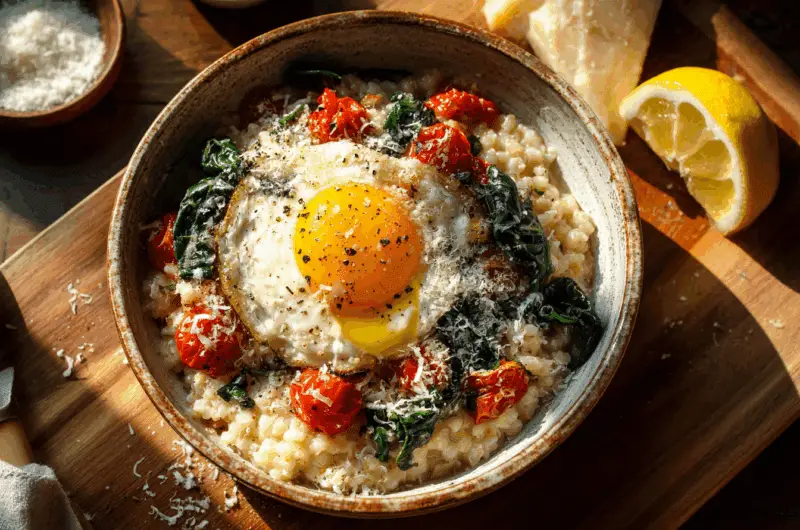
Savory Mediterranean Oatmeal with Fried Egg
Course: BreakfastCuisine: Mediterranean2
servings10
minutes15
minutes380
kcalThis savory oatmeal bowl combines creamy steel-cut oats with Mediterranean vegetables, fresh herbs, and a perfectly fried egg for a satisfying meal any time of day.
Ingredients
1 cup steel-cut oats (soaked overnight)
3 cups of water for soaking
1 cup vegetable broth
2 tablespoons olive oil, divided
1 medium onion, diced
2 cloves garlic, minced
1 cup cherry tomatoes, halved
2 cups fresh spinach
2 large eggs
1/2 cup grated Parmesan cheese
1 lemon, juiced
Salt and black pepper to taste
Directions
- The night before, bring 3 cups of water to a boil in a medium saucepan. Remove from heat and stir in the steel-cut oats. Cover the pot and let sit at room temperature overnight, or for at least 2 hours. This softens the oats and reduces morning cooking time significantly.
- In the morning, add the vegetable broth to the soaked oats and bring to a gentle simmer over medium heat. Cook for 5 minutes, stirring occasionally, until the liquid is absorbed and the oats are creamy. Season with salt and pepper to taste.
- While the oats are cooking, heat 1 tablespoon of olive oil in a large skillet over medium heat. Add the diced onion and cook for 3-4 minutes until softened. Add the minced garlic and cook for another 30 seconds until fragrant.
- Add the halved cherry tomatoes to the skillet and cook for 2-3 minutes until they start to soften and release their juices. Add the fresh spinach and cook until wilted, about 1 minute. Remove from heat and set aside.
- In a clean skillet, heat the remaining 1 tablespoon of olive oil over medium heat. Crack the eggs into the skillet and cook for 2-3 minutes until the whites are set but the yolks are still runny. Season the eggs with salt and pepper.
- Add the cooked oats to the skillet with the vegetables and gently fold everything together. The residual heat will warm the vegetables and allow the oats to absorb any remaining pan juices for extra depth of taste.
- Remove the oat mixture from heat and stir in half of the grated Parmesan cheese and the lemon juice. The cheese will melt slightly from the residual heat, creating a creamy texture throughout the dish.
- Divide the oat mixture between two bowls and top each with a fried egg. Sprinkle with the remaining Parmesan cheese, crack fresh black pepper on top, and drizzle with a little extra olive oil if desired. Serve immediately while hot.
Notes
- If you forget to soak the oats overnight, you can quick-soak them by bringing water to a boil, adding oats, covering, and letting sit for 2 hours minimum
- Old-fashioned rolled oats can be substituted but will create a mushier texture – reduce cooking time to 3 minutes
- Leftover cooked oats can be refrigerated for up to 3 days and reheated with a splash of broth or water
- For a vegan version, skip the eggs and cheese, and add hemp hearts or nutritional yeast for extra protein and umami depth
Frequently asked questions about savory oatmeal
Q: Can I use regular rolled oats instead of steel-cut oats for savory dishes?
A: Yes, but the texture will be much softer and more porridge-like. Rolled oats work better for dishes where you want a smoother consistency, like oat “risotto.” Cook them for only 2-3 minutes with the broth to prevent them from getting too mushy.
Q: How do I prevent my vegetables from making the oats watery?
A: Cook vegetables separately first to remove excess moisture, especially with mushrooms and tomatoes. Add them to the oats at the very end, or sauté them until most of their liquid has evaporated before mixing them in.
Q: Can savory oatmeal be made ahead and reheated?
A: Absolutely! Cooked oats keep in the fridge for up to 3 days. When reheating, add a splash of broth or water to restore the creamy texture, and add fresh toppings like herbs, cheese, or a fried egg to make it taste freshly made.
Q: What’s the best way to add protein to savory oats without eggs?
A: Hemp hearts, leftover cooked chicken, canned fish, or even a scoop of Greek yogurt work great. For plant-based options, try adding cooked lentils, chickpeas, or a spoonful of almond butter mixed in while the oats are still hot.