

Most people have been frying eggs the same way their entire lives, and most people have also been slightly disappointed by the results. The whites are either rubbery, the yolk is overdone, or there’s a weird slimy layer right around the center. It turns out the secret to a truly perfect fried egg isn’t a fancy pan or expensive butter. It’s steam. Just a tiny bit of water and a lid can change everything about how a fried egg cooks, and it takes almost no extra effort at all.
Why most fried eggs end up overcooked
Think about what usually happens when frying an egg. The pan is hot, the butter or oil is sizzling, and the egg hits the surface. The bottom of the white starts cooking immediately. But the top? That part just sits there, barely getting warm. So everyone does the logical thing — they wait. And wait. And by the time the top of the white looks set, the bottom is brown and crispy in a not-great way. The yolk has also started to firm up. The whole thing becomes a compromise between underdone whites and an overcooked yolk.
This is where the steam method steps in and fixes everything. When heat only comes from below, the egg cooks unevenly. The bottom gets way more heat than the top. That’s the core issue. No amount of careful temperature watching fully fixes that problem with a traditional open-pan approach. The egg needs heat from all around it, not just from below. And the simplest way to make that happen involves nothing more than water and something to cover the pan.
A teaspoon of water changes everything
Here’s the trick. After cracking eggs into a hot, lightly greased pan, add just one teaspoon of water to the skillet. Then place a lid on top. That tiny amount of water hits the hot surface and immediately turns into steam. The steam fills the space under the lid, surrounding the egg with gentle, even heat. The whites cook through from both the top and bottom at the same time. Meanwhile, the yolk stays protected from direct heat and comes out creamy and runny — exactly how a good fried egg should be.
This isn’t some complicated restaurant technique. It takes about two extra seconds. One teaspoon of water and a lid. That’s it. The steam creates a mini oven inside the pan. The result is whites that are fully set with no slimy patches and yolks that run beautifully when cut. It sounds too simple to make a real difference, but once anyone tries it, going back to the old way feels wrong. The improvement is that noticeable.
Turning off the burner is another option
There’s actually a variation of this method that takes things one step further. Instead of keeping the burner going, some cooks turn it completely off after cracking the eggs. The idea is that a well-heated pan already holds enough residual heat to finish the job. Just crack the eggs, turn the heat off, and cover with a lid. The trapped heat does all the work. It’s a more gentle approach, which means even less chance of browning on the bottom or overcooking any part of the egg.
This rule-breaking method came about almost by accident, according to one food writer who started doing it while juggling a busy morning routine. After about a minute and a half to two minutes with the lid on and the burner off, the eggs come out perfectly. If the whites still jiggle a bit after checking, just put the lid back on for another thirty seconds. And if the pan wasn’t quite hot enough, turning the burner back on to low for a minute easily fixes it.
The best type of pan to use
Does the pan matter? Yes, quite a bit actually. A nonstick skillet is the best bet for fried eggs, hands down. The coating lets the egg slide right off when it’s done. No sticking, no tearing, no leaving half the white behind. Brands like T-fal, GreenPan, or even a basic nonstick from any store work perfectly fine. The goal is a smooth cooking surface that doesn’t require a ton of oil or butter to keep things from gluing themselves to the bottom.
A well-seasoned cast iron pan can also do the job, but it takes more care. Cast iron holds heat incredibly well, which is great for this steam technique. However, eggs tend to stick to cast iron if the seasoning isn’t built up properly. For anyone who already has a go-to nonstick skillet, that’s the one to reach for. It gives the best shot at brunch-quality, picture-perfect eggs with runny yolks that stay intact all the way to the plate.
Why a glass lid makes a real difference
Here’s a detail that seems small but actually matters. Using a glass lid instead of a metal one lets anyone watch the egg cook without lifting the cover. Every time the lid comes off, steam escapes. That steam is doing the cooking, so losing it means the process slows down. With a glass lid, a quick glance shows whether the whites have set and how the yolk looks. No guessing, no lifting, no losing precious heat at the wrong moment.
That said, it’s totally fine to peek under a metal lid once or twice. The egg won’t suddenly fail because some steam escaped. But for the most consistent results, a glass lid is the way to go. Most nonstick skillets come with one, but if not, a lid from another pot that roughly fits the pan works just as well. It doesn’t need to seal perfectly. Even a loose-fitting lid traps enough steam to make a noticeable difference in how evenly the egg cooks from top to bottom.
Getting the pan temperature right first
One of the biggest mistakes people make with this method is not heating the pan enough before cracking the eggs. If the pan isn’t hot, the steam technique won’t work well. The water won’t evaporate fast enough, and the residual heat (especially if turning the burner off) won’t be enough to cook the whites all the way through. A good rule is to give the pan at least one to two minutes over medium-high heat before adding anything.
There’s a simple test for this. Sprinkle a few drops of water into the pan. If they sputter and pop immediately, the pan is ready. If the water just sits there quietly, it needs more time. Getting this step right makes the entire process smoother. When the pan is properly heated, the egg white starts setting the moment it makes contact. That initial sear on the bottom creates a nice base while the steam handles everything else above.
What to add for eggs that taste even better
The steam method produces a great egg all on its own. But once the technique is dialed in, adding a few extras takes things up another level. A sprinkle of flaky sea salt right when the egg hits the plate does wonders. A crack of black pepper, some red pepper flakes, or a little everything bagel seasoning all work incredibly well. The key is to season after cooking, not before. Salt added too early can break down the egg white and cause weird spots.
Butter versus oil is another thing worth thinking about. Cooking spray gives the cleanest release from the pan, but butter adds richness that oil just can’t match. A small pat of butter melted in the pan before the eggs go in gives a slightly nutty, golden edge to the bottom of the white. Some people even drizzle a little chili crisp or hot sauce over the top right before eating. The runny yolk mixes with whatever sauce or seasoning is added, creating something much more exciting than a plain fried egg.
Common mistakes that ruin the steam trick
Even though this method is simple, a few things can go wrong. Using too much water is one of them. More than a teaspoon and the egg starts poaching instead of frying. The goal is steam, not a water bath. Another mistake is using too high a heat. If the burner is cranked up, the bottom of the egg will brown and crisp before the steam has time to set the top. Medium or medium-high heat is the sweet spot for this technique.
Cracking the egg directly into the pan from high up can also cause problems. The yolk might break on impact, which defeats the whole purpose of a beautiful fried egg. It’s better to crack it into a small bowl first, then gently tip it into the pan. This also catches any shell pieces before they end up in the food. Taking these small extra steps might feel unnecessary, but they’re the difference between a decent egg and one that actually looks and tastes restaurant-quality.
Where to put that perfect fried egg
A perfectly fried egg doesn’t belong only on a breakfast plate next to toast. It goes on almost anything. Ramen, rice bowls, avocado toast, burgers, pizza, leftover pasta — all of them get better with a runny fried egg on top. The yolk acts like a built-in sauce that coats whatever it’s sitting on. A simple bowl of steamed rice with soy sauce, sesame oil, and a fried egg is one of the best quick meals anyone can make.
Salads are another great option. A warm fried egg over mixed greens with a vinaigrette turns a side dish into a full meal. Breakfast sandwiches obviously benefit too — an English muffin, a slice of cheese, maybe some bacon or ham, and a steamed fried egg on top. The runny yolk soaks into the bread and makes every bite better. Once this cooking trick becomes second nature, fried eggs show up at every meal. And honestly, that’s not a bad thing at all.
A fried egg is one of those everyday foods that most people think they already know how to make perfectly. But the steam method proves there’s a better way — one that’s barely any extra work and delivers noticeably better results. Whether the burner stays on or gets turned off, whether water or just a lid is used, the principle is the same: trap the heat, let the steam work, and stop fighting with uneven cooking. Mornings just got a little bit easier.
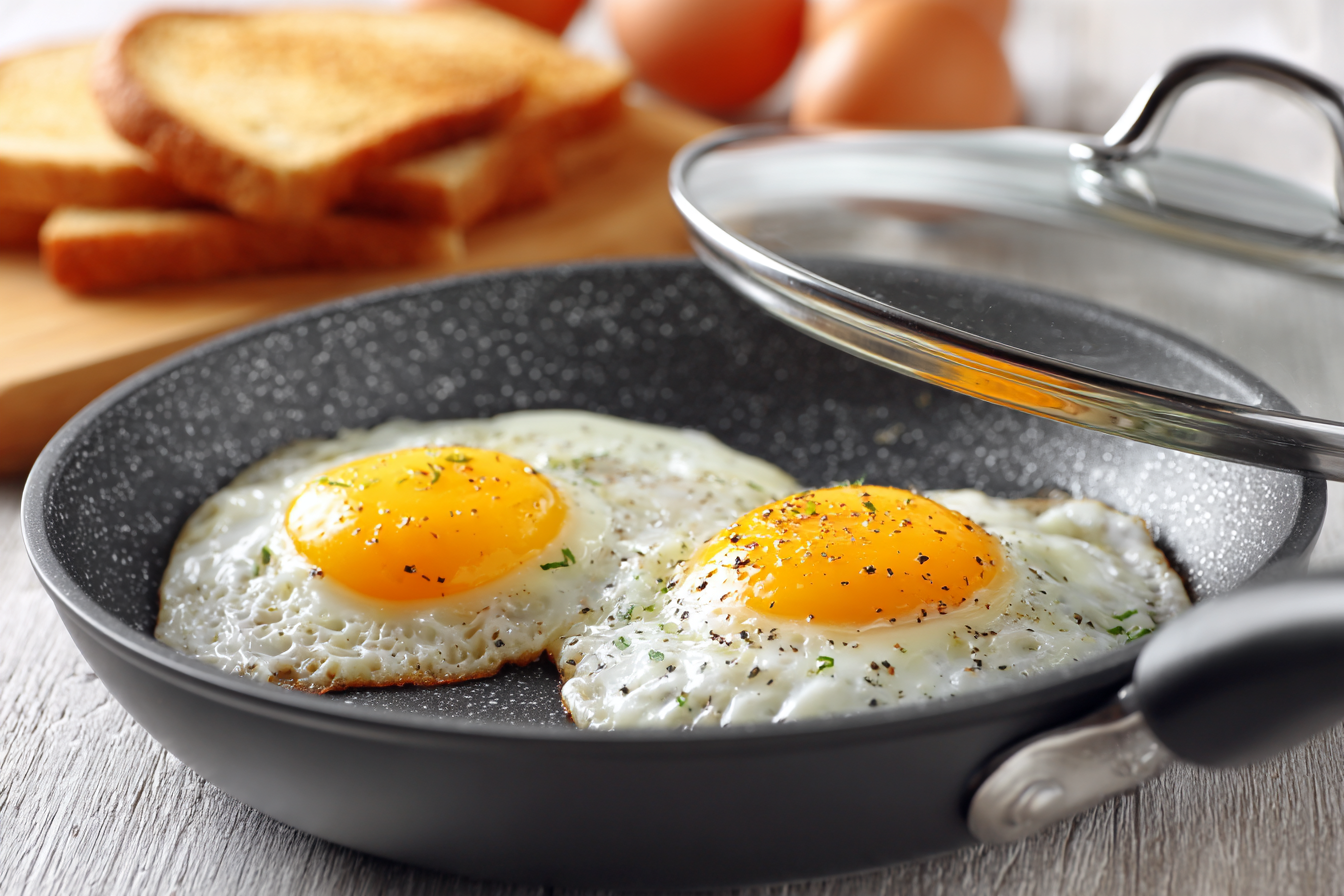
Steam-Fried Eggs with Perfectly Runny Yolks
Course: BreakfastCuisine: American2
servings1
minute4
minutes160
kcalThe tiny trick that makes fried eggs taste outrageously good — just a teaspoon of water and a lid turns ordinary eggs into something special.
Ingredients
2 large eggs
1 teaspoon water
1 teaspoon butter or cooking spray
Pinch of flaky sea salt
Freshly cracked black pepper to taste
Directions
- Place a medium nonstick skillet on the stovetop over medium-high heat. Let the pan heat up for one to two minutes until it is fully hot. To test, sprinkle a few drops of water into the pan — if they sputter and pop immediately, the pan is ready.
- Add the butter and let it melt, swirling to coat the bottom of the pan evenly. If using cooking spray, give the pan a light, even coat instead. The fat helps prevent sticking and adds a little richness to the bottom of the egg.
- Crack each egg into a small bowl first to catch any shell pieces, then gently tip the eggs into the hot pan side by side. Cracking into a bowl first also prevents breaking the yolk on impact with the pan surface. Work quickly so both eggs start cooking at roughly the same time.
- Add 1 teaspoon of water to the edge of the pan, away from the eggs, so it hits the hot surface and immediately begins to steam. The water should sizzle and start evaporating right away. This small amount of steam is what will cook the tops of the eggs evenly.
- Immediately place a lid (glass is best) over the skillet. Reduce the heat to medium-low, or turn the burner off completely if the pan is very hot. Let the eggs cook covered for one and a half to two minutes without lifting the lid.
- After about two minutes, lift the lid and check the eggs. The whites should be fully set and opaque, with the yolk still looking soft and jiggly underneath a thin, lightly cooked film. If the whites still look translucent in spots, replace the lid and cook for another 30 seconds.
- Use a thin spatula to gently slide the eggs out of the pan and onto a plate. The nonstick surface should let them release easily without tearing. Tilt the pan slightly toward the plate for a smooth transfer.
- Season immediately with flaky sea salt and freshly cracked black pepper. Serve right away while the yolk is still warm and runny. These eggs go perfectly on toast, over rice, on a salad, or alongside any breakfast favorites.
Notes
- Use no more than 1 teaspoon of water — too much and the egg will start to poach instead of fry.
- If the eggs are not setting quickly enough with the burner off, turn it back on to low and replace the lid for another minute.
- A glass lid works best because it lets you monitor the eggs without releasing steam, but any lid that roughly fits the pan will work.
- Season after cooking, not before — salt added to raw egg whites can cause discoloration and uneven spots.
- For extra richness, use butter instead of cooking spray, and add toppings like chili crisp, everything bagel seasoning, or hot sauce after plating.
Frequently Asked Questions
Q: Can I use olive oil instead of butter or cooking spray?
A: Absolutely. Olive oil works great and adds a slightly different taste to the bottom of the egg. Just use a small amount — about a teaspoon — to lightly coat the pan. The steam method works the same regardless of which fat is used.
Q: Does this method work for more than two eggs at a time?
A: Yes, as long as the eggs fit in a single layer without overlapping. A larger skillet (12-inch) can handle three or four eggs at once. Just make sure there’s enough room for steam to circulate around each egg under the lid.
Q: What if I prefer a fully cooked yolk instead of a runny one?
A: Simply leave the lid on for an extra one to two minutes. The steam will continue cooking the yolk through without needing to flip the egg. Check every 30 seconds after the two-minute mark until the yolk reaches the firmness preferred.
Q: Can I do this in a stainless steel pan?
A: It’s possible, but stainless steel is much more likely to cause sticking. The pan needs to be very well heated, and a bit more butter or oil is necessary. A nonstick or well-seasoned cast iron pan gives much better results for this specific method.