

Making tortillas from scratch might seem intimidating, but it’s actually one of the easiest things anyone can make at home. With just three simple ingredients that most people already have in their pantry, these soft, pliable wraps put store-bought versions to shame. The best part? Once that first warm tortilla hits the pan and fills the kitchen with that incredible toasty aroma, there’s no going back to the packaged stuff.
Why these basic ingredients work so well together
The beauty of homemade tortillas lies in their simplicity. All-purpose flour provides the structure, while salt enhances the natural wheat taste and helps strengthen the dough. The fat – whether it’s butter, lard, or vegetable shortening – creates those tender, flexible wraps that won’t crack when folded. This trio has been feeding families in Northern Mexico for nearly 500 years, proving that sometimes the simplest recipes are the most enduring.
Hot water serves as the fourth secret ingredient, though many recipes don’t mention its importance. Using hot water helps gelatinize the starch in flour, allowing it to absorb more liquid and creating a more pliable dough. This technique makes rolling much easier and results in tortillas that stay soft longer. Room temperature or cold water simply doesn’t provide the same tender texture that makes homemade tortillas so special.
Choosing the right fat makes all the difference
The type of fat used dramatically affects both taste and texture. Traditional lard creates the most authentic Northern Mexican tortillas with incredible pliability and a subtle savory depth. Unsalted butter brings a rich, creamy taste that makes these tortillas perfect for both savory and sweet applications. Vegetable shortening offers a neutral alternative that keeps tortillas soft the longest – ideal for meal prep or making ahead.
Each fat requires slightly different handling techniques. Melting the fat first ensures even distribution throughout the dough, creating consistent texture in every tortilla. Solid fats need to reach room temperature before melting to prevent overheating. Vegetable oil can be mixed directly with the hot water, making it the quickest option for busy weeknight cooking when time is limited.
Getting the dough texture exactly right
Perfect tortilla dough should feel slightly sticky at first but become smooth and elastic after kneading. The initial stickiness might tempt home cooks to add more flour, but this leads to tough, dry tortillas that crack when rolled. Instead, trust the process – continued kneading will develop the gluten just enough to create structure without making the dough too dense or chewy.
Kneading takes about 7 to 10 minutes by hand until the dough bounces back slightly when pressed with a finger. The dough will transform from shaggy and rough to smooth and supple. Kitchen humidity and flour freshness can affect hydration, so adding hot water gradually helps achieve the perfect consistency. Too much water creates sticky, hard-to-handle dough, while too little results in tortillas that tear easily during rolling.
The resting period everyone skips but shouldn’t
Letting the dough rest for at least 30 minutes allows the gluten to relax and the flour to fully hydrate. This crucial step makes rolling infinitely easier and prevents the dough from springing back into shape. Skipping the rest period results in tortillas that shrink back while rolling and become tough when cooked. Cover the dough with a damp towel or plastic wrap to prevent a skin from forming.
During this rest time, the fat continues to coat the flour proteins, further tenderizing the final product. Some bakers prefer to rest the dough for up to 2 hours, claiming even better results. The individual dough balls also need about 15 minutes of rest after shaping to make rolling easier. This extra patience pays off with tortillas that roll out effortlessly and cook evenly in the pan.
Rolling technique that prevents tearing and sticking
Rolling tortillas requires a light touch and minimal flour dusting. Too much flour on the work surface creates dry, tough tortillas, while too little causes sticking nightmares. Start from the center and roll outward in different directions, rotating the dough frequently to maintain a roughly circular shape. Don’t worry about perfect circles – rustic, slightly irregular shapes are part of homemade charm.
Each tortilla should be rolled to about 8 inches in diameter and roughly 1/8 inch thick. Consistent thickness ensures even cooking and prevents some spots from burning while others remain pale. If the dough springs back while rolling, let it rest another 10 minutes. A marble pastry board or large wooden cutting board provides the best surface for rolling, though a clean countertop works fine too.
Cooking temperature and timing secrets
Medium heat is the sweet spot for cooking tortillas – hot enough to create those characteristic brown spots but not so hot that they burn before cooking through. A cast iron skillet, comal, or heavy-bottomed pan works best for even heat distribution. The pan should be preheated for at least 5 minutes before adding the first tortilla. No oil is needed since the tortillas contain enough fat to prevent sticking.
Each tortilla cooks for about 30 seconds to 1 minute per side, depending on thickness and heat level. Look for light brown spots and slight puffing as signs of doneness. The first tortilla often doesn’t cook as evenly since the pan temperature is still stabilizing – consider it a test run. Properly cooked tortillas should be flexible enough to fold without cracking but not so soft that they fall apart when filled.
Storage tricks that keep tortillas soft for days
Freshly cooked tortillas should be wrapped immediately in a clean kitchen towel or placed in a tortilla warmer to trap steam and maintain softness. This step is crucial – exposed tortillas dry out within minutes and become brittle. For immediate serving, stack them as they come off the pan and keep covered. The residual heat and steam will keep them warm and pliable for at least 30 minutes.
For longer storage, allow tortillas to cool completely before refrigerating in a sealed container or plastic bag for up to a week. They can be frozen for up to 3 months with parchment paper between each tortilla to prevent sticking. Reheating is simple – a few seconds on each side in a dry pan brings back their original softness. Microwaving works too, though it can make them slightly chewy compared to pan reheating.
Common mistakes that ruin homemade tortillas
Adding too much flour during rolling creates dry, cardboard-like tortillas that crack when folded. Another frequent error is rolling them too thick, which results in doughy centers that don’t cook properly. Conversely, rolling too thin makes fragile tortillas that tear easily when filled. The dough should feel slightly tacky but not sticky – if it sticks to hands, it needs more flour, but if it feels dry, add water one tablespoon at a time.
Rushing the process leads to disappointing results. Skipping the rest periods, cooking on too high heat, or not preheating the pan properly all contribute to tough, unevenly cooked tortillas. Overworking the dough develops too much gluten, creating chewy rather than tender wraps. Remember that the first few attempts might not be perfect – tortilla making improves with practice, so don’t get discouraged if early batches aren’t restaurant-quality.
Creative ways to use fresh tortillas beyond tacos
Fresh tortillas shine in applications beyond traditional Mexican dishes. They make excellent pizza bases when brushed with olive oil and topped with cheese and vegetables. Cut into wedges and baked until crispy, they become homemade tortilla chips that taste infinitely better than store-bought versions. Sweet applications work too – spread with butter and cinnamon sugar, then pan-fry for a quick dessert that rivals churros.
Quesadillas become restaurant-quality when made with fresh tortillas, and breakfast burritos hold together better without tearing. They also work beautifully for wraps and sandwiches, providing a softer alternative to bread. Indian-inspired flatbreads can be made by adding cumin or other spices to the dough. The neutral taste of flour tortillas makes them incredibly versatile for both savory and sweet preparations that go far beyond traditional Mexican cuisine.
Once the technique is mastered, homemade tortillas become a regular kitchen staple rather than an occasional project. The satisfaction of creating something so fundamental and delicious from just three ingredients never gets old. These soft, warm wraps transform everyday meals into something special, whether wrapped around simple scrambled eggs or filled with elaborate dinner leftovers.
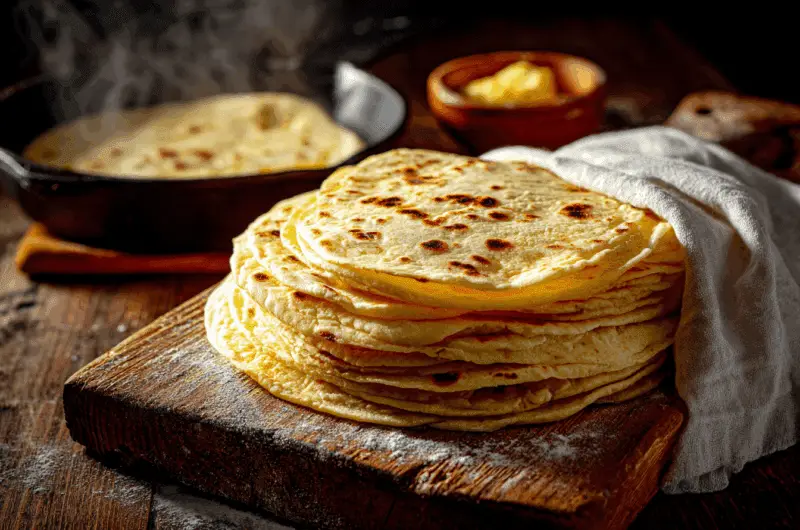
3-Ingredient Homemade Flour Tortillas
Course: Side DishCuisine: Mexican12
tortillas30
minutes15
minutes198
kcalSoft, pliable flour tortillas made with just flour, salt, and fat that put store-bought versions to shame.
Ingredients
3 cups all-purpose flour, plus more for dusting
1 teaspoon kosher salt
1/2 cup fat (vegetable shortening, unsalted butter, or lard)
1 cup hot water (110°F to 120°F)
Vegetable oil or cooking spray for coating bowl
Directions
- Combine 3 cups all-purpose flour and 1 teaspoon kosher salt in a large bowl, stirring to distribute evenly. Melt the fat in the microwave or on the stovetop until just liquified. Add the melted fat to the flour mixture and mix with your hands until the texture resembles coarse sand with no large chunks remaining.
- Heat 1 cup water until hot but not boiling (110°F to 120°F works perfectly). Slowly add half the hot water to the flour mixture, mixing with a flexible spatula until the dough feels less hot to touch. Gradually add the remaining water, a little at a time, until the dough feels sticky but holds together without being loose or wet.
- Transfer the dough to a clean work surface and knead by hand for 7 to 10 minutes until it becomes soft, slightly oily, and elastic. The dough will feel very sticky initially and may stick to your hands, but resist adding more flour as it will become less sticky with continued kneading. The finished dough should bounce back slightly when pressed with a finger.
- Divide the dough into 12 equal portions, about 60 grams each or roughly lime-sized pieces. Cup your hand over each portion and roll on the counter with bottoms facing down until the tops are smooth and tight. Place the shaped balls on a lightly oiled plate or bowl.
- Cover the dough balls with a damp kitchen towel and let rest for at least 30 minutes at room temperature. This resting period allows the gluten to relax and makes rolling much easier. The dough can rest for up to 2 hours for even better results.
- On a lightly floured surface, roll each dough ball from the center outward in different directions, rotating frequently to maintain a roughly circular shape. Roll to about 8 inches in diameter and 1/8 inch thick, using minimal flour to prevent sticking. Don’t worry about perfect circles – rustic shapes are perfectly fine.
- Heat a cast iron skillet, comal, or heavy-bottomed pan over medium heat for at least 5 minutes before cooking. No oil is needed since the tortillas contain enough fat to prevent sticking. The pan should be hot enough that a drop of water sizzles immediately but doesn’t violently boil.
- Cook each tortilla for 30 seconds to 1 minute per side, looking for light brown spots and slight puffing as signs of doneness. The first tortilla may not cook as evenly as the pan temperature stabilizes. As each tortilla finishes cooking, immediately wrap in a clean kitchen towel to trap steam and maintain softness.
Notes
- The type of fat dramatically affects taste – lard creates the most authentic results, butter adds richness, and vegetable shortening keeps tortillas soft longest
- Hot water is crucial for creating tender tortillas, as it helps gelatinize the starch and makes the dough more pliable
- Avoid adding too much flour during rolling as this creates dry, tough tortillas that crack when folded
- Tortillas can be stored in the refrigerator for up to 7 days or frozen for 3 months with parchment paper between each one
- The first tortilla is often a tester – don’t worry if it doesn’t cook perfectly as the pan temperature is still stabilizing
Frequently asked questions about homemade tortillas
Q: Can I make tortillas without lard or shortening?
A: Absolutely! Unsalted butter works beautifully and adds a rich taste that many people prefer. Vegetable oil is another option, though it should be mixed directly with the hot water rather than melted separately. Each fat creates slightly different textures, but all produce delicious results.
Q: Why do my tortillas turn out tough and chewy?
A: This usually happens from adding too much flour during rolling or not allowing proper rest time. The dough needs at least 30 minutes to relax after kneading, and each ball should rest another 15 minutes after shaping. Overcooking on too high heat also creates tough tortillas.
Q: How do I reheat leftover tortillas without them drying out?
A: The best method is a few seconds on each side in a dry pan over medium heat. Wrapping in a damp paper towel and microwaving for 15-20 seconds also works, though they may be slightly chewier. Never reheat in a toaster as this makes them brittle.
Q: Can I make the dough ahead of time?
A: Yes! The dough can be made up to 24 hours ahead and refrigerated. Bring it to room temperature before rolling and cooking. Individual dough balls can also be shaped and refrigerated, covered with a damp towel, for easier meal prep.