

That moment when you open the fridge and find a head of broccoli staring back at you, along with some pasta in the pantry and a lonely lemon on the counter – sounds like the beginning of a boring dinner, right? Actually, these three simple ingredients can create one of the most satisfying weeknight meals you’ll ever make. This buttery lemon pasta with roasted broccoli transforms ordinary ingredients into something that feels like it came from a fancy Italian restaurant, but takes less than 30 minutes to pull together.
Why roasting broccoli changes everything
Most people think of broccoli as that green vegetable their mom made them eat as kids – usually steamed and mushy. Roasting completely transforms broccoli into something with crispy, caramelized edges and a nutty sweetness that even picky eaters can’t resist. When broccoli hits high heat in the oven, the natural sugars concentrate and the edges get golden brown and slightly crispy while the centers stay tender.
The key is cutting the florets into small, uniform pieces so they cook evenly and match the size of whatever pasta shape you’re using. Roasting at 400 degrees for about 12-15 minutes gives you that perfect crisp-tender texture that holds up beautifully when tossed with pasta. Don’t crowd the pan – give those florets some breathing room so they roast instead of steam.
The magic of lemon butter sauce
A good lemon butter sauce is all about timing and balance. Too much lemon juice added too early and the butter breaks, creating a greasy mess instead of a silky sauce. The secret is building the base with butter, garlic, and lemon zest first, then adding the pasta cooking water to create an emulsion before finishing with fresh lemon juice off the heat.
That starchy pasta water is your best friend here – it helps bind everything together into a cohesive sauce that clings to every piece of pasta and broccoli. Fresh lemon zest adds bright, aromatic oils that dried seasonings can’t match, while the juice provides the acidic pop that balances the richness of the butter. Always zest before juicing – it’s much easier when the lemon is whole.
Choosing the right pasta shape matters
Not all pasta shapes are created equal when it comes to holding onto sauce and mixing with vegetables. Short, twisted shapes like rotini, penne, or farfalle work best because they have nooks and crannies that trap the lemon butter sauce. Long noodles like spaghetti tend to clump together and don’t distribute the broccoli evenly throughout each bite.
Whole wheat pasta adds a slightly nutty taste that complements the roasted broccoli perfectly, though regular pasta works just fine too. The key is cooking it just shy of al dente since it will continue cooking when you toss it with the hot sauce and broccoli. Reserve that pasta water before draining – you’ll need it to bring the sauce together.
Getting the garlic just right
Garlic can make or break this dish. Too little and the sauce tastes flat, too much and it overpowers the delicate lemon. The sweet spot is about 4 cloves, minced fine so it distributes evenly. The trick is sautéing it gently in the butter just until fragrant – about 30 seconds to a minute. If it turns brown, it becomes bitter and ruins the whole sauce.
Some people like to slice their garlic thin instead of mincing it for little pops of stronger garlic throughout the dish. Either way works, but keep the heat moderate and watch it carefully. Fresh garlic makes a huge difference over pre-minced from a jar – the oils are more vibrant and the bite is cleaner without any preservative taste.
Pine nuts add the perfect crunch
Pine nuts might seem like an fancy addition, but they’re actually what elevates this simple pasta from good to restaurant-quality. These little cream-colored nuts have a buttery, almost bacon-like richness when toasted that pairs beautifully with the lemon and broccoli. You can find them in most grocery stores, though they’re definitely pricier than other nuts.
Toast them right on the baking sheet with the broccoli for the last few minutes of roasting time, or do it separately in a dry pan for more control. Chopped walnuts make a good substitute if pine nuts aren’t in the budget – they’ll give you that same satisfying crunch and nutty richness. Just watch them carefully since nuts go from perfectly toasted to burnt very quickly.
Breadcrumbs bring texture and flavor
Toasted breadcrumbs might sound unnecessary, but they add an amazing textural element that makes each bite more interesting. Panko breadcrumbs work best because they’re larger and crispier than regular breadcrumbs. Toast them in a little butter until golden brown, then mix in some chopped fresh basil for an herby finish.
These golden breadcrumbs get sprinkled on top just before serving, adding a satisfying crunch that contrasts with the tender pasta and broccoli. Store any leftover breadcrumb mixture in an airtight container – it keeps well and makes a great topping for other pasta dishes, salads, or even soup. The combination of butter, breadcrumbs, and fresh herbs creates an almost pesto-like topping.
Cheese options that work best
Parmesan is the classic choice here, but don’t just grab any pre-grated cheese from the store. Freshly grated Parmigiano-Reggiano melts better and has a much more complex, nutty taste. Pecorino Romano offers a sharper, saltier bite that some people prefer. The key is adding it gradually while the pasta is still hot so it melts smoothly into the sauce.
For something different, crumbled feta adds a tangy, creamy element that plays well with the lemon. Feta doesn’t melt the same way as hard cheeses, so it creates little pockets of creamy saltiness throughout the dish. Goat cheese works similarly if you want something milder. Always add cheese off the heat to prevent it from becoming stringy or clumpy.
Simple variations to try
This basic recipe is like a blank canvas – you can add different proteins or vegetables depending on what’s in your fridge. Leftover rotisserie chicken shredded and tossed in works great, or try some cooked shrimp added at the very end. A can of white beans drained and rinsed adds protein and makes it more filling.
Vegetable-wise, roasted cherry tomatoes, zucchini, or asparagus all work well following the same method. Different nuts like slivered almonds or chopped pistachios can replace the pine nuts. A spoonful of pesto stirred in at the end adds another layer of herby richness. Red pepper flakes give it a gentle heat if you like a little kick.
Storage and reheating tips
Like most pasta dishes, this is best eaten fresh while the sauce is silky and the breadcrumbs are still crispy. However, leftovers keep in the fridge for up to 4 days in an airtight container. The sauce will look separated when cold, but don’t worry – that’s normal. Store any leftover breadcrumb mixture separately so it doesn’t get soggy.
When reheating, add a splash of water or chicken broth to help the sauce come back together. Microwave in 30-second intervals, stirring between each one, or reheat gently in a pan over medium-low heat. Fresh breadcrumbs sprinkled on top will restore some of that textural contrast. The dish actually develops more cohesive notes overnight as all the components meld together.
This buttery lemon pasta with roasted broccoli proves that the best meals often come from the simplest ingredients. When you combine proper technique with quality basics like good butter, fresh lemons, and perfectly roasted vegetables, magic happens in the kitchen. Next time you’re staring at random ingredients wondering what to make for dinner, remember this recipe – it might just become your new weeknight go-to.
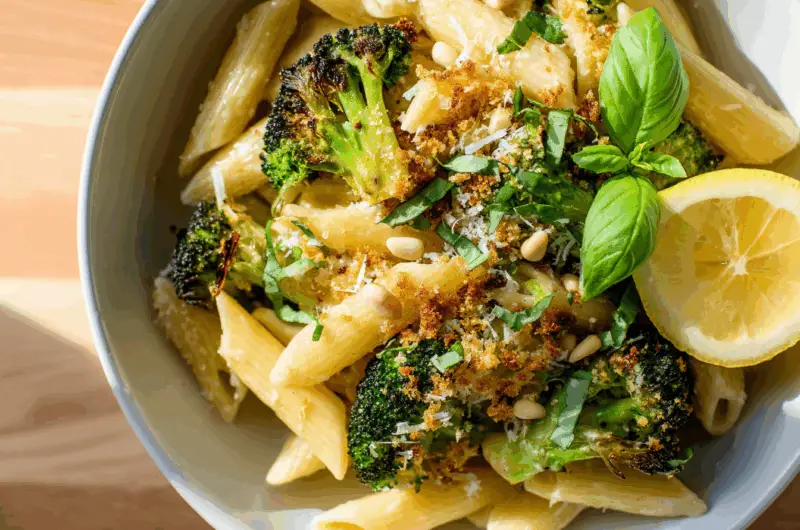
Buttery Lemon Pasta with Roasted Broccoli
Course: DinnerCuisine: Italian6
servings10
minutes20
minutes382
kcalA simple weeknight pasta featuring crispy roasted broccoli, buttery lemon sauce, and golden breadcrumbs that transforms basic ingredients into restaurant-quality comfort food.
Ingredients
12 oz dry pasta (penne, rotini, or farfalle)
6 cups small broccoli florets
3 tablespoons plus 2 teaspoons unsalted butter, divided
2 tablespoons extra-virgin olive oil
4 garlic cloves, finely chopped
Zest and juice of 1 whole lemon, divided
1/2 cup panko breadcrumbs
2 tablespoons pine nuts, finely chopped
1 tablespoon chopped fresh basil, plus more for garnish
1/4 to 1/2 teaspoon chili flakes
3/4 teaspoon kosher salt, divided
1/2 teaspoon cracked black pepper
1/3 cup grated Parmesan or Pecorino cheese, plus more for serving
Directions
- Preheat your oven to 400°F. Bring a large pot of salted water to boil for the pasta. While waiting, cut the broccoli into small, uniform florets that are similar in size to your chosen pasta shape.
- Heat 2 teaspoons of butter in a large skillet over medium heat. Add panko breadcrumbs and pine nuts, stirring constantly until golden brown, about 4 minutes. Season with a pinch of salt, transfer to a bowl, and stir in fresh basil. Wipe the skillet clean and set aside.
- Cook pasta according to package directions until just shy of al dente. Before draining, reserve 3/4 cup of the starchy pasta cooking water. Drain the pasta and set aside while you prepare the other components.
- While the pasta cooks, heat olive oil in the same large skillet over medium-high heat. Add broccoli florets and cook for 6-7 minutes, stirring only occasionally to allow browning. The broccoli should be vibrant green and crisp-tender with golden edges. Season with 1/4 teaspoon salt and transfer to a plate.
- Reduce heat to medium and add the remaining 3 tablespoons of butter to the same skillet. Once melted, add minced garlic, chili flakes, and lemon zest. Cook for 1-2 minutes until fragrant, being careful not to let the garlic brown.
- Pour in the reserved pasta cooking water, fresh lemon juice, remaining 1/2 teaspoon salt, and black pepper. Let the mixture simmer for 2 minutes to create an emulsified sauce that will cling to the pasta.
- Add the cooked pasta and roasted broccoli to the skillet with the lemon butter sauce. Toss everything together, then gradually sprinkle in the Parmesan cheese while stirring continuously to prevent clumping. The sauce should coat the pasta nicely.
- Serve immediately in warmed bowls, topped with the golden basil breadcrumb mixture. Garnish with extra fresh basil and additional grated cheese if desired. Provide extra lemon wedges on the side for those who want more brightness.
Notes
- Store leftover breadcrumb mixture separately in a zip-top bag at room temperature to maintain crispness
- Walnuts can be substituted for pine nuts if preferred or for budget reasons
- For gluten-free option, use chickpea or lentil-based pasta and increase cooking liquid as needed
- Leftovers keep in refrigerator for up to 4 days – add a splash of water when reheating
Frequently asked questions
Q: Can I use frozen broccoli instead of fresh?
A: Fresh broccoli works much better for this recipe since frozen broccoli contains more moisture and won’t get those crispy, caramelized edges that make this dish special. If you must use frozen, thaw it completely and pat dry before roasting.
Q: What can I substitute for pine nuts since they’re expensive?
A: Chopped walnuts, slivered almonds, or even sunflower seeds work well as substitutes. Toast them the same way to bring out their nutty richness and add that important textural contrast.
Q: How do I prevent the butter sauce from breaking or becoming greasy?
A: The key is using the starchy pasta water to create an emulsion and keeping the heat moderate. Add the lemon juice off the heat and toss everything together while the pasta is still hot to help bind the sauce.
Q: Can I make this dish ahead of time for meal prep?
A: This dish is best served fresh, but leftovers keep well for up to 4 days. Store the breadcrumb mixture separately and reheat with a splash of water or broth to bring the sauce back together.