

Ever stare at a head of cabbage in your fridge, wondering what to do with it? Most people immediately think of tedious cabbage rolls that require hours of rolling individual leaves. But what if there was a way to get all those same comforting tastes without the hassle? This one-pot cabbage casserole delivers everything you love about stuffed cabbage rolls – the savory ground beef, tender rice, tangy tomato sauce, and melted cheese – all mixed together in a single dish that practically cooks itself.
Why this beats traditional cabbage rolls every time
Traditional cabbage rolls demand patience most of us don’t have on weeknight evenings. Blanching cabbage leaves, stuffing each one individually, rolling them perfectly, and arranging them in a dish can easily take two hours. This one-pot version cuts that time down to about 15 minutes of prep work. The ground beef gets browned right in the same pot where everything will cook, eliminating extra dishes and cleanup time.
The magic happens when all the ingredients simmer together in one pot. The cabbage becomes perfectly tender without any pre-cooking, the rice absorbs all the savory juices from the beef and tomatoes, and the flavors meld together better than they ever could in separate rolled bundles. Kids who normally pick at their food often devour this version because everything is mixed together – no mysterious cabbage leaves to avoid or rice falling out everywhere.
Getting the perfect texture without overcooking
The biggest mistake people make is lifting the lid too early to check on the rice. Raw rice needs consistent steam and heat to cook properly, and every time that lid comes off, steam escapes and cooking time gets extended. Wait a full 20 minutes before even thinking about peeking inside. The rice will absorb the liquid gradually while the cabbage softens to that perfect tender-but-not-mushy consistency that makes this dish so satisfying.
Cabbage shrinks dramatically as it cooks, so don’t worry if your pot looks overly full at the beginning. Those three large handfuls of roughly chopped cabbage will cook down to about half their original volume. The key is cutting the cabbage into bite-sized pieces rather than leaving large chunks that take forever to become tender. Medium-sized pieces cook evenly and distribute better throughout the finished dish.
Choosing the right ground meat makes all the difference
Ground beef with about 80/20 fat content works best for this recipe because the fat renders out during browning and adds richness to the entire dish. Leaner ground beef can make the finished casserole taste dry and bland. However, make sure to drain off excess grease after browning – too much fat will make the rice greasy and prevent proper absorption of the tomato liquids.
Some home cooks substitute ground turkey or chicken, but these leaner meats need extra seasoning to match the robust taste of beef. If using poultry, add an extra half teaspoon of Creole seasoning and consider throwing in some Worcestershire sauce for depth. Ground pork also works wonderfully and actually adds even more richness than beef, though it’s less commonly available in most grocery stores.
Rice varieties that work best in one-pot cooking
Long-grain white rice is the gold standard for this recipe because it holds its shape during the extended cooking time and absorbs liquid without becoming sticky or clumpy. Short-grain rice tends to get mushy and can turn the whole dish into an unappetizing paste. Jasmine rice works beautifully and adds a subtle fragrance, while basmati rice brings a slightly nuttier taste that pairs well with the beef and tomatoes.
Avoid instant or minute rice completely – it’s designed to cook quickly and will turn to mush during the 20-30 minute simmering process. Brown rice requires significantly more liquid and cooking time, so stick with white rice unless you want to experiment with cooking times and liquid ratios. The standard cup of uncooked rice will expand to about three cups when finished, providing plenty of hearty substance to make this a complete meal.
Tomato products that create the perfect sauce
The combination of tomato sauce and diced tomatoes creates a sauce that’s neither too thick nor too thin. Plain tomato sauce provides smooth consistency, while diced tomatoes add texture and a fresh tomato taste. Using the empty tomato sauce can to measure water is an old kitchen trick that ensures you get every bit of sauce from the can while adding the right amount of liquid for the rice to cook properly.
For those who like heat, switching the diced tomatoes for a can of Rotel with green chilies transforms this into a slightly spicy version without overwhelming the other ingredients. Fire-roasted diced tomatoes add a subtle smoky note that works especially well if you’re using this recipe for outdoor entertaining or when you want something with a bit more complexity than the basic version.
Cheese choices that melt beautifully without getting greasy
Colby Jack melts smoothly and provides mild, creamy richness that doesn’t compete with the other ingredients. Sharp cheddar works well, too, though it can sometimes separate or become oily if the heat is too high when you add it. The trick is adding cheese after removing the pot from heat – the residual warmth will melt it perfectly without causing the proteins to break down and create that unappetizing, greasy layer on top.
Pre-shredded cheese contains anti-caking agents that can prevent smooth melting, so grating your own block cheese gives better results. However, most people find the convenience of pre-shredded worth the slight compromise in texture. Avoid processed cheese products like American cheese, which can make the finished dish taste artificial and overly salty.
Seasoning secrets that boost the taste
Creole seasoning contains the perfect blend of paprika, garlic, onion, and herbs that complement both the beef and cabbage without requiring multiple individual spices. Old Bay seasoning works as a substitute and adds a slightly different but equally delicious profile. The key is seasoning the meat while it browns so the spices can bloom in the rendered fat and coat every piece of beef thoroughly.
Many experienced cooks add a splash of Worcestershire sauce or a tablespoon of beef bouillon paste to deepen the savory notes. A bay leaf thrown in during cooking (and removed before serving) adds subtle complexity that makes people wonder what makes this version taste so much better than others they’ve tried. These small additions turn a simple weeknight meal into something that tastes like it simmered for hours.
Make-ahead tips for busy weeknight dinners
This recipe doubles easily and freezes beautifully for up to three months. Prepare two batches on Sunday afternoon – cook one for dinner that night and freeze the other in a disposable aluminum pan for later. The frozen version needs to thaw completely in the refrigerator before reheating, which takes about 24 hours for a full-sized casserole.
For reheating, add a few tablespoons of water or broth to prevent drying out, cover with foil, and warm in a 300-degree oven for about 30 minutes. The microwave works for individual portions but can make the rice rubbery if overheated. Leftover portions actually taste better the next day because all the seasonings have had more time to blend together.
Equipment that makes this recipe foolproof
A heavy-bottomed pot or Dutch oven distributes heat evenly and prevents the bottom from scorching during the long simmer time. Thin-bottomed pots can create hot spots that burn the rice before the cabbage finishes cooking. The pot needs to be large enough to hold all ingredients comfortably – at least 5 quarts works best since the raw cabbage takes up considerable space initially.
A tight-fitting lid is absolutely essential for proper steam retention during the rice cooking phase. If your lid doesn’t fit snugly, cover the pot with aluminum foil before placing the lid on top. This creates a better seal and ensures the rice cooks evenly without drying out. A wooden spoon works better than metal for stirring since it won’t scrape non-stick surfaces and doesn’t conduct heat.
This hearty one-pot wonder proves that the best comfort foods don’t require complicated techniques or hours of prep work. With just 15 minutes of active cooking time and ingredients most people already have on hand, this cabbage casserole delivers all the satisfaction of traditional stuffed cabbage rolls without any of the fuss. Perfect for feeding a hungry family or meal prepping for the week ahead.
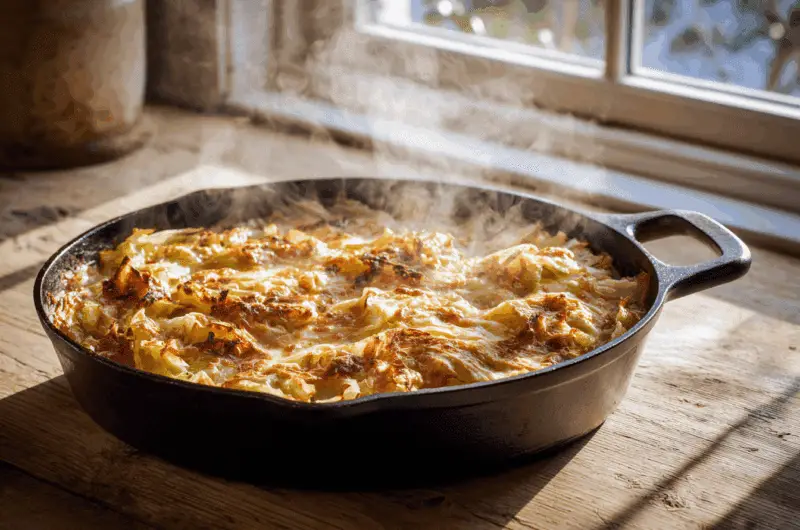
One-Pot Cabbage Casserole
Course: Main CourseCuisine: American6
servings15
minutes30
minutes549
kcalAll the comfort of stuffed cabbage rolls with none of the work – this hearty one-pot meal combines ground beef, rice, cabbage, and cheese in a single skillet that practically cooks itself.
Ingredients
2 lbs ground beef
1 tsp creole seasoning
1 onion, chopped
1 cup rice, uncooked
3 large handfuls of roughly chopped cabbage
1 (8 oz) can tomato sauce
2 cups water
1 (14 oz) can diced tomatoes, undrained
1 cup shredded cheese (Colby Jack)
Directions
- Add ground beef to a large saucepan with a lid and season with Creole seasoning. Brown the beef over medium heat, breaking it up with a wooden spoon as it cooks. Add the chopped onion to the pan and continue cooking until the onions become mostly clear and the beef is fully browned.
- Drain off any excess grease from the pan, leaving just a small amount for flavor. The beef should be nicely browned, and the onions soft and translucent before proceeding to the next step.
- Add the uncooked rice, chopped cabbage, tomato sauce, water, and diced tomatoes with their juice to the pan with the beef and onions. Stir everything together thoroughly to combine all ingredients evenly throughout the mixture.
- Bring the mixture to a rolling boil over medium-high heat, stirring occasionally. Once boiling, reduce the heat to medium-low and cover the pan with a tight-fitting lid.
- Allow the mixture to simmer covered for 20-30 minutes without lifting the lid. This is crucial for proper rice cooking – resist the temptation to check on it too early. The rice needs consistent steam and heat to cook properly.
- After 20 minutes, check to see if the rice is tender and the cabbage is soft. If needed, continue cooking for another 5-10 minutes until both the rice are fully cooked and the cabbage reaches your desired tenderness.
- Remove the pan from the heat and immediately sprinkle the shredded cheese evenly over the top of the casserole. Replace the lid and let it sit for 2-3 minutes to allow the cheese to melt from the residual heat.
- Remove the lid and gently stir the melted cheese into the casserole if desired, or leave it on top for presentation. Serve hot directly from the pot, making sure each serving gets a good mix of all ingredients.
Notes
- Use long-grain white rice for best results – avoid instant rice which will become mushy
- Substitute Rotel diced tomatoes with green chilies for a spicy version
- This recipe doubles easily and freezes well for up to 3 months
- Leftovers reheat beautifully – add a splash of water or broth when reheating to prevent drying
Frequently asked questions
Q: Can I use brown rice instead of white rice?
A: Brown rice requires much longer cooking time and more liquid than white rice. If you want to use brown rice, increase the water to 3 cups and extend the cooking time to 45-50 minutes. The texture will be chewier and nuttier than the original recipe.
Q: How do I prevent the rice from getting mushy?
A: The key is not lifting the lid during the first 20 minutes of cooking. Each time you lift the lid, steam escapes and disrupts the cooking process. Also, make sure to use long-grain white rice rather than short-grain or instant varieties which break down more easily.
Q: Can I make this in a slow cooker instead?
A: Yes, brown the beef and onions first, then transfer everything to a slow cooker. Cook on low for 4-6 hours or high for 2-3 hours. Add the cheese in the last 15 minutes. You may need to reduce the liquid slightly since slow cookers don’t allow for evaporation like stovetop cooking.
Q: What’s the best way to store and reheat leftovers?
A: Store leftovers in the refrigerator for up to 4 days in an airtight container. Reheat individual portions in the microwave or reheat the whole batch in a 300°F oven covered with foil. Add a tablespoon or two of water or broth to prevent drying out during reheating.