

Ever find yourself standing in front of the fridge at noon, wondering what to eat for lunch? The sandwich options feel boring, ordering takeout gets expensive, and cooking something hot seems like too much work. That’s where hummus wraps come in as the perfect solution – they’re fresh, satisfying, and take just minutes to put together with ingredients most people already have at home.
Why hummus wraps work better than regular sandwiches
Regular sandwiches can get soggy sitting in the fridge, and bread often goes stale faster than expected. Hummus wraps solve both problems because tortillas stay flexible longer than bread, and the creamy hummus creates a moisture barrier that keeps everything fresh. Plus, wraps hold way more vegetables than sandwiches without falling apart in your hands.
The protein in hummus also keeps you full longer than basic lunch meat or cheese. A single wrap can pack in multiple servings of vegetables without feeling like you’re eating a salad. These wraps work great for meal prep too – just keep the wet ingredients separate until you’re ready to eat.
The best tortillas make all the difference
Not all tortillas work the same for wrapping. Those small taco-size ones will leave you frustrated, trying to cram everything in. Burrito-size flour tortillas are the way to go because they’re large enough to hold plenty of filling and flexible enough to roll without cracking. Corn tortillas might seem healthier, but they break too easily for wraps.
Room temperature tortillas wrap much easier than cold ones straight from the fridge. If your tortillas feel stiff, warm them in the microwave for 10-15 seconds to make them pliable. Whole wheat tortillas add extra fiber and hold up well, while spinach wraps give you extra vegetables and a fun green color that looks great in lunch photos.
Store-bought vs homemade hummus options
Store-bought hummus saves tons of time and comes in flavors most people wouldn’t think to make at home. Sabra, Tribe, and Hope Foods all make solid options that work perfectly in wraps. Red pepper, garlic, and pine nut versions add extra interest without requiring any extra work. A single container usually has enough for 4-6 wraps depending on how thick you spread it.
Homemade hummus costs less and lets you control the salt and garlic levels exactly how you like them. Making a big batch on Sunday gives you wrap filling for the whole week. The basic recipe needs chickpeas, tahini, lemon juice, garlic, and olive oil – ingredients that keep well in the pantry. Fresh hummus tastes brighter than store-bought and doesn’t have the preservatives.
Smart vegetable combinations that actually taste good
Raw vegetables work best in hummus wraps because they stay crisp and don’t make everything soggy. Cucumbers, carrots, and bell peppers add crunch without overpowering other ingredients. Cherry tomatoes cut in half work better than sliced regular tomatoes because they don’t leak as much juice. Shredded lettuce distributes more evenly than whole leaves that bunch up.
Avocado makes wraps creamy and rich, but it browns quickly once cut. If you’re making wraps ahead of time, add avocado right before eating or squeeze some lemon juice on the slices. Red onion adds bite, but use it sparingly – a few thin slices go a long way. Sprouts and microgreens look fancy but don’t add much nutrition beyond regular lettuce.
Adding protein without making wraps too heavy
Hummus already provides protein, but some people want more substance in their lunch. Chickpeas work perfectly because they match the hummus and add texture. Lightly mash them with a fork so they don’t roll out of the wrap. Black beans, white beans, or lentils work just as well and add different colors to make wraps more interesting.
Grilled chicken, turkey slices, or hard-boiled eggs turn wraps into more substantial meals. Keep cooked proteins simple – plain grilled chicken works better than heavily seasoned meat that might clash with the hummus. Cheese adds richness, but use it sparingly since hummus is already creamy. Feta, goat cheese, or fresh mozzarella complement Mediterranean-style wraps perfectly.
The right way to roll wraps so they don’t fall apart
Spread hummus in the center third of the tortilla, not edge to edge. Leave about two inches clear on all sides so the filling doesn’t squeeze out when you roll. Layer vegetables in one direction rather than scattering them randomly – this makes rolling much easier and creates better distribution in each bite.
Start rolling from the bottom edge, tucking the filling in as you go. Fold the sides in after one complete roll, then continue rolling tightly. The final seam should face down when you set the wrap on a plate. Cut diagonally with a sharp knife to prevent squishing – dull knives will smash everything together.
Making wraps ahead without getting soggy results
Prep all your vegetables on Sunday and store them in separate containers in the fridge. Cut cucumbers, slice carrots into sticks, wash lettuce, and portion out chickpeas. Having everything ready makes assembling wraps quick on busy mornings. Vegetables stay crisp for 3-4 days when stored properly in airtight containers.
Assembled wraps keep for one day in the refrigerator if wrapped tightly in plastic wrap or foil. After that, the vegetables start releasing moisture and the tortilla gets gummy. For longer storage, pack components separately and assemble right before eating. This takes an extra minute but guarantees fresh, crisp wraps every time.
Creative sauce combinations beyond basic hummus
Hot sauce transforms basic hummus wraps into something exciting. Sriracha adds heat and sweetness, while chipotle sauce brings smoky depth. Buffalo sauce works great with chicken-filled wraps, and ranch dressing appeals to people who find plain hummus too unfamiliar. A little goes a long way – too much sauce makes wraps messy.
Pesto creates Italian-inspired wraps that pair well with tomatoes and fresh mozzarella. Tahini sauce doubles down on the Middle Eastern theme and adds extra creaminess. Balsamic glaze brings acidity that brightens all the other ingredients. Mix different sauces with hummus to create custom combinations – garlic hummus with sriracha or red pepper hummus with ranch both work surprisingly well.
Budget-friendly ingredients that don’t compromise taste
Hummus wraps cost much less than deli sandwiches or restaurant lunches. A container of hummus makes multiple wraps, and vegetables like carrots, cucumbers, and lettuce stay affordable year-round. Buying vegetables whole instead of pre-cut saves money – it takes just a few minutes to slice a cucumber or shred lettuce yourself.
Canned chickpeas, frozen vegetables, and dried beans stretch the protein without expensive meat. A bag of carrots costs less than baby carrots and tastes just as good when cut into sticks. Generic store brands of hummus often taste just as good as name brands but cost significantly less. Stock up when tortillas go on sale – they freeze well and thaw quickly.
These wraps prove that quick lunches don’t have to be boring or expensive. With a few basic ingredients and simple techniques, anyone can make satisfying meals that beat both sad desk salads and overpriced takeout. The best part is how easily they adapt to whatever vegetables are on sale or sitting in your fridge waiting to be used up.
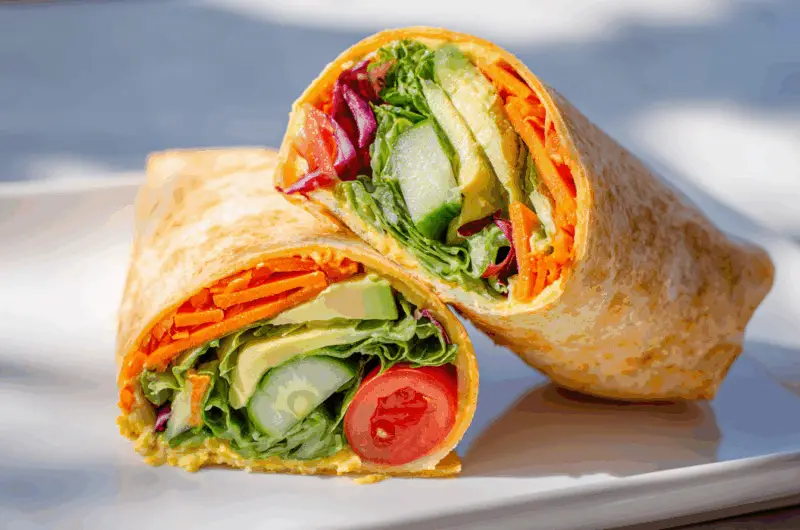
Easy Hummus Veggie Wraps
Course: LunchCuisine: Mediterranean4
servings10
minutes385
kcalFresh and satisfying wraps packed with crisp vegetables, creamy hummus, and your favorite sauce – perfect for quick lunches that beat boring sandwiches.
Ingredients
4 large flour tortillas (burrito size)
1 cup hummus (store-bought or homemade)
1 large cucumber, thinly sliced
16 cherry tomatoes, halved
2 medium carrots, cut into thin sticks
1 ripe avocado, sliced
2 cups mixed greens or baby spinach
1/4 red onion, thinly sliced (optional)
2 tablespoons hot sauce or sriracha
Directions
- Warm the tortillas in the microwave for 10-15 seconds to make them more pliable. Place each tortilla on a clean work surface and spread about 1/4 cup of hummus down the center third of each tortilla. Leave about 2 inches clear on all sides for easier rolling.
- Layer the vegetables over the hummus in this order: cucumber slices, cherry tomato halves, carrot sticks, and red onion if using. Arrange vegetables in one direction rather than scattering them randomly to make rolling easier.
- Add the avocado slices on top of the other vegetables, then drizzle with hot sauce or sriracha to taste. Finish with a handful of mixed greens, distributing them evenly over the other ingredients.
- Starting from the bottom edge, begin rolling the tortilla up tightly, tucking the filling in as you go. After one complete roll, fold in both sides of the tortilla to create an envelope shape.
- Continue rolling tightly until you reach the end of the tortilla. The seam should face down when you place the wrap on a plate. Use gentle but firm pressure to keep everything compact.
- If serving immediately, cut each wrap diagonally in half with a sharp knife using a gentle sawing motion. For storage, wrap tightly in plastic wrap or aluminum foil and refrigerate for up to one day.
Notes
- For best results, eat wraps immediately after assembly to maintain crisp vegetables and prevent sogginess
- If making ahead, prep all vegetables separately and assemble just before eating for maximum freshness
- Pat cherry tomatoes dry with paper towels to reduce excess moisture that can make wraps soggy
- Substitute any vegetables based on preference – bell peppers, sprouts, or roasted red peppers all work well
- For extra protein, add chickpeas, black beans, or grilled chicken to make wraps more filling
Frequently asked questions about hummus wraps
Q: How long do assembled hummus wraps stay fresh in the refrigerator?
A: Assembled wraps stay fresh for about 24 hours when wrapped tightly in plastic wrap or foil. After that, vegetables start releasing moisture and the tortilla becomes gummy. For longer storage, keep components separate and assemble just before eating.
Q: Can I use corn tortillas instead of flour tortillas for these wraps?
A: Corn tortillas don’t work well for wraps because they crack and break when rolled. Stick with large flour tortillas, whole wheat wraps, or spinach tortillas for best results. They’re more flexible and hold ingredients better without tearing.
Q: What’s the best way to prevent wraps from getting soggy?
A: Pat wet vegetables like tomatoes dry with paper towels, avoid adding too much sauce, and keep wet ingredients away from the tortilla. Spreading hummus creates a barrier that helps protect the tortilla from moisture in other ingredients.
Q: Can I freeze hummus wraps for later?
A: Freezing isn’t recommended because vegetables become mushy and lose their crunch when thawed. Instead, prep ingredients ahead of time and store them separately in the refrigerator for quick assembly throughout the week.