

Ever wonder why lentils sit forgotten in the pantry while everyone raves about expensive superfoods? These tiny powerhouses cost about a dollar per pound and pack more protein than most people realize. A single bowl of spiced lentils delivers the same staying power as a restaurant meal for a fraction of the cost. The secret lies in the spicing – transforming bland legumes into something actually worth craving. Most home cooks skip lentils because they seem boring, but the right combination of spices changes everything completely.
Why canned lentils beat dried every time
Weeknight cooking shouldn’t require planning three hours ahead. Canned lentils eliminate the soaking and long cooking times that make dried legumes impractical for busy schedules. Most grocery stores stock several brands, with Goya and Bush’s being reliable options that hold their shape well. The texture difference between canned and freshly cooked lentils becomes negligible once the spices get involved.
Opening a can takes thirty seconds versus the hour-plus commitment for dried lentils. Rinsing and draining removes excess sodium while maintaining the firm texture needed for bowls. The convenience factor makes the difference between actually cooking lentils or grabbing takeout. Smart shoppers stock up when canned lentils go on sale, creating an instant protein source that stores for years.
The spice blend that makes everything work
Plain lentils taste like cardboard, but the right spice combination transforms them completely. Smoked paprika provides depth without heat, while garlic powder adds savory notes that even kids appreciate. A touch of maple syrup balances the earthiness, and veggie bouillon paste creates the umami base that makes people ask for seconds. These aren’t exotic ingredients – most pantries already contain everything needed.
The key lies in letting the spices cook together for several minutes before adding other ingredients. This technique, called blooming, releases essential oils that create complex layers of taste. Bay leaves add subtle depth, while lime juice brightens everything at the end. The entire spice blend costs less than five dollars and seasons multiple batches of lentils.
Building bowls that actually satisfy
Bowl construction determines whether dinner feels complete or leaves everyone hunting for snacks an hour later. Starting with quinoa provides additional protein and creates a substantial base that absorbs the spiced lentil juices. Pre-cooked quinoa from Costco or Trader Joe’s saves time without sacrificing nutrition. The grain-legume combination delivers all essential amino acids naturally.
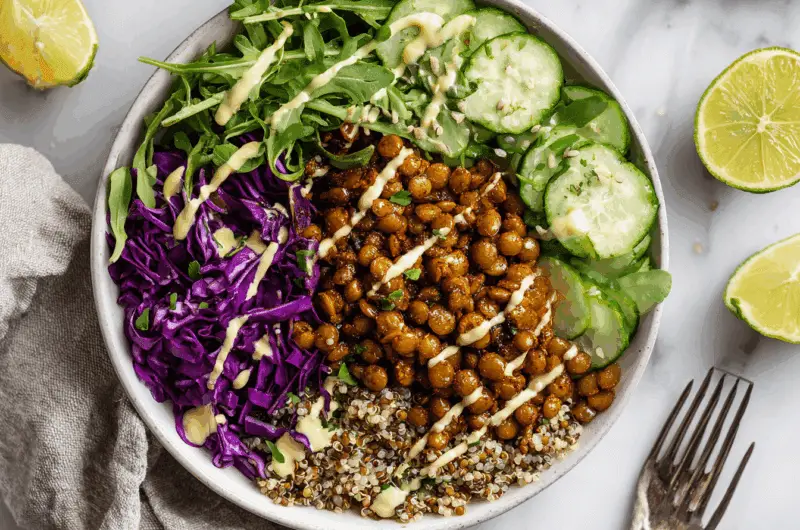
Fresh vegetables add crunch and color that make bowls Instagram-worthy and nutritionally complete. Shredded red cabbage stays crisp for days, while arugula provides peppery contrast to the mild lentils. Cucumber slices contribute cooling freshness, and a drizzle of good dressing pulls everything together. The visual appeal matters – colorful bowls actually taste better to most people.
Meal prep strategies that actually work
Sunday lentil cooking creates weekday meal solutions without much effort. A double batch provides four to five servings that improve in taste as the spices continue melding. Glass containers work better than plastic for storage since lentils can stain lighter materials. Cooked spiced lentils maintain quality for four days refrigerated, making them perfect for grab-and-go lunches.
Smart preppers cook grains separately and store vegetables unwashed until assembly time. This prevents soggy quinoa and wilted greens that ruin the eating experience. Batch preparation means measuring spices once instead of fumbling through the spice cabinet every few days. The assembly process becomes automatic, reducing decision fatigue during busy weeks.
Making kids actually eat lentils
Children detect unfamiliar textures immediately, so introducing lentils requires strategic thinking. Starting with familiar accompaniments like mild cheese or ranch dressing helps ease the transition. The spice blend in this recipe stays gentle enough for sensitive palates while providing enough interest for adults. Letting kids build their own bowls increases acceptance rates significantly.
Visual presentation matters more with children than adults realize. Arranging ingredients in separate sections rather than mixing everything together reduces the scary factor of new foods. Small portions of lentils alongside preferred foods work better than large servings that seem overwhelming. Success often comes from repeated exposure rather than forcing large quantities initially.
Cost comparison with restaurant bowls
Restaurant grain bowls typically cost twelve to sixteen dollars and often leave diners still hungry afterward. Homemade versions deliver larger portions and better customization for roughly three dollars per serving. A single bag of dried lentils creates eight to ten meal servings, while canned versions still beat restaurant prices substantially. The math becomes especially compelling for families feeding multiple people.
Popular chains like Sweetgreen and Chipotle charge premium prices for ingredients that cost pennies to prepare at home. Lentil bowls provide the same satisfaction as meat-based meals without the higher grocery bills. The protein content matches or exceeds many restaurant options while costing significantly less. Budget-conscious families can eat well without sacrificing nutrition or taste.
Storage tips that prevent waste
Proper storage extends the life of prepared lentils and prevents the mushy texture that ruins leftover appeal. Glass containers with tight-fitting lids prevent absorption of refrigerator odors while maintaining optimal texture. Separating wet and dry ingredients until serving time keeps everything fresh longer. Cold lentils taste just as good as warm ones, making them perfect for packed lunches.
Freezing cooked lentils works surprisingly well for up to three months, though texture changes slightly after thawing. Portion control becomes easier with individual containers that eliminate guesswork about serving sizes. Adding fresh lime juice before eating revives any lentils that seem tired after storage. The convenience of having protein ready to eat makes sticking to homemade meals much easier.
Equipment that makes the difference
Basic kitchen tools handle lentil cooking perfectly well, but certain equipment makes the process smoother. A medium saucepan with a heavy bottom prevents sticking and ensures even heating throughout the cooking process. Sharp knives for vegetable prep speed up assembly time considerably. A fine-mesh strainer works better than a colander for rinsing small lentils without losing any down the drain.
Instant Pot enthusiasts can adapt this recipe easily, though stovetop cooking provides better control over final texture. Pressure cooking tends to make lentils mushier, which works fine for some applications but less ideal for bowls requiring distinct textures. Good measuring spoons ensure consistent spicing between batches. The investment in basic tools pays off through years of easy meal preparation.
Variations that prevent boredom
The base lentil recipe adapts to countless variations that keep meals interesting throughout the week. Mediterranean versions add olives, feta, and oregano for completely different taste profiles. Mexican-inspired bowls benefit from cumin, chili powder, and fresh cilantro. Indian variations incorporate curry powder, ginger, and coconut milk for warming comfort food appeal.
Seasonal vegetables change the character of bowls without requiring new cooking skills. Summer versions shine with fresh tomatoes, basil, and zucchini. Winter adaptations work well with roasted root vegetables, kale, and heartier grains. The flexibility means never getting bored with the same combination while maintaining the budget-friendly foundation that makes lentil bowls practical for regular rotation.
Spiced lentil bowls solve the eternal problem of eating well without spending a fortune or hours in the kitchen. The combination of affordability, nutrition, and genuine satisfaction makes them perfect for anyone tired of choosing between convenience and quality. Once the basic technique becomes automatic, countless variations ensure meals never get boring while grocery budgets stay reasonable.
Mediterranean Spiced Lentil Bowls
Course: DinnerCuisine: Mediterranean4
servings15
minutes15
minutes320
kcalTransform humble lentils into satisfying bowls packed with smoky spices, fresh vegetables, and protein that keeps you full for hours.
Ingredients
2 cans (15 oz each) brown or green lentils, drained and rinsed
2 tablespoons extra virgin olive oil, divided
1 teaspoon veggie bouillon paste
1 tablespoon maple syrup
1 teaspoon garlic powder
1 teaspoon smoked paprika
1 bay leaf
2 tablespoons fresh lime juice
Salt and black pepper to taste
2 cups cooked quinoa
2 cups shredded red cabbage
2 cups fresh arugula
1 cucumber, sliced
Vegan caesar dressing or dressing of choice
Directions
- Heat 1 tablespoon olive oil in a medium saucepan over medium-high heat. Add the drained lentils and cook for 1-2 minutes, stirring to coat them with oil. This helps the spices adhere better and creates more complex layers of taste.
- Add veggie bouillon paste, maple syrup, garlic powder, smoked paprika, and bay leaf to the lentils. Stir well to distribute spices evenly. Cook for 8-10 minutes over medium heat, stirring occasionally to prevent sticking and allow the spices to bloom.
- Stir in lime juice and remaining 1 tablespoon olive oil. Continue cooking for 2-3 minutes until the lime juice is absorbed and lentils are heated through. Season with salt and pepper to taste, then remove bay leaf before serving.
- Divide cooked quinoa among four bowls, creating a substantial base that will absorb the spiced lentil juices. Arrange shredded cabbage, arugula, and cucumber slices in separate sections around each bowl for visual appeal and varied textures.
- Top each bowl with a generous serving of warm spiced lentils, allowing them to nestle into the quinoa base. Drizzle with your preferred dressing, starting with a small amount since you can always add more. Serve immediately while lentils are still warm.
Notes
- Canned lentils work best for this recipe as they hold their shape better than most dried varieties and save significant cooking time
- Cooked lentils store in the refrigerator for up to 4 days and can be reheated in the microwave or served cold over salads
- For meal prep, store components separately and assemble just before eating to maintain optimal textures and prevent wilting
- This recipe easily doubles or triples for larger batches, making it perfect for weekly meal preparation
Frequently asked questions
Q: Can I use dried lentils instead of canned?
A: Yes, but you’ll need to cook 1 cup dried lentils in 3 cups water for 20-25 minutes first. Canned lentils are more convenient and hold their shape better for bowl applications.
Q: How long do these spiced lentils keep in the refrigerator?
A: Cooked spiced lentils stay fresh for up to 4 days when stored in airtight containers. They actually taste better the next day as the spices continue to meld together.
Q: What can I substitute for veggie bouillon paste?
A: Use 1 vegetable bouillon cube dissolved in 1 tablespoon warm water, or add an extra 1/4 teaspoon salt plus 1/2 teaspoon onion powder for similar umami depth.
Q: Are these bowls filling enough for a main meal?
A: Absolutely! The combination of lentils and quinoa provides complete protein, while the fiber content keeps you satisfied for hours – much longer than typical grain bowls from restaurants.