

Sunday mornings were made for pancakes, but what if you’re trying to cut back on sugar without sacrificing the fluffy goodness everyone craves? These naturally sweet banana pancakes prove you don’t need added sugar to create breakfast magic. The secret lies in using perfectly ripe bananas and a few simple ingredients you probably already have in your kitchen!
Why ripe bananas make all the difference
Those brown-spotted bananas sitting on your counter aren’t past their prime – they’re actually perfect for pancakes. The darker the spots, the more natural sugars have developed inside. When bananas ripen, their starches convert to sugars, creating that sweet taste without needing any additional sweeteners. Most people throw away overripe bananas, but smart home cooks know these are pancake gold.
Professional bakers understand that banana sweetness peaks when the skin shows plenty of brown spots. The fruit becomes softer, making it easier to mash completely, which prevents lumpy pancake batter. If your bananas aren’t quite ripe enough, try microwaving them for 15-second intervals until they soften – just let them cool before mixing with eggs to avoid scrambling.
The yogurt secret for extra fluffiness
Adding yogurt to pancake batter might seem unusual, but it’s a game-changer for texture. The acidity in yogurt reacts with baking powder to create extra lift, resulting in pancakes that are incredibly light and airy. Plain yogurt works best because it doesn’t compete with the banana sweetness. Greek yogurt can work too, though you might need to thin the batter with a splash of milk.
The protein in yogurt also helps create a tender crumb structure that stays moist longer than traditional pancakes. This yogurt technique has been used by professional chefs for years, and it’s especially effective in sugar-free recipes where you need every advantage for texture and taste.
One bowl mixing keeps things simple
Forget the complicated mixing methods that require separate bowls for wet and dry ingredients. This recipe streamlines the process by combining everything in one large bowl. Start by mashing your bananas with a fork right in the mixing bowl, then add the wet ingredients before gently stirring in the flour and leavening agents. Less cleanup means more time enjoying your pancakes.
The key is not to overmix once you add the flour. A few lumps are perfectly fine and actually preferred – overmixing develops the gluten too much, leading to tough pancakes. Stop stirring as soon as you no longer see streaks of flour. This gentle mixing method ensures tender, fluffy results every time.
Perfect pancake cooking temperature matters
Medium heat is crucial for these thick pancakes. Too high and they’ll brown before cooking through completely. Too low and they won’t develop that golden crust everyone loves. Test your pan temperature by sprinkling a few drops of water on the surface – they should sizzle and evaporate within seconds. A properly heated non-stick pan or well-seasoned cast iron works best.
Since these pancakes are thicker than regular batter, they need slightly longer cooking time. Watch for bubbles to form on the surface and the edges to look set before flipping. The first pancake is often a test – adjust your heat accordingly. Don’t press down with your spatula after flipping, as this deflates the fluffy texture you’ve worked to achieve.
Smart ingredient substitutions that work
Running low on certain ingredients doesn’t mean skipping pancakes. Milk can be replaced with any non-dairy alternative – almond, oat, or even coconut milk work well. Buttermilk creates extra tang and fluffiness if you have it on hand. For flour, whole wheat adds nuttiness, though the pancakes will be slightly denser. All-purpose flour gives the lightest results.
Butter adds richness, but vegetable oil or melted coconut oil work as substitutes. Some bakers use unsweetened applesauce for extra moisture. The vanilla extract can be swapped for almond extract for a different twist, though use only half the amount since almond extract is stronger. These flexible substitutions make this recipe adaptable to what’s in your pantry.
Baking powder freshness affects results
Expired baking powder is the enemy of fluffy pancakes. Most people don’t realize baking powder loses potency after about 18 months. Test yours by mixing a teaspoon with hot water – it should bubble vigorously. If the reaction is weak, your pancakes will be flat and dense. Fresh baking powder creates the lift these sugar-free pancakes need to compete with their sweetened counterparts.
Some recipes call for both baking powder and baking soda for extra lift. The combination works especially well with acidic ingredients like yogurt. Store baking powder in a cool, dry place and replace it regularly for best results. Professional bakers mark the opening date on their containers to track freshness.
Make-ahead and freezing tips
These pancakes freeze beautifully for busy mornings. Cool them completely before placing in freezer bags with parchment paper between layers. They’ll stay fresh for up to three months. Reheat directly from frozen in the toaster or microwave for 30-60 seconds. The texture remains remarkably close to fresh-made, making them perfect for meal prep.
For fresh pancakes later in the day, the batter can sit in the refrigerator for up to 4 hours before cooking. Give it a gentle stir before using, as ingredients may separate slightly. Cooked pancakes stay good in the fridge for 4-5 days, though they’re definitely best eaten fresh and warm from the pan.
Creative serving suggestions beyond syrup
While maple syrup is the classic choice, these naturally sweet pancakes pair well with many toppings. Fresh berries add tartness that complements the banana sweetness. Sliced almonds or chopped walnuts provide crunch. Greek yogurt with a drizzle of honey creates a protein-rich topping. Even a simple dusting of cinnamon enhances the banana taste without adding sugar.
For special occasions, try warming some peanut butter until spreadable, or make a simple berry compote by heating frozen berries until they release their juices. Whipped cream lightened with a splash of vanilla makes an indulgent topping. The natural sweetness of these pancakes means you need less of any added topping to feel satisfied.
Common mistakes to avoid
The biggest mistake is using underripe bananas, which won’t provide enough natural sweetness and are harder to mash smoothly. Another common error is overmixing the batter, which develops too much gluten and creates tough pancakes. Some cooks make their pan too hot, burning the outside while leaving the center undercooked. Patience with medium heat produces better results.
Don’t skip the salt – it enhances the banana sweetness and balances all the other elements. Using too much baking powder creates a metallic taste, while too little results in flat pancakes. Measure carefully and check expiration dates. Finally, resist the urge to flip too early; wait for those surface bubbles and set edges for the best texture.
These naturally sweet banana pancakes prove that cutting sugar doesn’t mean sacrificing weekend breakfast traditions. With ripe bananas providing all the sweetness needed, plus yogurt for extra fluffiness, these pancakes satisfy both health-conscious eaters and pancake purists. The simple one-bowl method makes them practical for regular rotation, while their freezer-friendly nature means pancake mornings can happen anytime.
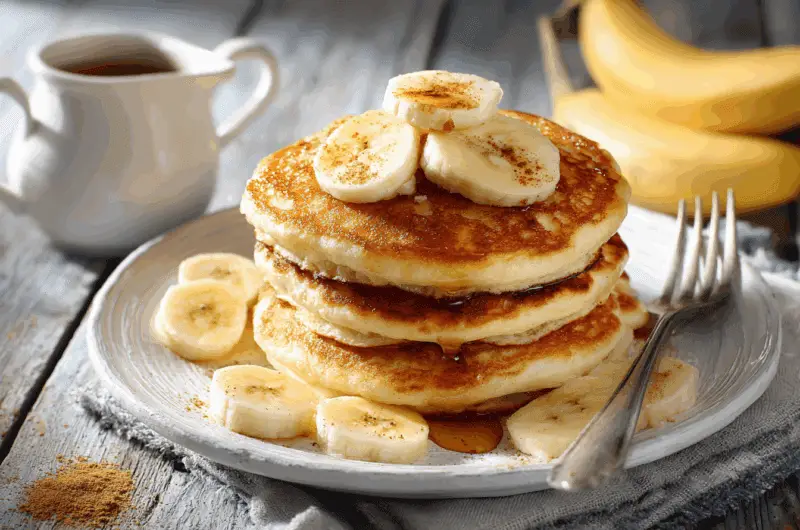
Sugar-Free Fluffy Banana Pancakes
Course: BreakfastCuisine: American3
servings10
minutes10
minutes180
kcalNaturally sweet pancakes made with ripe bananas and yogurt for incredible fluffiness without any added sugar.
Ingredients
2 very ripe bananas (3/4 cup mashed)
3/4 cup plain yogurt
2 tablespoons unsalted butter, melted
1 large egg
1 teaspoon vanilla extract
1/4 teaspoon fine salt
1 cup all-purpose flour
1 teaspoon baking powder
Oil for cooking
Directions
- In a large bowl, mash the peeled bananas with a fork until you get about 3/4 cup of mashed bananas. A few small lumps are fine, but try to get them mostly smooth. The riper your bananas, the easier this will be.
- Add the plain yogurt and melted butter to the mashed bananas and stir until well combined. The mixture should be creamy and uniform in color.
- Add the egg, vanilla extract, and salt to the bowl. Stir everything together until the egg is completely incorporated and the mixture is smooth. Make sure no streaks of egg white remain visible.
- Add the flour to the bowl and evenly sprinkle the baking powder on top. Gently stir until just combined, being careful not to overmix. The batter should be thick and may have a few small lumps, which is perfectly fine.
- Heat a large frying pan or griddle over medium heat and lightly coat with oil. Test the temperature by sprinkling a few drops of water on the surface – they should sizzle immediately.
- Using about 3 tablespoons of batter for each pancake, pour the batter into the pan. Since the batter is thick, use a spoon to spread it into round shapes. The pancakes won’t spread much on their own.
- Cook until the pancakes puff up slightly and bubbles form on the surface, about 2-3 minutes. Check the bottom with a spatula to ensure they’re golden brown before flipping. Don’t flip too early or they may fall apart.
- Flip the pancakes and cook for another 1-2 minutes until golden brown on both sides. Repeat with remaining batter, adding a little more oil to the pan between batches. Serve immediately with fresh fruit and maple syrup if desired.
Notes
- Use very ripe bananas with brown spots for maximum sweetness and easier mashing
- Greek yogurt can be substituted but may make the batter thicker – add 1-2 tablespoons milk if needed
- Pancakes can be frozen for up to 3 months and reheated in toaster or microwave
- Don’t overmix the batter as this will make the pancakes tough
Frequently asked questions
Q: Can I make these pancakes without eggs?
A: Unfortunately, eggs are essential for the structure and fluffiness of these pancakes. The egg helps bind everything together and creates the light texture. Egg substitutes like flax eggs don’t work as well in this particular recipe.
Q: How ripe should my bananas be for the best results?
A: Look for bananas with plenty of brown spots on the peel – the more spots, the sweeter they’ll be. Avoid completely black bananas, but don’t use yellow bananas without spots as they won’t provide enough natural sweetness.
Q: Why are my pancakes not fluffy even though I followed the recipe?
A: Check that your baking powder is fresh (it should bubble when mixed with hot water). Also make sure you’re not overmixing the batter and that your pan is at the right temperature – medium heat works best.
Q: Can I add chocolate chips or blueberries to these pancakes?
A: Absolutely! Fold in about 1/2 cup of add-ins after mixing in the flour but before cooking. Fresh or frozen berries work great, and mini chocolate chips distribute more evenly than regular sized ones.