

A hamburger in the 1950s would look almost unrecognizable compared to the towering, loaded burgers we see on menus today. Back then, a burger was thin, simple, and cooked fast on a hot griddle with butter or lard. The patties were smashed flat, the toppings were basic, and the whole thing was about a third the size of what we eat now. So what exactly made those old-school burgers so good, and how can we bring that style back into our own kitchens?
Drive-ins made burgers a national obsession
Before the drive-thru lanes we know today, there were drive-in restaurants. People would pull up in their cars, place an order, and a carhop would bring food right to the window. After World War II, cars were everywhere, and so were drive-ins. This setup was perfect for quick meals, and burgers became the star of the show. It was a new, fun way to eat, and it turned hamburgers into something truly American. The whole experience — the car, the tray clipped to the window, the simple burger — became iconic.
McDonald’s and In-N-Out had already opened their doors by the late 1940s. Burger King showed up in 1954. These chains grew fast because the demand was huge. Millions of Americans were lining up at these spots just to grab a quick, cheap burger. The 1950s burger boom was real, and it changed the way the country ate forever. Without those early drive-ins, the modern fast food world might look completely different.
Home cooks kept their burger recipes dead simple
Restaurants weren’t the only places serving burgers in the 1950s. Plenty of people made them right at home, and the recipes were about as straightforward as it gets. Most home cooks used just ground chuck, butter, onions, and a pinch of salt and pepper. There were no eggs, no breadcrumbs, no fancy binders or mix-ins like many of us use today. The meat did the heavy lifting all on its own. This simple approach actually let the beef shine, which is something we’ve kind of lost over the years.
If shaping patties by hand was too messy, there was even a gadget for that. The Bun-Burger Patty Maker looked like a little burger-shaped press that closed around the ground meat and formed a perfect circle. It was shaped like a bun, which is a pretty clever design. Once the patty was formed, it went straight into a hot skillet greased with butter or margarine. No overthinking, no complicated steps. That’s the beauty of 1950s cooking — it was fast and practical.
The beef was fresh and never frozen
Here’s something that might surprise a lot of people. In the early 1950s, most of the beef used for burgers was grass-fed and pretty fresh. Restaurants didn’t get shipments of frozen patties from some warehouse across the country. The meat went from the cow to the grill with very little time in between. White Castle, which is often considered the world’s first burger chain, actually ground its meat on-site so customers could see exactly how fresh it was. That kind of transparency helped build trust early on.
Even McDonald’s started out using fresh patties during the 1950s. It wasn’t until the franchise grew much larger that they switched to frozen beef to keep up with demand. Interestingly, McDonald’s went back to fresh beef for some of its popular burgers in 2018. It’s almost like they were taking a page from their own history. The mass production of corn-fed cattle and feedlots came later, largely because the burger boom created so much demand for ground beef.
Butter and lard were the go-to cooking fats
If someone in the 1950s was about to cook a burger, the first thing hitting the pan was a generous amount of butter or lard. That was just standard practice back then. It didn’t matter if the beef itself was already fatty — extra fat in the pan was part of the process. Some home cooks even kept a tin of bacon grease on the stove and used it to fry everything from vegetables to steaks to burgers. That little tin was basically a kitchen staple for most families in the decade.
The result was a burger that had a rich, almost crispy exterior from all that fat sizzling in the pan. It gave the patty an incredible crust that’s hard to replicate with cooking spray or a light drizzle of oil. Modern recipes tend to shy away from this much added fat, but the truth is, it made a real difference in how those burgers tasted. If someone wants an authentic 1950s burger at home, using butter in a cast iron skillet is a great first step toward getting that old-school result.
Smashing the patty thin was the real secret
Forget those thick, steakhouse-style burgers. In the 1950s, the patties were thin. Really thin. A ball of ground beef got placed on a screaming-hot flat griddle and then pressed flat with a spatula. This is what people now call a “smashburger,” and it’s actually a technique that dates back to the mid-20th century. The reason was practical — thin patties cooked much faster, which was essential when dozens of customers were waiting in line at a drive-in or diner counter.
But speed wasn’t the only benefit. Smashing the beef flat created a crispy, caramelized crust on the outside while keeping the inside moist. Burger expert George Motz has explained this technique in detail, pointing out that the Maillard reaction — the browning that happens when meat hits a hot surface — is what gives smashburgers their incredible taste. A modern restaurant called Hackensack 1950s Burger still uses this exact method today, pressing balls of beef flat with two large spatulas on a griddle. The edges come out perfectly crisp every single time.
Onions went on the patty while it cooked
Right after smashing the beef flat, the next step was almost always the same — sliced onions went directly on top of the patty while it was still cooking. This wasn’t a garnish added at the end. The onions cooked right along with the meat, getting soft and slightly caramelized from the heat of the griddle. Every burger joint in the 1950s, from small diners to big chains, seemed to follow this same routine. Even at home, cooks were placing onions on their patties as they fried.
White Castle, which helped make burgers popular in America starting in 1921, used a method where diced onions were placed under the meat on the grill. The steam from the onions actually helped cook the patty. Even if a customer didn’t order onions, the grill was so loaded with them that every burger picked up some of that taste anyway. Raw onion on a burger is actually a more modern idea. Back in the ’50s, cooked onions were the way to go.
The toppings were classic and no-nonsense
These days, people put everything from peanut butter to pineapple on their burgers. In the 1950s, toppings were far more restrained. A standard burger came with mustard, ketchup, pickles, onions, and sometimes a slice of cheese. That was pretty much it. There was no sriracha mayo, no avocado, no bacon jam. The simplicity was part of the appeal. The burger itself was the main event, and the toppings were there to support it — not steal the spotlight.
That said, the 1950s did see some early experimentation. Good Housekeeping magazine started suggesting creative burger toppings as early as the 1940s, with ideas like fried eggs, flavored butters, chives, olives, horseradish, and even apple slices showing up through the ’50s. So while most people stuck to the basics, there were a few adventurous cooks pushing the boundaries even back then. It’s fun to think that today’s wild burger toppings actually have roots going back over 70 years.
Everything cost almost nothing at McDonald’s
Want to know how cheap burgers were in the 1950s? When Ray Kroc opened his first McDonald’s franchise in 1955, a hamburger cost 15 cents. A cheeseburger was 19 cents. Fries and a drink were each 10 cents. The entire menu — all nine items — could be bought for just $1.14. That left plenty of change from a $2 bill. The menu was tiny compared to what McDonald’s offers now, with just burgers, fries, and a handful of drinks.
Of course, the portions were smaller too. The original burger was only 3.7 ounces total, including the bun. Fries were 2.4 ounces, and a soda was just 7 ounces — less than half the size of a small drink today. When adjusted for inflation, that 15-cent hamburger would be about $1.80 now. The basic McDonald’s hamburger today actually costs less than that in many places, so in some ways, we’re getting a better deal. But those tiny, simple 1950s burgers had a charm of their own.
The Friday burger was a clever meatless twist
Not every 1950s burger was made with beef. There was a creative spin called the “Friday burger” that swapped out the meat patty for canned tuna. The name likely comes from the Roman Catholic tradition of not eating meat on Fridays. Fish was allowed, so families would eat things like tuna casseroles, fish sticks, or baked salmon. Someone eventually had the bright idea to shape canned tuna into a patty, coat it with breadcrumbs, and serve it on a toasted hamburger bun instead.
The Friday burger was dressed with Miracle Whip instead of mayonnaise, which was a hugely popular condiment in the 1950s. Celery salt added a subtle, grassy note without needing fresh celery — fitting right into the decade’s love of convenience. On top went onion rings, dill pickles, and a slice of American cheese. It was basically a retro version of a tuna melt, and honestly, it still sounds pretty good by today’s standards. It’s the kind of simple, satisfying recipe that deserves a comeback.
The 1950s burger was all about simplicity, speed, and great taste from basic ingredients. Whether it was a thin smashburger sizzling on a buttered griddle or a clever tuna Friday burger on a toasted bun, the approach was the same — keep it simple and make it good. Trying any of these old-school techniques at home is a fun way to step back in time without needing a time machine. Sometimes the best recipes are the ones that have been around for decades.
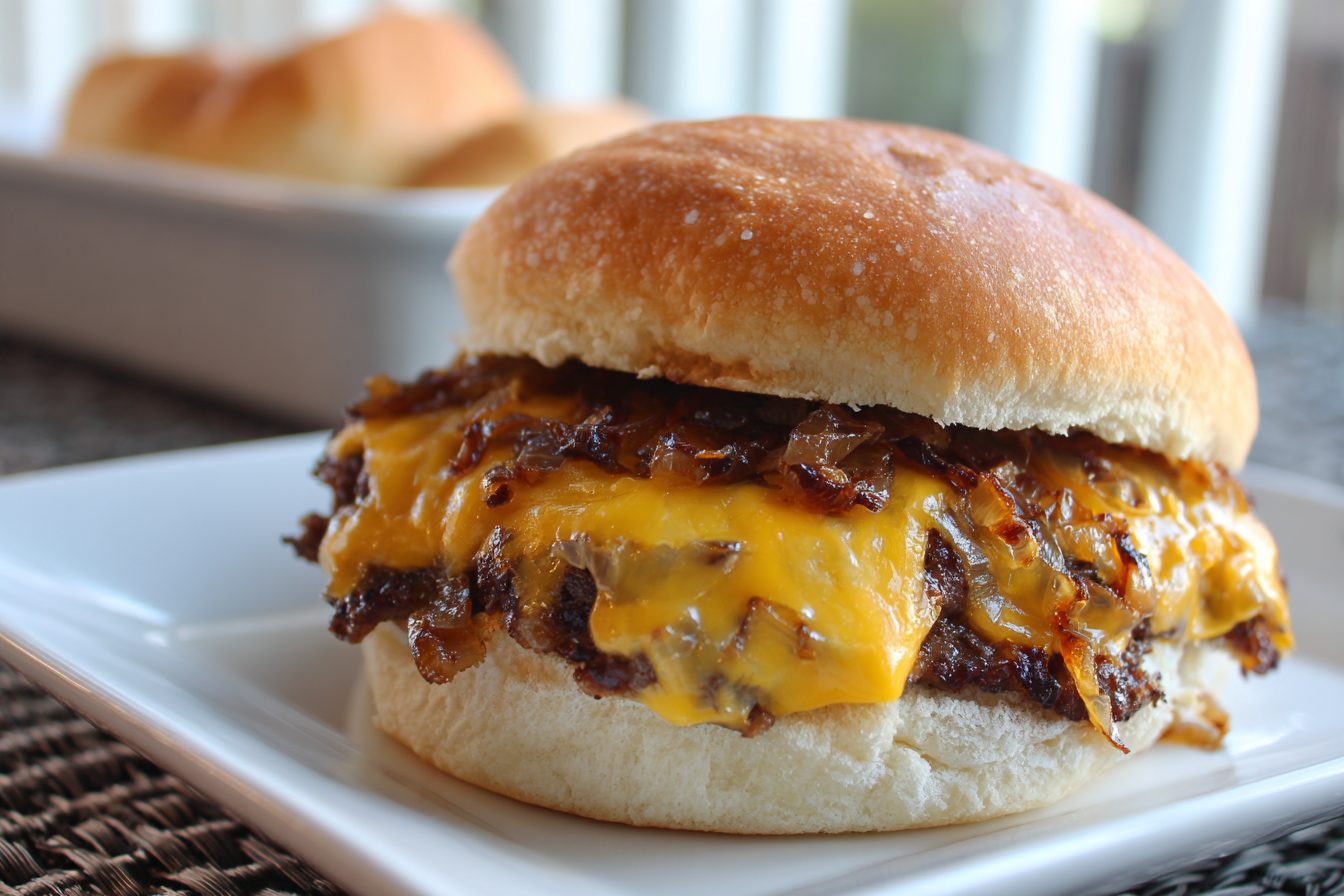
Classic 1950s Smashburger
Course: DinnerCuisine: American4
servings10
minutes10
minutes420
kcalA thin, crispy-edged burger just like they made at the old drive-ins — simple, fast, and incredibly good.
Ingredients
1 pound ground chuck (80/20 blend)
4 soft hamburger buns
2 tablespoons unsalted butter
1 medium yellow onion, thinly sliced
4 slices American cheese
Kosher salt and black pepper to taste
Yellow mustard for serving
Ketchup for serving
Dill pickle slices for serving
Directions
- Divide the ground chuck into 4 equal portions, roughly 4 ounces each. Gently roll each portion into a loose ball — do not pack the meat tightly or the burgers will turn out dense. Set the balls aside on a plate or cutting board.
- Heat a cast iron skillet or flat griddle over high heat for at least 3 minutes until it is very hot. Add 1 tablespoon of butter to the pan and let it melt and start to sizzle. The pan needs to be screaming hot to get that signature crust on the patty.
- Place 2 beef balls onto the hot skillet, leaving space between them. Immediately press each ball flat with a sturdy metal spatula or burger press, pushing down firmly until the patty is about ¼ inch thick. Season the top of each smashed patty generously with salt and pepper.
- Place a small pile of thinly sliced onion directly on top of each patty while it cooks. Press the onions gently into the meat with the spatula so they stick. Let the patties cook without moving them for about 2 to 3 minutes, until the edges turn deep brown and crispy.
- Use the spatula to carefully flip each patty, onion side down. The crust on the bottom should be dark golden brown. Place a slice of American cheese on top of each patty immediately after flipping. Let the burgers cook for another 1 to 2 minutes until the cheese is fully melted.
- While the burgers cook, lightly toast the hamburger buns in a separate dry skillet or under the broiler for about 1 minute. Watch them closely so they don’t burn. Toasted buns hold up much better against the juicy patty and keep the burger from getting soggy.
- Repeat the cooking process with the remaining 2 beef balls, adding the second tablespoon of butter to the pan before starting. Make sure the skillet is back up to high heat before adding the next batch. Season, add onions, and top with cheese just like the first batch.
- Assemble each burger by spreading yellow mustard and ketchup on the bottom bun. Place the cheesy, onion-topped patty on the bun and add dill pickle slices on top. Close with the top bun and serve immediately while everything is still hot and the cheese is gooey.
Notes
- Ground chuck with an 80/20 lean-to-fat ratio works best for smashburgers because the fat keeps the thin patty moist and adds to the crispy crust.
- Do not press the patty more than once — pressing it after the initial smash squeezes out the juices and dries out the meat.
- A cast iron skillet gives the best results because it retains high heat evenly, but a flat steel griddle also works great.
- For an even more authentic 1950s experience, skip the ketchup and mustard on the bun and instead add a thin spread of softened butter or Miracle Whip.
Frequently Asked Questions
Q: What makes a smashburger different from a regular burger?
A: A smashburger starts as a ball of ground beef that gets pressed flat on a very hot griddle or skillet. The thin patty develops a crispy, caramelized crust on the outside while staying moist inside. Regular burgers are usually thicker and shaped by hand before cooking, which gives them a different texture and takes longer to cook through.
Q: Can I use a nonstick pan instead of cast iron?
A: Cast iron or a steel griddle works best because they hold high heat really well, which is the key to getting that crispy crust. A nonstick pan won’t get hot enough and the patty won’t develop the same browned edges. If cast iron is all that’s available, make sure to preheat it for several minutes on high heat before adding the butter and beef.
Q: Why did 1950s cooks put onions on the patty while it was cooking?
A: Placing sliced or diced onions directly on the patty while it cooked allowed the onions to steam and caramelize from the heat of the meat and griddle. This infused the burger with a sweet, savory taste that raw onions simply can’t replicate. White Castle popularized this technique in the 1920s, and it became standard practice at diners and home kitchens throughout the 1950s.
Q: What kind of cheese is best for a 1950s-style burger?
A: American cheese is the most authentic choice for a classic 1950s burger. It melts quickly and evenly over the thin patty, creating that gooey, slightly tangy layer that pairs perfectly with mustard and pickles. Other cheeses work fine for personal preference, but American cheese gives the most true-to-era result.