

Walk into any diner in the 1970s and you’d likely find “Shit on a Shingle” on the menu, though most places called it chipped beef on toast. This hearty breakfast dish fed countless families during tough times and kept soldiers going through long military campaigns. Today, most people under 40 have never even heard of it, let alone tasted the creamy, salty goodness that made it a household staple for decades.
Why this breakfast disappeared from most tables
Chipped beef on toast became a casualty of changing food trends and modern convenience culture. The dish requires making a white sauce from scratch, something that seemed unnecessary when microwaveable breakfast options flooded grocery stores in the 1990s. Younger generations grew up with instant oatmeal packets and toaster pastries, never learning the simple satisfaction of stirring flour into butter and milk to create something hearty and filling.
The military connection also hurt its popularity among civilians. Many veterans associated the dish with mess hall food, and the crude nickname didn’t help its reputation in polite dining rooms. As breakfast became more about speed than substance, this 15-minute recipe got pushed aside for grab-and-go options that required zero cooking skills.
What made the original so satisfying
The magic happened in the contrast between salty, chewy beef and smooth, creamy white sauce soaking into crispy toast. Dried chipped beef, sold in small glass jars, had an intense saltiness that cut through the mild sauce perfectly. Each bite delivered protein, carbs, and enough richness to keep someone full until lunch. The dish worked because it transformed simple pantry ingredients into something genuinely comforting.
Unlike today’s breakfast options loaded with sugar, this meal provided steady energy without the crash. The white sauce, made with real butter and milk, created a coating that stuck to your ribs. Toast became the perfect vehicle, absorbing just enough sauce while maintaining some texture. Many families served it alongside scrambled eggs or hash browns for an even heartier start to the day.
Finding the right ingredients today
Armour and Hormel still make dried chipped beef, though most grocery stores stock it in the canned meat aisle rather than prominently displaying it. The small glass jars contain thin slices of salted, dried beef that look almost like jerky but rehydrate beautifully in cream sauce. Some stores carry it near the spam and deviled ham, while others place it with specialty or ethnic foods.
If local stores don’t carry it, online retailers offer the same brands that fed previous generations. The beef keeps for months unopened, making it perfect for stocking up when found. Some people substitute thinly sliced deli roast beef or even leftover ham, but the authentic experience comes from that specific salty, chewy texture of properly dried chipped beef that dissolves slightly into the sauce.
Making perfect white sauce every time
The foundation of great chipped beef on toast lies in mastering a basic white sauce, also called béchamel. Start with equal parts butter and flour, cooking them together until the mixture smells nutty but hasn’t browned. This eliminates the raw flour taste that ruins many homemade sauces. Gradually whisking in cold milk prevents lumps from forming and creates that smooth, velvety texture everyone remembers.
Temperature control makes the difference between success and disaster. Keep the heat at medium-low and add milk slowly, whisking constantly until each addition fully incorporates. The sauce should coat the back of a spoon when finished. Season carefully since the chipped beef adds plenty of salt already. A pinch of white pepper and maybe some garlic powder elevates the basic recipe without overwhelming the beef.
Preparing the beef properly
Straight from the jar, chipped beef can taste overwhelmingly salty and tough. Many cooks skip the crucial step of rinsing and soaking, which removes excess salt while softening the meat. Separate the slices under cool running water, then let them sit in a bowl of water for 5-10 minutes. This simple step transforms jerky-like pieces into tender, flavorful additions to the sauce.
After soaking, drain the beef thoroughly and tear larger pieces into bite-sized strips. Some recipes call for chopping with a knife, but tearing creates more surface area for the sauce to cling to. Add the prepared beef to the finished white sauce and let it simmer gently for just a few minutes. Overcooking makes the beef tough again, while undercooking leaves it chewy.
Choosing the right bread
Thick-cut white bread, toasted until golden brown, provides the ideal base for supporting the heavy sauce without falling apart. Wonder Bread and similar soft white breads work perfectly, though they need proper toasting to maintain structure. The toast should feel sturdy enough to hold up under the weight of sauce and beef while still being easy to cut with a fork.
Some families preferred Texas toast or thick-cut sourdough for extra substance. The key is achieving the right balance between crispy exterior and tender interior that absorbs sauce without becoming soggy. Butter the toast lightly while warm, then immediately top with the hot chipped beef mixture. The residual heat helps everything meld together perfectly.
Variations that became family traditions
Regional differences created interesting twists on the basic recipe. Some Southern cooks added a dash of Worcestershire sauce or hot sauce to the white sauce for extra depth. Midwest families often stirred in frozen peas during the last few minutes of cooking, adding color and sweetness that balanced the salty beef. Pennsylvania Dutch variations included hard-boiled egg slices as garnish.
Military cooks sometimes stretched the dish by adding more vegetables or serving it over biscuits instead of toast. Navy versions might include a splash of sherry or white wine in the sauce, while Army recipes stayed strictly utilitarian. These adaptations kept the basic concept alive while reflecting local tastes and available ingredients in different regions and institutions.
Serving suggestions and timing
Chipped beef on toast tastes best served immediately while the sauce is hot and the toast still has some crispness. The dish doesn’t hold well, as the toast continues absorbing sauce and becomes soggy within minutes. Prepare everything just before serving, with the toast popping up as the sauce reaches perfect consistency. This timing ensures each bite delivers the intended contrast of textures.
Traditional accompaniments include black coffee, fresh orange juice, and simple sides like hash browns or grits. The rich, creamy main dish pairs well with acidic elements that cut through the heaviness. Some families served sliced tomatoes or fresh fruit to brighten the meal. A dash of paprika over the finished dish adds color and a hint of smokiness that complements the salty beef.
Why it deserves a comeback
Modern food trends emphasize comfort food and cooking from scratch, making chipped beef on toast perfectly positioned for rediscovery. The dish uses simple, affordable ingredients to create something genuinely satisfying and filling. Unlike many breakfast options today, it provides substantial protein and complex carbohydrates that sustain energy for hours rather than causing sugar crashes.
Teaching this recipe connects younger cooks with food history while building essential sauce-making skills. The techniques transfer to countless other dishes, from cheese sauces to gravies. Plus, there’s something deeply satisfying about creating a complete, hearty meal using basic pantry staples and fundamental cooking methods that have fed families for generations. Sometimes the old ways really were the good ways.
This forgotten breakfast deserves a place back on modern tables. Learning to make chipped beef on toast connects us with simpler times when meals brought families together around homemade comfort food. The next time breakfast needs to be both filling and memorable, skip the processed options and try this classic recipe that once started countless mornings right.
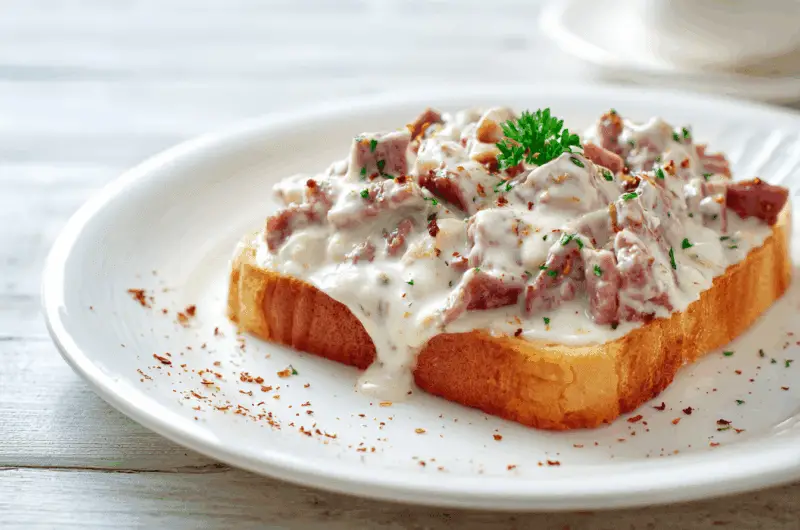
Classic Chipped Beef on Toast
Course: BreakfastCuisine: American4
servings10
minutes15
minutes320
kcalThis forgotten breakfast classic combines creamy white sauce with salty chipped beef over crispy toast for the ultimate comfort food experience.
Ingredients
4 tablespoons butter
4 tablespoons all-purpose flour
2 cups whole milk
1 jar (2.25 oz) dried chipped beef
8 slices thick white bread
1/4 teaspoon white pepper
1/2 teaspoon garlic powder (optional)
2 tablespoons butter for toast
Paprika for garnish
Directions
- Rinse the chipped beef under cool water to remove excess salt. Separate the pieces and let them soak in a bowl of water for 5-10 minutes. Drain thoroughly and tear into bite-sized pieces. This step is crucial for preventing the dish from being too salty.
- In a large skillet or saucepan, melt 4 tablespoons of butter over medium-low heat. Add the flour and whisk constantly for 2-3 minutes until the mixture smells nutty but hasn’t browned. This removes the raw flour taste and creates a proper roux.
- Gradually add the cold milk while whisking constantly to prevent lumps. Add about 1/4 cup at a time initially, then increase to larger amounts as the sauce thickens. Continue cooking and whisking until the sauce coats the back of a spoon, about 5-7 minutes.
- Season the white sauce with white pepper and garlic powder if using. Taste carefully before adding any salt, as the chipped beef will provide plenty of saltiness. The sauce should be smooth and creamy with no lumps.
- Add the prepared chipped beef to the sauce and stir gently to combine. Simmer for 2-3 minutes to heat the beef through, but don’t overcook or the beef will become tough. The mixture should be thick enough to coat the beef but not too thick to pour.
- Toast the bread slices until golden brown and crispy. While still warm, lightly butter each slice. The toast needs to be sturdy enough to support the weight of the sauce without becoming immediately soggy.
- Place two pieces of buttered toast on each plate. Immediately ladle the hot chipped beef mixture generously over the toast. The residual heat from both components will help them meld together perfectly.
- Sprinkle with paprika for color and serve immediately while hot. The dish doesn’t hold well, so timing is important. Serve with black coffee and fresh orange juice for the complete vintage breakfast experience.
Notes
- Don’t skip soaking the chipped beef – it removes excess salt and softens the meat for better texture
- Keep heat at medium-low when making the white sauce to prevent burning and ensure smooth consistency
- Serve immediately as the toast will become soggy if the dish sits too long
Frequently asked questions
Q: Can I substitute fresh deli roast beef for dried chipped beef?
A: While possible, the texture and taste will be quite different. Dried chipped beef has a unique chewy texture and concentrated salty taste that fresh deli meat can’t replicate. If substituting, use thinly sliced roast beef and add extra salt to the sauce.
Q: Why does my white sauce always turn out lumpy?
A: Lumps form when milk is added too quickly or the heat is too high. Always use medium-low heat and add cold milk gradually while whisking constantly. If lumps do form, strain the sauce through a fine mesh strainer before adding the beef.
Q: Where can I find dried chipped beef in grocery stores?
A: Look in the canned meat aisle near spam and deviled ham, or sometimes with specialty/ethnic foods. Armour and Hormel are the most common brands. If local stores don’t carry it, online retailers offer the same products with reliable shipping.
Q: Can I make this dish ahead of time for a crowd?
A: The sauce and beef mixture can be made ahead and reheated gently, but toast the bread fresh and serve immediately. The contrast between crispy toast and creamy sauce is essential to the dish’s appeal and disappears if assembled too early.