

Picture Sunday morning with a house full of hungry guests and only one pan to work with. Most breakfast recipes leave someone scrambling eggs while others wait, but sheet pan breakfast sandwiches change everything. These Hawaiian roll beauties cook 24 servings at once, turning breakfast chaos into breakfast bliss. Instead of standing over a stove flipping individual items, everything bakes together in perfect harmony.
Why Hawaiian rolls make the perfect base
Hawaiian rolls bring something special to breakfast sandwiches that regular bread simply can’t match. Their naturally sweet taste balances perfectly against savory ingredients like eggs, cheese, and sausage. The soft, pillowy texture holds up beautifully during baking without getting soggy or tough. Most importantly, they come pre-connected in packages, which makes assembly incredibly simple.
The trick to working with Hawaiian rolls involves keeping them attached during the entire process. Using a sharp serrated knife, slice through the whole package horizontally to create two large pieces. This method prevents individual rolls from shifting around during assembly and ensures even cooking throughout. After baking, the sandwiches separate easily along their natural lines, creating perfectly portioned servings that look professionally made.
Getting the eggs just right
Scrambled eggs for sheet pan sandwiches require a different approach than regular breakfast eggs. The key involves cooking them just until they’re barely set, almost looking slightly underdone. This prevents them from becoming rubbery during the final baking step. Whisking in a couple tablespoons of milk creates extra creaminess and helps the eggs stay tender throughout the cooking process.
Adding chopped green onions to the scrambled eggs provides a mild onion taste that complements the sweet rolls perfectly. Some people prefer adding hot sauce or a pinch of cayenne for heat, but the green onions offer a more universally appealing option. The eggs continue cooking slightly in the oven, so removing them from heat while they still look soft ensures they won’t overcook in the final step.
Choosing the right proteins and cooking them properly
Protein options for these sandwiches include veggie sausage patties, traditional pork sausage, bacon strips, or sliced deli ham. Each protein needs to be fully cooked before assembly since the final baking time focuses on melting cheese rather than cooking meat. Veggie sausage patties work particularly well because they hold their shape and don’t release excess grease that could make the rolls soggy.
Bacon requires some advance planning since it needs to be cooked and drained properly. Cooking bacon the day before saves time on busy mornings and allows the grease to solidify for easy removal. Traditional breakfast sausage should be formed into thin patties rather than crumbled to create even coverage across the sandwiches. Whatever protein gets chosen, make sure it’s completely cooled before assembly begins.
The double cheese layer technique
Using cheese on both the bottom and top of the filling creates a protective barrier that keeps everything contained. The bottom layer of cheese prevents the bread from getting soggy from the scrambled eggs, while the top layer acts like glue to hold all the ingredients together. Sharp cheddar provides excellent melting properties and adds a nice tangy contrast to the sweet rolls.
Other melting cheeses like Colby Jack, American, or even Swiss work well in this recipe. The important thing is using actual cheese slices rather than shredded cheese, which doesn’t create the same protective barrier effect. Count on using about 20 slices total for two packages of Hawaiian rolls, with 10 slices on the bottom and 10 on top. This might seem like a lot of cheese, but it serves a structural purpose beyond just adding taste.
Assembly order makes all the difference
The proper layering sequence ensures each component stays in its right place during baking. Start with the bottom roll halves on a parchment-lined sheet pan, then add the first layer of cheese slices. Next comes the cooked protein, followed by the soft scrambled eggs spread evenly across the surface. The second layer of cheese goes on top of the eggs, then finally the top roll halves.
This specific order prevents ingredients from sliding around or creating soggy spots in the bread. The cheese layers act as moisture barriers while the protein provides structure between the wet ingredients and bread. Taking time to spread each layer evenly ensures every sandwich gets the same amount of filling. Rushing through assembly often results in uneven distribution and some sandwiches having more filling than others, which creates inconsistent results.
The egg wash and seasoning secret
Brushing the tops with egg wash creates a beautiful golden brown finish that looks professionally made. Mix one egg with a tablespoon of water and brush it evenly across all the roll tops. This step adds visual appeal and helps the everything bagel seasoning stick properly. The egg wash also contributes to a slightly crispy top that contrasts nicely with the soft interior.
Everything bagel seasoning transforms these breakfast sandwiches into something that tastes like it came from a fancy bagel shop. The combination of sesame seeds, poppy seeds, dried garlic, dried onion, and salt adds complexity without overwhelming the other ingredients. Sprinkle it generously over the egg-washed tops for maximum impact. If everything bagel seasoning isn’t available, a simple mix of sesame seeds and garlic powder works as a decent substitute.
Perfect baking temperature and timing
Baking at 350°F for 6-8 minutes provides enough heat to melt the cheese completely without overcooking the eggs or making the rolls too crispy. The exact timing depends on how thick the sandwiches are and how much filling is used. Watch for the cheese to become completely melted and slightly bubbly around the edges as the signal that they’re done.
Overbaking creates tough, chewy rolls and rubbery eggs, while underbaking leaves cold spots and unmelted cheese. The sweet spot happens when the tops turn golden brown and the cheese is visibly melted throughout. Let the sandwiches rest for 2-3 minutes after removing from the oven before attempting to separate them. This brief cooling period allows the cheese to set slightly, making the sandwiches easier to handle and less likely to fall apart when served.
Make-ahead and storage tips
These breakfast sandwiches work wonderfully for meal prep and make-ahead situations. Assemble the entire pan the night before and store it covered in the refrigerator. Add an extra 2-3 minutes to the baking time when cooking from cold. The assembled sandwiches keep well in the fridge for up to 24 hours before baking, making them perfect for holiday mornings or weekend gatherings.
Leftover cooked sandwiches reheat beautifully in the microwave for 30-45 seconds or in a 300°F oven for 5-7 minutes. Some people even freeze individual portions for up to a month, though the texture changes slightly after freezing. For best results with frozen sandwiches, thaw them overnight in the refrigerator before reheating. The convenience of having ready-made breakfast sandwiches available makes the small texture change worthwhile for busy mornings.
Serving suggestions and variations
These sandwiches work perfectly for large group breakfasts, holiday mornings, or weekend brunch gatherings. They’re substantial enough to serve as the main dish alongside fresh fruit or a simple side salad. The sweet and savory combination satisfies most taste preferences, making it ideal for feeding crowds with varying breakfast preferences. Cut them apart along the natural roll lines and arrange on a large platter for easy serving.
Variations might include using different types of rolls like brioche slider buns or regular dinner rolls, though the cooking time may need adjustment. Some cooks add sliced tomatoes or spinach leaves for extra vegetables, while others incorporate different spice blends instead of everything bagel seasoning. The basic technique remains the same regardless of specific ingredients, making this recipe incredibly adaptable to personal preferences and dietary restrictions. International variations could include adding salsa and using Mexican cheese, or incorporating herbs and goat cheese for a Mediterranean twist.
Sheet pan breakfast sandwiches solve the age-old problem of feeding groups without sacrificing quality or spending hours in the kitchen. The combination of sweet Hawaiian rolls, perfectly scrambled eggs, melted cheese, and everything bagel seasoning creates something special that goes far beyond basic breakfast fare. Next time a crowd gathers for morning meals, this simple technique delivers restaurant-quality results with minimal effort and maximum satisfaction.
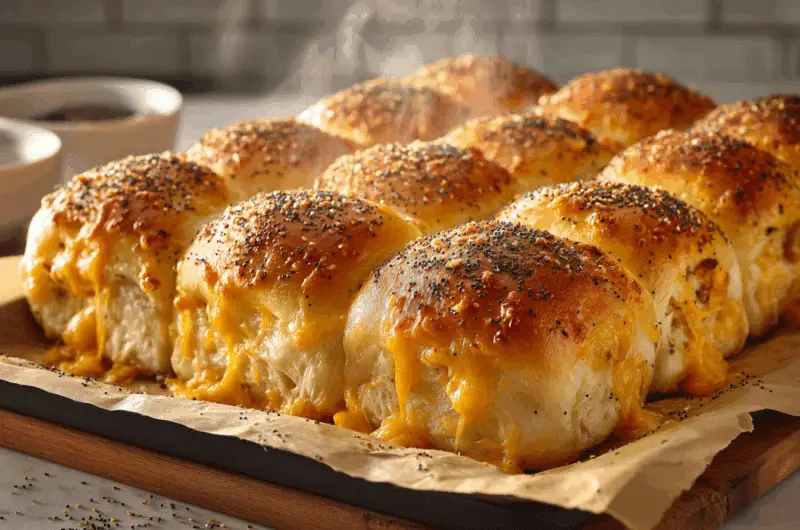
Sheet Pan Breakfast Sandwiches
Course: BreakfastCuisine: American24
servings15
minutes8
minutes121
kcalThese crowd-pleasing breakfast sandwiches made with Hawaiian rolls, scrambled eggs, cheese, and sausage bake together on one pan for easy morning meals.
Ingredients
2 packages Hawaiian rolls (24 rolls total)
20 slices of cheddar cheese
8 veggie sausage patties, cooked
9 large eggs, divided
2 tablespoons milk
2 tablespoons green onions, chopped
3 tablespoons everything bagel seasoning
1 tablespoon water
Parchment paper for lining
Directions
- Preheat oven to 350°F and line a large sheet pan with parchment paper. Cook the veggie sausage patties according to package directions until crispy and fully heated through. Set aside to cool slightly while preparing other ingredients.
- In a medium bowl, whisk together 8 eggs and 2 tablespoons milk until well combined. Heat a large skillet over medium-low heat and scramble the eggs until just barely set, almost looking slightly underdone. Stir in chopped green onions and remove from heat immediately.
- Keeping the Hawaiian rolls attached to each other, use a sharp serrated knife to slice horizontally through the entire package, creating top and bottom halves. Place the bottom halves on the prepared sheet pan, cut side up.
- Layer 10 cheese slices evenly over the bottom roll halves. Arrange the cooked sausage patties on top of the cheese, breaking them into pieces if needed for even coverage. Spread the soft scrambled eggs evenly over the sausage layer.
- Add the remaining 10 cheese slices on top of the eggs, then carefully place the top roll halves over everything, cut side down. Press gently to compress the sandwiches slightly.
- In a small bowl, whisk the remaining egg with 1 tablespoon of water to create an egg wash. Brush this mixture evenly over the tops of all the rolls using a pastry brush.
- Sprinkle the everything bagel seasoning generously over the egg-washed tops, making sure to cover all the rolls. The seasoning should stick well to the egg wash.
- Bake for 6-8 minutes until the cheese is completely melted and bubbly, and the tops are golden brown. Let cool for 2-3 minutes before cutting along the natural roll lines to separate into individual sandwiches. Serve immediately while warm.
Notes
- Substitute the veggie sausage with cooked bacon, pork sausage, or sliced deli ham if preferred.
- Assemble the night before and refrigerate covered, then add 2-3 extra minutes to the baking time.
- Leftovers reheat well in a microwave for 30-45 seconds or oven at 300°F for 5-7 minutes.
- For spicier sandwiches, add hot sauce or cayenne pepper to the scrambled eggs.
Frequently asked questions
Q: Can I make these sandwiches the night before?
A: Yes, you can assemble the entire pan and refrigerate it covered overnight. Just add 2-3 extra minutes to the baking time since you’re starting with cold sandwiches. This makes them perfect for holiday mornings when you want to minimize prep work.
Q: What other proteins can I use besides veggie sausage?
A: Cooked bacon, pork sausage patties, or sliced deli ham all work great. Just make sure whatever protein you choose is fully cooked before assembly, since the baking time only melts the cheese and warms everything through.
Q: Why do the eggs need to be undercooked when scrambling?
A: The eggs continue cooking during the 6-8 minute baking time, so starting with slightly underdone eggs prevents them from becoming rubbery in the finished sandwiches. They should look almost wet when you remove them from the skillet.
Q: How do I store and reheat leftover sandwiches?
A: Store leftovers in the refrigerator for up to 4 days. Reheat individual sandwiches in the microwave for 30-45 seconds or in a 300°F oven for 5-7 minutes. They can also be frozen for up to a month, though the texture will be slightly different after thawing.