

Walking into grandparents’ kitchens always brings back memories of simple ingredients creating something magical. Most people remember grandma’s cooking, but grandfathers had their own special recipes too. Italian grandfathers especially knew how to make hearty soups that could feed the whole family with just vegetables and a few pantry basics. This traditional minestrone-style soup proves that the best recipes don’t need fancy ingredients, just time and love.
Why Italian grandfathers were soup masters
Italian men of the older generation grew up during tough times when wasting food wasn’t an option. They learned to turn whatever vegetables were available into satisfying meals that could stretch to feed unexpected guests. Many grandfathers worked long hours and came home to help in the kitchen, especially with soup-making since it required patience and timing that busy grandmothers didn’t always have.
These men understood that soup wasn’t just about throwing vegetables in water. They knew which vegetables to add first, how to build layers of taste, and most importantly, how to let everything cook together slowly. Traditional recipes were passed down through watching and doing, not written instructions, which is why many of these soups taste different every time but somehow always perfect.
The secret ingredient everyone forgets
Most people think making good soup is about having the right vegetables or the perfect broth. But Italian grandfathers knew the real secret was pancetta. This cured pork belly adds richness and depth that regular bacon just can’t match. When you cook pancetta slowly at the beginning, it releases fat that becomes the base for everything else, creating that deep, satisfying taste that makes people ask for seconds.
The pancetta doesn’t overpower the vegetables; instead, it makes them taste more like themselves. When you brown it properly with the onions, carrots, and celery, something magical happens. The vegetables absorb those rich, salty notes while the pancetta picks up sweetness from the vegetables. This is why restaurant soups often taste better than homemade ones – they understand this foundational step that home cooks usually skip.
Building the base the right way
Starting with the holy trinity of Italian cooking – onions, carrots, and celery – might seem basic, but there’s a specific way to do it. The onions need to get soft and slightly golden before anything else goes in. This takes about 5 minutes of patient stirring, not the quick sauté most people do. The carrots and celery should still have a little bite when the next ingredients get added because they’ll continue cooking for another hour.
Adding garlic too early is a common mistake that makes it taste bitter. Wait until the vegetables are properly softened, then add minced garlic for just one minute before adding the tomatoes. The canned tomatoes should be crushed by hand, not diced perfectly, because irregular pieces break down better and create a more rustic texture. This traditional approach takes patience but creates incredible depth of taste.
Choosing vegetables that actually matter
Not all vegetables belong in this soup, despite what modern recipes might suggest. Traditional Italian grandfathers stuck to vegetables that could handle long cooking without turning to mush. Fava beans, peas, asparagus tips, artichoke hearts, and small potatoes were the stars. Each one gets added at a different time based on how long it needs to cook, not all dumped in together like many people do today.
The beans go in early because they need time to absorb the broth and release their starch, which helps thicken the soup naturally. Asparagus tips only need a few minutes, so they go in near the end to stay bright green and slightly crisp. Potatoes are the timing indicator – when they’re fork-tender, everything else should be perfectly cooked. Artichoke hearts go in last because they just need to warm through, and overcooking makes them tough and stringy.
Water levels nobody talks about
Here’s something most soup recipes get wrong – the vegetables should always be covered with water, but just barely. Too much water makes weak, flavorless soup. Too little and things burn or cook unevenly. Italian grandfathers would add hot water throughout cooking as needed, never cold water which stops the cooking process and can make vegetables tough.
The soup should look almost too thick when it’s done because it will thin out slightly as it cools. Good minestrone is more like a vegetable stew than a brothy soup. If it’s too thin at the end, remove the lid and let it cook down for another 10-15 minutes. If it gets too thick, add hot water one cup at a time. The consistency should coat a spoon but still pour easily when ladled into bowls.
Salt and seasoning mistakes to avoid
Using bouillon cubes means being careful with additional salt because those little cubes are already packed with sodium. Many home cooks add salt at the beginning and end up with oversalted soup that can’t be fixed. Smart grandfathers tasted as they went and added salt gradually, knowing that the pancetta and bouillon would contribute plenty of saltiness on their own.
Black pepper should be freshly ground and added near the end, not at the beginning where it can become bitter. A small amount of sugar helps balance the acidity from the tomatoes – just half a teaspoon is enough for a big pot. Some recipes call for herbs, but traditional versions rely on the vegetables and pancetta to provide all the taste complexity needed without competing with dried seasonings.
Timing each vegetable addition perfectly
The biggest difference between amateur and experienced soup makers is knowing when to add each ingredient. After the pancetta and base vegetables are established, fava beans and peas go in first because they take the longest to become tender. They need at least 15-20 minutes of gentle simmering to reach the right texture and absorb the surrounding tastes.
Potatoes come next because they need about 10 minutes to cook through without falling apart. Asparagus tips only need 3-4 minutes, so they wait until near the end. Artichoke hearts are the final addition because they’re already cooked and just need warming through. This staggered approach ensures everything finishes at the same time with the right texture – nothing mushy, nothing undercooked.
Making it ahead changes everything
Like most soups, this one tastes completely different the next day. The vegetables continue absorbing the broth overnight, and all the tastes blend together in ways that can’t happen during the initial cooking. Smart grandfathers often made soup in the evening, knowing it would be even better for lunch the next day when reheated gently on the stove.
When reheating, add a splash of hot water if it’s gotten too thick overnight. Never microwave the whole pot because it heats unevenly and can overcook the vegetables. Instead, heat individual portions in the microwave or warm the entire pot slowly on low heat, stirring occasionally. The soup keeps well in the refrigerator for up to five days and actually improves with each reheating.
Serving tricks that make a difference
Traditional Italian grandfathers never served this soup alone. Crusty bread for dipping was mandatory, preferably day-old bread that could soak up the broth without immediately falling apart. A drizzle of good olive oil on top of each bowl adds richness and helps marry all the tastes together. Some families grated parmesan cheese on top, but purists insisted the soup was perfect without it.
The bowls should be warmed before ladling in the soup, which keeps everything hot longer and prevents the vegetables from cooling too quickly. Room temperature bowls will drop the soup’s temperature immediately, and nobody wants lukewarm minestrone. This attention to small details separated grandfathers who truly cared about their cooking from those who were just going through the motions.
This soup represents more than just a recipe – it’s a connection to Italian traditions and the patient cooking methods that created satisfying meals from simple ingredients. Making it properly takes time and attention, but the results prove why these techniques survived generations of home cooks.
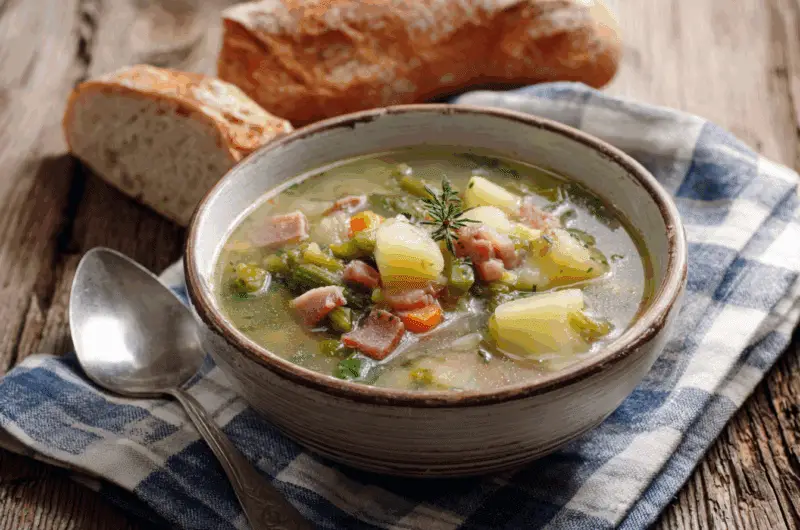
Traditional Italian Grandfather’s Vegetable Soup
Course: DinnerCuisine: Italian6
servings15
minutes45
minutes220
kcalA hearty minestrone-style soup with pancetta, seasonal vegetables, and time-honored Italian techniques that create incredible depth of flavor.
Ingredients
1 small onion, diced
2 carrots, diced
2 stalks celery, diced
1/4 pound pancetta, diced
1 bouillon cube
1/2 can peeled tomatoes, crushed by hand
17 oz frozen fava beans
1 cup frozen peas
12 oz asparagus tips
12 oz artichoke hearts, quartered
2 small potatoes, cubed
2 tablespoons olive oil
Salt and black pepper to taste
Directions
- Heat olive oil in a large heavy-bottomed pot over medium heat. Add the diced pancetta and cook slowly, stirring occasionally, until it releases its fat and becomes lightly golden, about 4-5 minutes. The pancetta should not be crispy but should render most of its fat.
- Add the diced onions to the pot and cook until softened and slightly translucent, about 5 minutes, stirring regularly. Add the carrots and celery, cooking for another 3-4 minutes until they begin to soften but still retain some firmness. The vegetables should absorb the rendered pancetta fat.
- Crush the canned tomatoes by hand and add them to the pot along with their juices. Cook everything together, stirring occasionally, until the vegetables are well-coated and the mixture becomes fragrant, about 5 minutes. The tomatoes should break down and create a thick base.
- Add enough hot water to just cover the vegetables, then add the bouillon cube, stirring to dissolve it completely. Bring the mixture to a boil, then reduce heat to maintain a gentle simmer. Add the frozen fava beans and cook for 15 minutes, adding more hot water as needed to keep vegetables covered.
- Add the cubed potatoes and frozen peas to the pot, ensuring there’s enough liquid to keep everything just covered. Simmer for another 10 minutes, or until the potatoes are fork-tender. The potatoes will help naturally thicken the soup as they release starch.
- Add the asparagus tips and cook for 3-4 minutes until they’re bright green and tender-crisp. Be careful not to overcook them as they should retain some bite. Taste the broth and adjust seasoning with salt and freshly ground black pepper as needed.
- Finally, add the quartered artichoke hearts and cook for just 2-3 minutes to warm them through. Remove the pot from heat and let it rest for 5 minutes before serving. The soup should have a thick, stew-like consistency that coats a spoon.
- Serve hot in warmed bowls, drizzled with a little extra olive oil if desired. Accompany with crusty day-old bread for dipping. The soup tastes even better the next day after the flavors have had time to meld together overnight.
Notes
- Be careful with salt since the pancetta and bouillon cube already add plenty of sodium – taste as you go
- The vegetables should always be just covered with liquid, add hot water as needed during cooking
- This soup freezes well for up to 3 months and reheats beautifully on the stovetop
- Substitute any seasonal vegetables you have on hand, but maintain the cooking time order
Frequently asked questions
Q: Can I use bacon instead of pancetta?
A: You can substitute bacon, but the taste will be different since bacon is smoked while pancetta is just cured. Use about the same amount but cook it a bit longer to render the fat properly.
Q: What if I can’t find fava beans?
A: Lima beans or cannellini beans work as substitutes. Frozen lima beans have a similar texture, while canned cannellini beans should be drained and added near the end since they’re already cooked.
Q: How thick should the finished soup be?
A: It should be more like a thick stew than a brothy soup. The liquid should just barely cover the vegetables when done, and it should coat a spoon when you stir it.
Q: Can I make this vegetarian?
A: Yes, skip the pancetta and use extra olive oil to sauté the vegetables. Add a parmesan rind during simmering for extra richness, or use vegetable bouillon instead of regular bouillon cubes.