

Mornings are tough enough without having to juggle multiple pans, plates, and cooking times just to get a decent breakfast on the table. What if there was a way to combine bacon, eggs, cheese, and even bread into one amazing dish that practically cooks itself? This one-pan breakfast skillet transforms your morning routine by throwing everything into a single pan, cracking eggs on top, and letting the oven do the heavy lifting while you tackle your to-do list.
Why everyone’s obsessed with one-pan breakfasts
The appeal of one-pan cooking goes beyond just convenience. When everything cooks together, the bacon fat renders down and coats the other ingredients, creating layers of taste that separate cooking methods simply can’t achieve. The eggs cook perfectly in the residual heat, while vegetables get caramelized and cheese melts into every crevice of the pan.
Professional chefs have been using this technique for years, and home cooks are finally catching on. The one-pan method eliminates the timing stress of traditional breakfast cooking. Instead of standing over multiple burners, flipping pancakes while scrambling eggs and watching bacon, everything happens simultaneously in one controlled environment. Plus, cleanup becomes a breeze when there’s only one dish to wash.
Getting your ingredient ratios right
The secret to a perfect breakfast skillet lies in balancing proteins, vegetables, and starches so nothing gets overcooked or undercooked. Start with about six strips of bacon for a standard 10-inch cast iron skillet. This provides enough fat to cook the other ingredients while ensuring every bite has that smoky bacon essence. Add two medium potatoes, diced small so they cook through completely.
Vegetables like bell peppers, onions, and mushrooms should be cut uniformly to ensure even cooking. Six to eight eggs work perfectly for feeding a family of four, though you can adjust based on your household’s appetite. The key is creating wells in your cooked ingredients where the eggs can nestle without running all over the pan. Cheese goes on last, about two cups of shredded cheddar or your preferred variety.
Choosing the right pan makes all the difference
Cast iron skillets are the gold standard for breakfast skillets because they distribute heat evenly and go seamlessly from stovetop to oven. A 10-inch or 12-inch skillet provides enough space for all ingredients without overcrowding. The natural non-stick properties of well-seasoned cast iron prevent eggs from sticking, while the material retains heat long after leaving the oven.
If cast iron isn’t available, oven-safe stainless steel or carbon steel pans work well too. Avoid non-stick pans unless they’re specifically rated for oven temperatures above 400 degrees. Some cooks swear by using a brownie pan for individual portions, which creates perfectly portioned servings and eliminates the need for serving spoons.
The stovetop preparation phase
Start by cooking the bacon over medium heat until it’s about 75% done – still slightly chewy but with most of the fat rendered out. Remove the bacon but leave all that delicious fat in the pan. This rendered fat becomes your cooking medium for everything else, eliminating the need for additional oil or butter while adding incredible depth of taste.
Add diced potatoes to the bacon fat and cook for about 8-10 minutes until they start getting golden brown and crispy on the outside. Season generously with salt, pepper, and your favorite breakfast seasonings like paprika or garlic powder. The potatoes should be almost fully cooked at this stage since they’ll only get a few more minutes in the oven. Add onions and peppers during the last few minutes of potato cooking.
Creating perfect egg wells
Once your potatoes and vegetables are cooked, create small wells or indentations in the mixture using a spoon or spatula. These wells prevent the eggs from running all over the pan and help them cook more evenly. The wells should be deep enough to contain most of the egg white but not so deep that the eggs don’t get heat from underneath.
Crack each egg into a small bowl first, then pour it into a well. This technique prevents broken yolks and gives you better control over placement. If you prefer scrambled eggs, you can beat them beforehand and pour the mixture over the entire skillet instead. The oven finishing method works equally well with scrambled or whole eggs, though cooking times may vary slightly.
Oven temperature and timing secrets
Preheat your oven to 375 degrees Fahrenheit while you’re doing the stovetop preparation. This temperature is hot enough to set the eggs quickly without overcooking the already-prepared ingredients. Higher temperatures risk burning the bottom of your skillet contents, while lower temperatures result in rubbery, overcooked eggs by the time the whites are set.
Most skillets need 12-15 minutes in the oven for perfectly set whites with still-runny yolks. If you prefer firmer yolks, add another 3-5 minutes. The beauty of this method is that you can check the eggs’ doneness through the oven door without opening it and losing heat. Look for whites that appear completely opaque with no clear, jiggly parts remaining around the yolks.
Cheese and finishing touches that wow
Add cheese during the final 3-4 minutes of baking time so it melts perfectly without becoming greasy or separated. Shredded cheese works better than sliced because it distributes more evenly and melts faster. Sharp cheddar provides a nice contrast to the rich eggs and bacon, while pepper jack adds a subtle kick that wakes up your morning palate.
Fresh herbs like chives, parsley, or cilantro should go on after the skillet comes out of the oven. A sprinkle of hot sauce or a dollop of salsa can brighten the entire dish. Some people like adding the cooked bacon back on top during the last few minutes of baking, while others prefer crumbling it over the finished dish for added texture contrast.
Creative variations that keep breakfast interesting
The basic formula works with countless ingredient combinations. Substitute breakfast sausage for bacon, or use leftover ham from dinner. Sweet potatoes can replace regular potatoes for a slightly different nutritional profile and natural sweetness. Mexican-inspired versions might include jalapeños, cilantro, pepper jack cheese, and a finish of fresh salsa and avocado slices.
Mediterranean variations could feature sun-dried tomatoes, spinach, feta cheese, and fresh basil. The midnight breakfast concept works perfectly for dinner too – just serve it with a simple salad and some crusty bread. Vegetarian versions using mushrooms, spinach, tomatoes, and different cheese varieties satisfy non-meat eaters while maintaining the same cooking principles.
Serving and storage tips
Let the skillet rest for 2-3 minutes after coming out of the oven before serving. This brief rest allows the eggs to finish setting from residual heat while preventing anyone from burning their mouth on molten cheese. Serve directly from the skillet with individual plates and forks, or transfer portions to plates using a large spoon or spatula.
Leftovers keep well in the refrigerator for up to three days, though the eggs will firm up completely when reheated. Reheat individual portions in the microwave for 60-90 seconds, or warm the entire skillet in a 300-degree oven for about 10 minutes. The breakfast skillet concept also works great for meal prep – just reheat portions throughout the week for quick, satisfying breakfasts.
This one-pan breakfast skillet proves that the best morning meals don’t require complicated techniques or multiple pans. By combining simple ingredients in one vessel and letting the oven do most of the work, busy mornings become manageable without sacrificing taste or satisfaction. Whether feeding a crowd or just your family, this reliable method delivers consistent results that will have everyone asking for seconds.
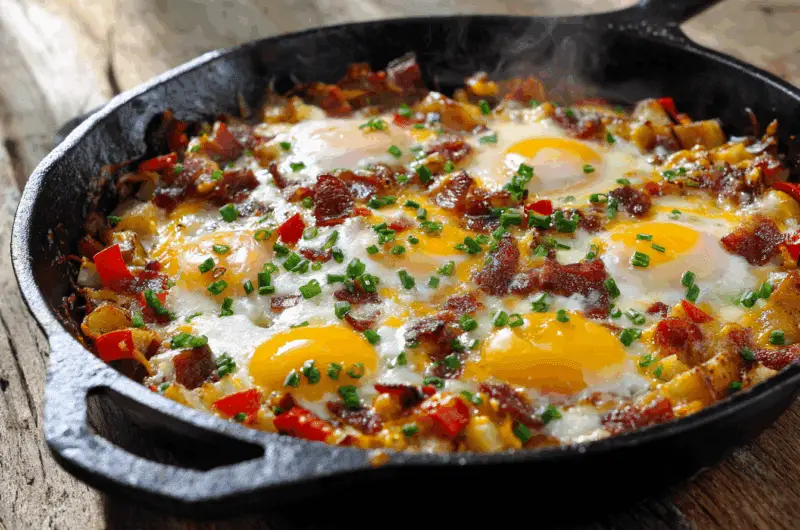
Ultimate One-Pan Breakfast Skillet
Course: BreakfastCuisine: American4
servings15
minutes35
minutes485
kcalA hearty breakfast combining bacon, eggs, potatoes, and cheese all cooked together in one skillet.
Ingredients
6 strips thick-cut bacon, chopped
2 medium russet potatoes, diced small
1 medium onion, diced
1 red bell pepper, diced
8 large eggs
2 cups shredded sharp cheddar cheese
1 teaspoon salt
1/2 teaspoon black pepper
2 tablespoons fresh chives, chopped
Directions
- Preheat oven to 375°F. Cook chopped bacon in a 10-inch cast iron skillet over medium heat until 75% done and most fat has rendered, about 6-8 minutes. Remove bacon with slotted spoon and set aside, leaving fat in pan.
- Add diced potatoes to the bacon fat and cook for 8-10 minutes, stirring occasionally, until golden brown and almost tender. Season with salt and pepper during cooking for best results.
- Add diced onion and bell pepper to the skillet and cook for 3-4 minutes until vegetables begin to soften. Stir everything together to combine and distribute evenly across the pan.
- Using a spoon, create 8 small wells in the potato mixture, spacing them evenly around the pan. The wells should be deep enough to hold most of each egg white but not so deep that eggs don’t get bottom heat.
- Crack each egg into a small bowl first, then carefully pour into each well to prevent broken yolks. This gives you better control and helps ensure even placement around the skillet.
- Transfer skillet to preheated oven and bake for 12-15 minutes until egg whites are set but yolks are still slightly runny. Check through oven door to monitor doneness without losing heat.
- Remove skillet and sprinkle shredded cheese and reserved bacon over the top. Return to oven for 3-4 minutes until cheese melts completely and begins to bubble around the edges.
- Remove from oven and let rest for 2-3 minutes to allow eggs to finish setting from residual heat. Garnish with fresh chives and serve directly from the skillet with individual plates and forks.
Notes
- For firmer yolks, bake an additional 3-5 minutes before adding cheese
- Leftovers keep for 3 days in the refrigerator and reheat well in microwave or low oven
- Substitute breakfast sausage for bacon or add vegetables like mushrooms or spinach for variety
Frequently asked questions
Q: Can I make this breakfast skillet without bacon?
A: Absolutely! Substitute breakfast sausage, ham, or use 2-3 tablespoons of oil or butter to cook the vegetables. Vegetarian versions work great with mushrooms, spinach, and extra cheese for protein and richness.
Q: What if I don’t have a cast iron skillet?
A: Any oven-safe skillet works well, including stainless steel or carbon steel pans. Avoid regular non-stick pans unless they’re rated for temperatures above 400°F, as the coating can break down at high heat.
Q: How do I know when the eggs are perfectly cooked?
A: Look for completely opaque egg whites with no clear, jiggly parts remaining. Yolks should still have a slight jiggle for runny centers, or bake 3-5 minutes longer for firmer yolks that are fully set.
Q: Can I prep this the night before?
A: You can cook the bacon, potatoes, and vegetables ahead of time and store in the refrigerator. In the morning, reheat the mixture in the skillet, create wells, add eggs, and bake as directed for fresh results.