

Most people think butter is the only way to make French toast, but celebrity chef Giada De Laurentiis just turned that idea upside down. Her simple swap replaces butter with extra-virgin olive oil, creating a breakfast that walks the perfect line between sweet and savory. This isn’t just another cooking hack – it’s a complete game-changer that transforms ordinary French toast into something unexpectedly amazing. The result is less sticky-sweet than traditional versions, with a rich, sophisticated taste that even savory breakfast lovers can’t resist.
Why olive oil works better than butter
Butter has dominated French toast recipes for decades, but olive oil brings something completely different to the table. While butter can burn at high temperatures and sometimes creates uneven browning, olive oil maintains its integrity and creates a beautiful golden crust. The oil penetrates the bread differently than butter, creating a crispy exterior that doesn’t get soggy when topped with fruit or syrup.
The biggest advantage is the depth of taste. Good quality extra-virgin olive oil adds a fruity, slightly peppery note that complements both sweet and savory toppings. This technique works especially well for people who find traditional French toast too sweet or one-dimensional. The olive oil creates complexity without overwhelming the dish, making each bite more interesting than the last.
Choosing the right bread makes all the difference
Not all bread works well with this olive oil method. Challah is the top choice because its tight crumb structure holds up beautifully when soaked in custard, and its slightly sweet nature pairs perfectly with the savory notes of olive oil. Brioche also works wonderfully, though it’s richer and more indulgent. Thick-cut Texas toast can handle the soaking process, but avoid thin sandwich bread that will fall apart.
The key is using bread that’s sturdy enough to absorb the custard without becoming mushy. Day-old bread actually works better than fresh because it’s slightly dried out and soaks up more liquid. Cut your slices about 3/4 inch thick – any thinner and they’ll break apart, any thicker and they won’t cook through properly. Sourdough can work too, but its tanginess might clash with sweeter toppings.
The custard base stays surprisingly simple
Since the olive oil adds complexity, the custard base should remain fairly straightforward. A basic mixture of eggs, milk or cream, a touch of sugar, and vanilla extract works perfectly. Some recipes call for cinnamon or nutmeg, but these spices can compete with the olive oil’s natural notes. The goal is to let the oil shine while the custard provides richness and helps create that golden exterior.
The egg-to-dairy ratio matters more than usual with this method. Too many eggs and the custard becomes too thick, preventing proper absorption. Too much dairy and the bread becomes soggy. A good starting point is three eggs to one cup of milk or half-and-half, with just two tablespoons of sugar and a teaspoon of vanilla. This creates a custard that penetrates the bread without making it fall apart during cooking.
Temperature control prevents burning disasters
Olive oil behaves differently from butter when heated, so temperature control becomes crucial. Medium heat works best – high enough to create a beautiful crust but not so hot that the oil starts smoking. Cast iron or stainless steel pans work better than non-stick for this technique because they distribute heat more evenly and help create that perfect golden-brown surface.
Watch for visual cues rather than relying on timing alone. The oil should shimmer but not smoke when the pan is ready. Each side needs about 1.5 to 2 minutes, depending on your stove and pan. If the oil starts splattering aggressively, the heat is too high. The finishing step in a 400°F oven ensures the center cooks through without overcooking the exterior, creating that perfect balance of crispy outside and custardy inside.
Quality olive oil makes or breaks this dish
Since olive oil is the star ingredient, quality matters enormously. Cheap, flavorless oil will create bland results, while harsh, overly peppery oil can overwhelm the dish. Look for extra-virgin olive oil with a smooth, fruity character – the kind that’s pleasant to taste on its own. Many grocery stores carry perfectly good options that won’t break the bank, but avoid the bargain-basement varieties.
A simple test is whether the oil tastes good when drizzled on bread. If it’s harsh, bitter, or flavorless, it won’t improve your French toast. Medium-intensity olive oils work best – they have enough character to add interest but won’t dominate every bite. Store the oil properly in a cool, dark place, and use it within a few months of opening for the best results.
Fresh fruit beats maple syrup every time
Traditional maple syrup clashes with the sophisticated notes of olive oil French toast. Fresh berries work beautifully because their natural acidity balances the richness of the oil and eggs. Macerated berries are even better – toss fresh strawberries, raspberries, or blackberries with a little sugar and let them sit for 15 minutes to create their own syrup.
Stone fruits like peaches, nectarines, or plums also pair wonderfully with this style of French toast. Their natural sweetness complements the olive oil without creating that cloying sensation that comes from heavy syrup. A light dusting of powdered sugar or a drizzle of honey can add sweetness if needed, but the fruit should be the main attraction on top of this unique breakfast creation.
Savory toppings open up new possibilities
The olive oil base makes this French toast perfect for savory applications that would seem weird with butter-based versions. A sprinkle of grated Parmesan cheese and fresh herbs transforms it into a sophisticated brunch dish. Sliced avocado with a pinch of sea salt creates a California-style breakfast that’s both filling and interesting.
For something more adventurous, try it topped with ricotta cheese, sliced tomatoes, and fresh basil for an Italian-inspired breakfast. The olive oil ties all these Mediterranean elements together naturally. Even simpler additions like a fried egg on top or some crispy bacon alongside work better with this version than traditional sweet French toast because the oil creates a bridge between sweet and savory elements.
Timing the oil drizzle adds extra richness
One of Giada’s smartest moves is using olive oil twice – once for cooking and again as a finishing drizzle. This might sound excessive, but it works brilliantly. The cooking oil creates the crust and adds subtle depth, while the fresh drizzle on top provides a bright, immediate olive oil taste that hits your palate first. Use a lighter hand with the finishing oil than you might think necessary.
The finishing drizzle should complement, not dominate, the dish. A light spiral over the plated French toast, combined with fresh fruit, creates visual appeal and adds that final layer of richness. This technique works especially well when serving the French toast immediately – the warm bread slightly heats the fresh oil, releasing its aromatic compounds and creating an almost restaurant-quality presentation at home.
Common mistakes that ruin the technique
The biggest mistake is using too much oil in the pan. Unlike butter, which gets absorbed into the bread, excess olive oil can make the finished product greasy. Start with one tablespoon and add more only if needed. Another common error is not preheating the pan properly – cold oil creates uneven browning and can make the bread absorb too much oil before cooking begins.
Oversaturating the bread with custard is another pitfall. The oil cooking method requires bread that holds together well, so limit soaking time to about 30 seconds per side. Using low-quality olive oil or pairing it with overly sweet toppings destroys the balance that makes this technique special. Finally, skipping the oven-finishing step often results in French toast that’s crispy outside but raw in the center, wasting all the effort put into this upgraded approach.
This olive oil French toast technique proves that sometimes the best innovations come from simple ingredient swaps. The result is breakfast that feels more sophisticated than traditional versions while remaining completely approachable for home cooks. Whether topped with fresh berries or savory ingredients, this method creates French toast that stands out from the crowd and might just become the new weekend breakfast standard.
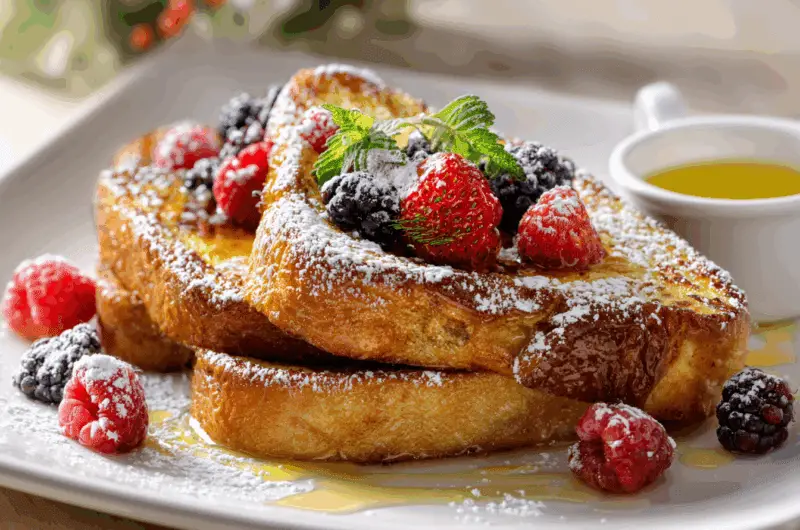
Giada’s Olive Oil French Toast
Course: BreakfastCuisine: Italian4
servings10
minutes15
minutes280
kcalThis game-changing French toast uses olive oil instead of butter for a sophisticated twist that’s crispy outside and custardy inside.
Ingredients
8 thick slices challah bread (3/4 inch thick)
3 large eggs
1 cup whole milk
2 tablespoons granulated sugar
1 teaspoon vanilla extract
3-4 tablespoons extra-virgin olive oil, divided
1 cup fresh berries
Powdered sugar for dusting
Pinch of salt
Directions
- Preheat oven to 400°F and heat a cast-iron or stainless steel skillet over medium heat. In a shallow dish, whisk together eggs, milk, sugar, vanilla, and salt until well combined. The custard should be smooth with no streaks of egg white visible.
- Cut challah bread into 3/4-inch thick slices, ensuring they’re sturdy enough to handle soaking. Working with one slice at a time, dip bread into custard mixture for 30 seconds per side. Don’t oversoak as this can make the bread fall apart during cooking.
- Add 1-2 tablespoons of olive oil to the preheated pan – the oil should shimmer but not smoke. Carefully place soaked bread slices in the pan, cooking 1-2 pieces at a time to avoid overcrowding.
- Cook each side for 1.5-2 minutes until golden brown and crispy. The oil should sizzle gently but not splatter aggressively – adjust heat if needed. Add more oil between batches if the pan looks dry.
- Transfer the skillet with browned French toast to the preheated oven. Bake for 5 minutes to ensure the centers are fully cooked while maintaining the crispy exterior. The toast should feel set when gently pressed.
- Remove from oven and transfer French toast to serving plates immediately. Top with fresh berries and dust lightly with powdered sugar if desired. The contrast between warm toast and cool berries is perfect.
- Drizzle a small amount of fresh extra-virgin olive oil over the plated French toast in a light spiral pattern. This finishing drizzle adds brightness and enhances the olive oil character of the dish.
- Serve immediately while warm. The French toast is best enjoyed fresh from the oven when the exterior is still crispy and the interior remains custardy and warm.
Notes
- Use high-quality extra-virgin olive oil with a smooth, pleasant taste – harsh or flavorless oil will ruin the dish
- Challah bread works best, but brioche or thick Texas toast are good alternatives – avoid thin sandwich bread
- Day-old bread actually works better than fresh as it absorbs custard without falling apart
- Don’t skip the oven finishing step – it ensures the center cooks through without burning the exterior
- For savory versions, try topping with Parmesan cheese, fresh herbs, or sliced avocado instead of berries
Frequently asked questions
Q: Can I use regular olive oil instead of extra-virgin?
A: Extra-virgin olive oil is essential for this recipe because it provides the distinctive taste that makes this technique special. Regular olive oil is too mild and won’t give you the sophisticated depth that makes this French toast stand out from traditional versions.
Q: Why does the bread need to be so thick?
A: Thick slices (3/4 inch) are crucial because they need to absorb the custard without falling apart and hold up to the olive oil cooking method. Thin bread becomes soggy and breaks apart, while thick bread creates the perfect contrast of crispy exterior and custardy interior.
Q: Can I make this ahead of time?
A: This French toast is best served immediately for optimal texture. However, you can prepare the custard mixture the night before and have your bread sliced and ready. The actual cooking should be done just before serving to maintain the crispy exterior.
Q: What if my olive oil starts smoking in the pan?
A: If the oil starts smoking, reduce the heat immediately and let the pan cool slightly before continuing. Smoking oil will create bitter tastes and can burn your French toast. Medium heat should be hot enough to create a golden crust without smoking.