

Most weeknight dinners fall into the same rotation, and honestly, it gets boring. But then there’s that one recipe that shows up so often you start to wonder if maybe it’s just better than everything else. Chicken marsala has that effect. The combination of tender chicken, golden mushrooms, and a rich wine sauce makes it feel special without requiring you to spend hours in the kitchen. What makes this version different is how simple it is to pull together while still tasting like something from a nice restaurant. Once you try it, you’ll understand why it keeps making its way back to the dinner table.
Why this chicken marsala recipe works every time
The secret to great chicken marsala starts with how you prepare the chicken. Instead of cooking thick chicken breasts that end up dry on the outside and raw in the middle, this recipe calls for pounding them thin. When you cover the chicken with plastic wrap and hit it with a meat mallet until it’s about half an inch thick, it cooks faster and stays incredibly tender. The flour coating does three important things: it gives the chicken a nice golden color when you fry it, locks in all the moisture so each bite stays juicy, and helps create a smooth, silky sauce instead of a watery mess.
Another reason this recipe delivers consistent results is the cooking method. You fry the chicken for just about five minutes total, then remove it from the pan while you build the sauce. This prevents overcooking, which is what usually turns chicken breasts into rubber. The chicken finishes cooking gently in the sauce at the end, soaking up all those rich marsala wine notes. That way, everything comes together without any piece getting overdone or undercooked. It’s a simple technique that makes a huge difference in the final result.
The marsala wine makes all the difference
Marsala wine is what sets this dish apart from regular chicken and mushroom recipes. It’s a fortified wine from Sicily with a unique taste that’s slightly sweet with hints of roasted nuts and toffee. When you cook with it, the alcohol burns off but all those deep, complex notes remain. This creates a sauce that tastes both sophisticated and comforting at the same time. Some recipes call for dry marsala and others for sweet, but here’s the thing: all marsala has some sweetness to it. The bottles labeled “dry” are just a bit less sweet, but not dramatically different.
You can find marsala wine at most liquor stores for under ten dollars, and one bottle will last you through several batches of this recipe. If you absolutely can’t find marsala, you can substitute with Madeira wine or an amber-colored sherry that’s not too dry or too sweet. The sauce won’t taste exactly the same, but it’ll still be delicious. Just avoid using “cooking wine” from the grocery store because it’s loaded with salt and tastes nothing like actual wine. Real marsala makes a real difference, and it’s worth the trip to the liquor store.
Getting the mushrooms perfectly golden
Mushrooms can make or break this dish, and the key is giving them enough space in the pan. When you crowd too many mushrooms together, they release moisture and steam instead of browning. This leaves you with pale, soggy mushrooms that don’t add much to the dish. Instead, spread them out in a single layer and let them cook undisturbed for a few minutes. They’ll develop those beautiful caramel-colored edges that add an earthy, slightly sweet taste to the sauce. The recipe calls for chestnut mushrooms, but you can use whatever looks good at the store.
If you want to get fancy, try mixing in some different varieties. Chanterelles have a fruity note that contrasts nicely with the wine, while porcini mushrooms bring a woodsy depth that makes the whole dish taste more complex. Most big supermarkets sell mixed mushroom packs that work great here. The shallots in this recipe add a subtle hint of garlic without overpowering the delicate wine sauce. Regular onions can work in a pinch, but shallots bring something special that’s worth seeking out. They’re usually near the regular onions in the produce section.
Building the sauce the right way
After you’ve cooked the chicken and set it aside, the same pan becomes your sauce base. This is where all the magic happens. The browned bits stuck to the bottom of the pan, called fond, hold tons of concentrated chicken and flour taste. When you add the chopped shallots and cook them for a few minutes, they soften and pick up all those browned bits. Then the sliced mushrooms go in, and after they’ve had time to brown properly, you sprinkle in a tablespoon of flour. This flour cooks for just a minute to get rid of the raw taste, then acts as a thickener for the sauce.
Next comes the marsala wine, and this is where the kitchen starts smelling amazing. Turn the heat up to medium and pour in half a cup of wine, letting it bubble and reduce slightly. Then add a cup of chicken stock and bring everything to a boil before reducing it to a simmer. The sauce will thicken as it simmers, and you can control how thick it gets by how long you let it cook. Some people like it thin enough to pool on the plate, while others prefer it thick enough to cling to every piece of chicken. Either way works, so just cook it to your preference.
What to serve alongside your chicken marsala
The rich sauce practically begs for something to soak it up. Mashed potatoes are the classic choice, and they work beautifully here. The creamy potatoes balance out the wine sauce and make every bite feel indulgent. If you want to keep things simple, plain rice does the job perfectly well. The sauce pools around the rice and gets absorbed into every grain. Pasta is another great option, especially something like fettuccine or linguine that can be twirled up with pieces of chicken and mushroom. Whatever starch you choose becomes a vehicle for that incredible sauce.
Green vegetables add a nice crunch and brightness to cut through the richness. Simple green beans work great, especially if you toss them with a little lemon and butter. Roasted broccoli brings a slightly charred taste that contrasts nicely with the smooth sauce. If you want to go all out, you could turn this into a full Italian-style meal with multiple courses. Start with some bruschetta, follow with a simple soup, then serve the chicken marsala as the main event, and finish with something sweet. But honestly, the chicken is so good it doesn’t need much else to make a complete meal.
The flour coating debate
Some chicken marsala recipes skip the flour coating entirely, and while that saves a step, it changes the dish quite a bit. Without flour, the chicken doesn’t get that golden-brown crust, and more importantly, the sauce stays thin and almost soupy. The flour on the chicken releases into the sauce as everything simmers together, naturally thickening it to that perfect consistency where it coats the back of a spoon. If you’re really pressed for time, you can skip the dredging step, but just know that you’ll end up with a much thinner sauce that might slide right off the chicken instead of clinging to it.
The traditional method of coating the chicken in flour also helps seal in the juices when you first sear it. That initial high-heat cooking creates a barrier that keeps all the moisture locked inside, which is why the chicken stays so tender even after it simmers in the sauce. The whole dredging process takes maybe two extra minutes, and the payoff is worth it. Just put some flour in a shallow dish, season it with salt and pepper, and press each piece of chicken into it before frying. The little bit of extra effort makes the final dish significantly better.
Making it ahead and storing leftovers
Chicken marsala tastes best when it’s fresh, but leftovers still hold up pretty well for a couple days. Store everything in an airtight container in the fridge, and it’ll keep for two to three days. When you’re ready to eat it again, the microwave works fine, but reheating it on the stovetop gives better results. Put the chicken and sauce in a pan over medium-low heat and add a splash of water or chicken stock to loosen up the sauce, which tends to thicken in the fridge. Cover it with a lid so the chicken doesn’t dry out, and let it warm through for about fifteen minutes.
If you want to prep components ahead of time, you can pound and flour the chicken earlier in the day and keep it in the fridge until dinner time. You can also slice the mushrooms and chop the shallots in advance. But the actual cooking should happen right before you eat for the best results. The whole thing comes together in about twenty-five minutes anyway, so there’s not much need to make it ahead. The sauce is at its glossiest and most beautiful right after you finish cooking it, and that’s when the dish really shines.
Common mistakes to avoid
The biggest mistake people make is overcooking the chicken. Remember, you’re only searing it for about five minutes total before it comes out of the pan. It doesn’t need to be cooked all the way through at this point because it’s going back into the sauce later. If you cook it completely during the initial sear, it’ll be overcooked and tough by the time you finish. Another common error is not pounding the chicken thin enough. If your chicken breasts are still thick after pounding, they won’t cook evenly, and you’ll end up with dry edges and undercooked centers.
Using too much flour in the sauce can make it gummy and heavy instead of smooth and silky. Stick to the one tablespoon called for in the recipe, and add it after the mushrooms have already browned. If you add it too early, it might burn and create bitter spots in your sauce. Also, don’t skip the step of bringing the sauce to a boil before reducing it to a simmer. That initial boil helps the flour cook properly and prevents any weird raw flour taste from lingering. These small details make the difference between a good chicken marsala and a great one that tastes just like what you’d get at a nice Italian restaurant.
Optional additions to customize the recipe
While the classic recipe doesn’t include cream, adding some makes the sauce richer and more indulgent. If you want to try it, stir in about half a cup of heavy cream after the sauce has thickened. It turns the sauce a lighter color and adds a luxurious, velvety texture that coats everything beautifully. Some people also like to add a pat of butter at the very end of cooking, which gives the sauce extra shine and a silky mouthfeel. Just swirl it in right before serving, and it’ll make the whole dish look and taste more restaurant-quality.
Fresh herbs make a nice finishing touch too. Chopped parsley is traditional and adds a pop of color and freshness that brightens up the rich sauce. Some people like to use fresh thyme, which adds an earthy, slightly minty note that works well with the mushrooms. You could also experiment with a squeeze of lemon juice at the end if you want a bit more brightness to balance the sweetness of the wine. The basic recipe is delicious on its own, but these little additions let you make it your own and adjust it to your taste preferences.
After making chicken marsala a few times, you’ll start to understand why it keeps showing up on dinner tables. It’s one of those recipes that feels fancy enough for company but easy enough for a regular Tuesday night. The combination of tender chicken, savory mushrooms, and that rich marsala wine sauce hits all the right notes without requiring advanced cooking skills or hard-to-find ingredients. Once you get the basic technique down, you can adjust it to your liking and make it as simple or as fancy as the occasion demands.
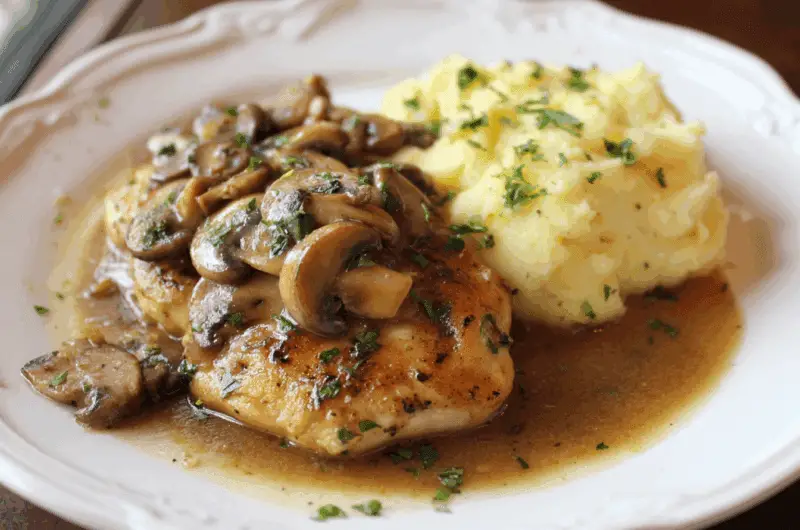
Classic Chicken Marsala
Course: Main CourseCuisine: Italian4
servings10
minutes15
minutes341
kcalTender chicken breasts in a rich marsala wine sauce with golden mushrooms, ready in just 25 minutes for an impressive weeknight dinner.
Ingredients
4 chicken breasts
Salt and pepper to taste
1/2 cup (60g) all-purpose flour
2 tablespoons olive oil
3 small shallots, chopped
1 cup (100g) chestnut mushrooms, sliced
1 tablespoon flour
1/2 cup (125ml) marsala wine
1 cup (250ml) chicken stock
Fresh flat leaf parsley, chopped, for garnish
Directions
- Place each chicken breast between two sheets of plastic wrap or parchment paper. Using a meat mallet or rolling pin, pound the chicken until it’s about 1/2 inch thick throughout. This ensures even cooking and creates tender, quick-cooking cutlets. Season both sides generously with salt and pepper, then dredge each piece in the 1/2 cup of flour, shaking off any excess.
- Heat the olive oil in a large skillet over medium-high heat until it shimmers. Add the floured chicken breasts and cook for about 2-3 minutes per side until golden brown. The chicken doesn’t need to be fully cooked through at this point as it will finish cooking in the sauce later. Remove the chicken to a plate and set aside.
- In the same pan, reduce heat to low and add the chopped shallots. Cook for 2-3 minutes, stirring occasionally, until they soften and become fragrant. The shallots will pick up all the browned bits from the bottom of the pan, which adds incredible depth to the sauce.
- Add the sliced mushrooms to the pan with a pinch of salt and pepper. Increase heat to medium and cook for about 5 minutes, stirring occasionally, until the mushrooms are golden brown and have released their moisture. Don’t crowd the pan or the mushrooms will steam instead of brown.
- Sprinkle 1 tablespoon of flour over the mushrooms and shallots, stirring well to coat everything evenly. Cook for about 1 minute to remove the raw flour taste. This flour will help thicken the sauce and give it a smooth, silky consistency.
- Pour in the marsala wine and turn the heat up to medium. Let the wine bubble and reduce slightly for about 1-2 minutes, scraping up any browned bits stuck to the bottom of the pan. The alcohol will cook off, leaving behind the wine’s rich, slightly sweet notes.
- Add the chicken stock and bring the entire mixture to a boil. Once boiling, reduce the heat to a gentle simmer. The sauce will begin to thicken as it reduces.
- Return the chicken breasts to the pan, nestling them into the sauce. Let everything simmer together for 3-4 minutes, allowing the chicken to finish cooking through and the sauce to reach your desired consistency. The sauce should coat the back of a spoon when it’s ready. Sprinkle with chopped fresh parsley and serve immediately with your choice of mashed potatoes, rice, or pasta.
Notes
- If you can’t find marsala wine, substitute with Madeira wine or an amber-colored sherry that’s not too dry or too sweet. Avoid using cooking wine from the grocery store as it contains too much salt.
- For a richer sauce, stir in 1/2 cup of heavy cream after the sauce has thickened, or add a pat of butter at the end for extra shine and silkiness.
- Don’t skip pounding the chicken thin – this is what makes it cook quickly and stay tender. Thick chicken breasts will be overcooked on the outside and raw in the middle.
- Experiment with different mushroom varieties like chanterelles, porcini, or mixed mushroom packs for more complex earthy notes in the sauce.
- Leftovers can be stored in the fridge for 2-3 days. Reheat gently on the stovetop with a splash of water or stock to loosen the sauce.
Frequently asked questions
Q: Can I make chicken marsala without wine?
A: While marsala wine is what gives this dish its signature taste, you can substitute with Madeira wine or a sweetish amber sherry if you can’t find marsala. However, if you don’t want to cook with any alcohol at all, this particular recipe isn’t the best choice since the wine is central to the sauce. Consider trying a different chicken and mushroom recipe that uses broth instead.
Q: Why is my chicken marsala sauce too thin?
A: A thin sauce usually happens when the chicken isn’t dredged in flour before cooking, or when you skip the tablespoon of flour that gets added to the mushrooms. The flour is what naturally thickens the sauce as everything simmers together. If your sauce is already too thin, you can simmer it longer uncovered to reduce it, or make a small slurry with a teaspoon of cornstarch mixed with cold water and stir it in.
Q: How do I keep the chicken from drying out?
A: The key is to not overcook it during the initial sear. Only cook the chicken for about 5 minutes total (2-3 minutes per side) until it’s golden but not fully cooked through. It will finish cooking when you return it to the sauce. Also, make sure you’ve pounded the chicken thin so it cooks evenly. Thick chicken breasts will be dry on the edges by the time the center cooks through.
Q: What’s the difference between dry and sweet marsala wine?
A: All marsala wine has some sweetness since it’s a fortified wine. Bottles labeled “dry” are slightly less sweet than those labeled “sweet,” but the difference isn’t dramatic. For chicken marsala, either type works fine, though most recipes traditionally use a marsala with a touch of sweetness. You can find marsala wine at most liquor stores for under ten dollars, and one bottle will last through several batches of this recipe.