

Ever wonder why bakery cakes taste so much better than the ones made at home? There’s actually a secret ingredient that professional bakers have been using for years to create those impossibly moist, fluffy cakes that stay perfect for days. This mystery ingredient isn’t something exotic or expensive – it’s probably sitting in your pantry right now, disguised as something completely different. Most home bakers walk right past it without realizing they’re missing the key to bakery-quality results.
Instant pudding mix transforms ordinary cake batter
The weird ingredient that makes cakes super fluffy is instant pudding mix. Yes, that box of Jell-O pudding sitting in your pantry isn’t just for making dessert cups. Professional bakers discovered that adding a small box of instant pudding mix to cake batter creates an incredibly moist, tender crumb that stays fresh for days. The secret lies in the modified cornstarch and other stabilizers in the pudding mix that help the cake retain moisture while creating a lighter texture.
When instant pudding mix is added to cake batter, it acts as a moisture magnet and structure enhancer all in one. The modified cornstarch in the mix allows the cake to hold onto more liquid while baking, preventing that dry, crumbly texture that plagues so many homemade cakes. Even better, you don’t need to make the pudding first – just dump the dry mix straight into your batter and watch the magic happen.
Why instant clearjel works even better
If instant pudding mix seems too weird, there’s an even more direct approach. The actual magic ingredient inside that pudding box is something called Instant Clearjel, which is modified cornstarch designed specifically for retaining moisture in baked goods. Professional bakeries have been using this stuff for decades because it delivers consistent results every single time. A small amount goes a long way – just two tablespoons can transform an entire cake.
Instant Clearjel is basically the professional version of what makes pudding mix work so well in cakes. It’s available online and at some specialty baking stores, though many home bakers find it easier to just grab a box of instant pudding from the grocery store. The science behind it is fascinating – the modified starch molecules create tiny pockets that trap moisture while still allowing the cake to rise properly, resulting in that perfect fluffy-yet-moist texture.
Buttermilk creates the perfect acid balance
Another game-changing ingredient that makes cakes incredibly fluffy is buttermilk instead of regular milk. The acidity in buttermilk breaks down gluten strands, creating a more tender crumb that practically melts in your mouth. Most people think buttermilk will make their cake taste sour, but it actually balances the sweetness and creates a more complex, bakery-quality taste. The acid also reacts with baking soda to create extra lift, making cakes rise higher and fluffier.
Professional bakers always reach for buttermilk when they want guaranteed results. The acidic ingredient works like a natural tenderizer, breaking down tough proteins that can make cakes dense and chewy. Even if a recipe calls for regular milk, substituting buttermilk will almost always improve the texture. Just remember that when switching to buttermilk, the cake might need a pinch more baking soda to balance the extra acidity.
Oil beats butter for moisture every time
Here’s something that might surprise cake lovers – vegetable oil creates moister cakes than butter. Butter tastes amazing, but it solidifies when cool, making cakes firmer and sometimes dry. Oil stays liquid at room temperature, keeping cakes soft and moist even when stored in the refrigerator. The trick is using a combination of both – enough butter for rich taste, plus oil for that perfect texture.
Most home bakers stick with all butter because it seems fancier, but professional bakeries know better. A combination approach gives the best of both worlds – the rich, complex taste of butter with the superior moisture retention of oil. Even using just 1/4 cup of oil in place of some butter makes a noticeable difference in how soft and fluffy the finished cake turns out.
Room temperature ingredients mix better
Cold ingredients are the enemy of fluffy cakes. When butter, eggs, and milk are all at room temperature, they combine into a smooth, uniform batter that traps air bubbles properly. Cold eggs can cause the batter to curdle, while cold butter won’t cream properly with sugar, resulting in dense, heavy cakes. Taking ingredients out of the fridge an hour before baking makes a huge difference in the final texture.
Professional bakers are obsessive about ingredient temperatures because they know it affects everything about how the cake turns out. Room temperature ingredients create better emulsification, which means more air gets incorporated into the batter. If ingredients are too cold, the batter never fully combines, leaving streaks and pockets that create an uneven, dense texture instead of light and fluffy perfection.
Lower oven temperatures prevent dense cakes
Most home bakers crank their ovens too high, which creates a crusty outside before the inside has time to properly rise and set. Professional bakeries typically bake cakes at 325°F or even 300°F, allowing the batter to rise slowly and evenly throughout. This gentle heat creates a more uniform crumb and prevents the dreaded dome top that needs to be sliced off later.
Slow and steady really does win the race when it comes to fluffy cakes. Higher temperatures cause the outside to set too quickly, trapping dense pockets inside and preventing proper rising. Lower temperature baking takes a bit longer, but the results are dramatically better – evenly risen layers with a tender, fluffy crumb from edge to center. An oven thermometer helps ensure the temperature is actually what the dial says it is.
Proper mixing technique prevents tough cakes
Overmixing is one of the fastest ways to ruin a potentially fluffy cake. Once flour is added to the wet ingredients, mixing should be gentle and just until combined. Aggressive mixing develops gluten, which creates tough, chewy cakes instead of tender, fluffy ones. The batter might look a little lumpy, but that’s actually perfect – those lumps will smooth out during baking.
Professional bakers follow a specific order when combining ingredients to minimize mixing time. The alternating method – adding dry and wet ingredients in stages – helps create a smooth batter without overworking the flour. Start with dry ingredients, then wet, then dry again, mixing just until each addition is incorporated. This technique creates the perfect texture every single time.
Egg whites create extra lift and lightness
Using only egg whites instead of whole eggs creates incredibly light, fluffy white cakes that seem to defy gravity. Egg yolks add richness but also weight and density, while egg whites whip up into foam that adds air and lift to cake batter. Many professional white cake recipes use six or even eight egg whites to create that signature cloud-like texture that makes bakery cakes so special.
The technique for incorporating egg whites makes a huge difference in the final result. Adding them one at a time while mixing on low speed allows each white to fully combine before adding the next. Cold egg whites can curdle the batter, so letting them come to room temperature first is crucial. Some bakers even warm them slightly in the microwave for a few seconds to ensure perfect mixing.
Simple syrup keeps cakes moist for days
The final secret to bakery-quality cakes is brushing layers with simple syrup before frosting. This isn’t about fixing a dry cake – it’s about taking an already moist cake and making it stay perfect for days. Simple syrup is just equal parts water and sugar heated until dissolved, then brushed onto cooled cake layers. This extra step locks in moisture and prevents the cake from drying out, even after sitting for several days.
Many home bakers skip this step because it seems unnecessary, but professional bakeries never skip it. The simple syrup technique can be enhanced with extracts or liqueurs for extra taste, but even plain syrup makes a noticeable difference. A silicone pastry brush works best for applying an even, light layer that soaks in without making the cake soggy.
These professional techniques transform ordinary home baking into something truly special. The combination of moisture-retaining ingredients, proper temperatures, and careful technique creates cakes that rival any bakery. Most of these ingredients and methods cost nothing extra – they’re just different ways of doing what home bakers already do, with dramatically better results that friends and family will definitely notice.
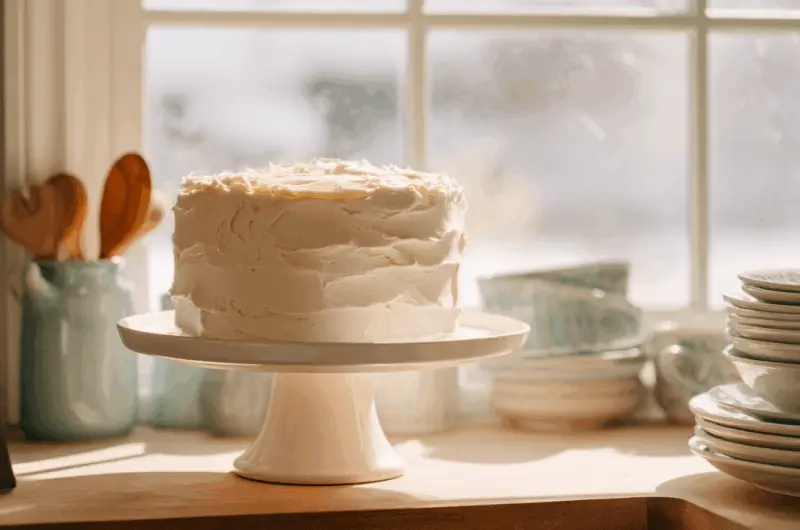
Super Fluffy White Cake with Pudding Mix
Course: DessertCuisine: American12
servings15
minutes30
minutes420
kcalThis incredibly fluffy white cake uses the secret bakery ingredient that makes all the difference.
Ingredients
8 oz unsalted butter, room temperature
14 oz granulated sugar
6 large egg whites, room temperature
14 oz all-purpose flour
1 box (3.4 oz) instant vanilla pudding mix
2 1/2 teaspoons baking powder
1/2 teaspoon salt
10 oz buttermilk, room temperature
2 oz vegetable oil
1 teaspoon vanilla extract
1/2 teaspoon almond extract
Directions
- Preheat oven to 325°F and prepare two 9-inch cake pans with butter and flour or baking spray. Line the bottoms with parchment paper for easy removal. Make sure your oven rack is positioned in the center of the oven for even baking.
- In a medium bowl, whisk together flour, instant pudding mix, baking powder, and salt until well combined. Set this dry mixture aside. In a measuring cup, combine buttermilk, vegetable oil, vanilla extract, and almond extract, stirring gently to mix.
- In the bowl of a stand mixer fitted with the paddle attachment, cream the room temperature butter until smooth and light. Gradually add sugar while mixing on low speed, then increase to high speed and beat for 5 minutes until the mixture is light, white, and fluffy.
- With mixer on low speed, add egg whites one at a time, allowing each to fully incorporate before adding the next. If egg whites are cold, warm them briefly in the microwave for 10-15 seconds. Cold egg whites can cause the batter to curdle.
- Add one-third of the flour mixture to the butter mixture and mix on low speed just until combined. Pour in half of the buttermilk mixture and mix until just incorporated. Add another third of flour, then remaining buttermilk, then final third of flour, mixing gently after each addition until just combined.
- Divide batter evenly between prepared pans, using a kitchen scale for accuracy if available. Gently tap pans on counter to release air bubbles. Bake for 28-35 minutes or until a toothpick inserted in center comes out clean and cake springs back when lightly touched.
- Cool cakes in pans for 10 minutes, then turn out onto wire racks to cool completely. While still slightly warm, wrap cakes in plastic wrap to lock in moisture. This prevents them from drying out and creates that bakery-style texture.
- Once completely cool, trim any brown edges with a serrated knife for the cleanest appearance. Brush layers lightly with simple syrup if desired before frosting. Frost with your favorite buttercream or cream cheese frosting for the ultimate bakery-style cake.
Notes
- Room temperature ingredients are crucial for proper mixing – take everything out of the fridge 1-2 hours before baking
- Instant pudding mix can be any flavor, but vanilla works best for white cake – chocolate pudding mix makes great chocolate cake too
- Don’t skip the lower oven temperature – 325°F creates more even baking and fluffier texture than higher heat
- Wrapping warm cakes in plastic wrap locks in moisture and prevents drying – this is a professional bakery technique
- Cake can be made 1-2 days ahead and will actually improve in texture as the moisture distributes evenly
Frequently asked questions
Q: Can I use any flavor of instant pudding mix in cake batter?
A: Yes, any flavor works great! Vanilla pudding mix is perfect for white or yellow cakes, while chocolate pudding mix makes incredibly moist chocolate cakes. Lemon pudding mix creates amazing lemon cakes, and butterscotch adds a rich caramel note to vanilla cake.
Q: What happens if I don’t have buttermilk for my cake recipe?
A: Make your own by adding 1 tablespoon of lemon juice or white vinegar to 1 cup of regular milk, then let it sit for 5 minutes until it curdles. This creates the same acidity that makes cakes tender and fluffy. You can also use sour cream thinned with a little milk.
Q: Why did my cake turn out dense even though I followed the recipe exactly?
A: The most common causes are overmixing once flour is added, using cold ingredients that don’t combine properly, or baking at too high a temperature. Make sure everything is room temperature and mix gently just until ingredients are combined.
Q: How long will a cake made with pudding mix stay fresh?
A: Cakes made with instant pudding mix stay incredibly moist for 4-5 days at room temperature when properly covered, or up to a week in the refrigerator. The modified cornstarch in the pudding mix helps retain moisture much longer than regular cake recipes.