

Picture rushing home from work on a Wednesday evening, stomach growling, and realizing you have about 15 minutes before your family starts complaining about dinner. The thought of ordering takeout crosses your mind, but then you remember that perfect combination of leftover chicken in the fridge and a few simple ingredients that can transform into something way better than any restaurant version. This Asian-inspired chicken salad proves that incredible meals don’t require hours of prep time or a culinary degree.
Why this salad beats takeout every time
Most people think creating restaurant-quality Asian chicken salad requires special skills or hard-to-find ingredients. The reality is much simpler. This recipe uses everyday items you probably already have in your kitchen, combined with a few Asian pantry staples that make all the difference. The secret lies in the balance of textures and that incredible peanut-based dressing that brings everything together.
What makes this version superior to restaurant offerings is the freshness factor. Restaurant salads often sit under heat lamps or in refrigerated cases, losing that crucial crunch factor. When you make it at home, every vegetable maintains its perfect texture, and the dressing coats each ingredient evenly without making anything soggy. Plus, you control exactly what goes into every bite.
The magic of Napa cabbage as your base
Many home cooks automatically reach for regular iceberg lettuce when making salads, but Napa cabbage changes the entire game. This Asian variety offers a completely different experience – it’s softer, more pliable, and has a subtle peppery kick that adds complexity without overwhelming other ingredients. Unlike regular cabbage that can taste harsh and tough, Napa cabbage almost melts in your mouth while still providing satisfying crunch.
The texture difference becomes even more apparent when you massage the cabbage with the dressing. This technique, borrowed from traditional Asian cooking methods, helps break down the cell walls slightly, making the cabbage more digestible and allowing it to absorb more of that amazing peanut dressing. The result is a salad that doesn’t feel like you’re eating a pile of raw vegetables, but rather a cohesive, satisfying meal.
Leftover chicken becomes the star ingredient
That rotisserie chicken you bought on Sunday suddenly becomes the hero of your weeknight dinner routine. Breast meat works perfectly because it shreds easily and absorbs the dressing beautifully, but don’t stress if you only have thigh meat available. The key is getting the chicken to room temperature before shredding, which makes the process much easier and ensures even seasoning distribution throughout the salad.
If you’re starting from scratch without leftover chicken, grilled chicken breasts seasoned simply with salt and pepper work wonderfully. Cook them for about 4-5 minutes per side at medium-high heat, then let them rest for a few minutes before shredding. Fresh grilled chicken adds a smoky element that complements the Asian-inspired dressing perfectly, though any cooked chicken method will work in a pinch.
Creating the perfect peanut dressing at home
The dressing makes or breaks any salad, and this peanut-based version hits every note perfectly. Powdered peanut butter creates an incredibly intense peanut taste without making the dressing too thick or heavy. If you’ve never tried powdered peanut butter, prepare to be amazed – it’s like regular peanut butter amplified by ten, since removing the oil concentrates all those nutty compounds into pure essence.
The magic happens when you combine the powdered peanut butter with rice vinegar, soy sauce, sesame oil, honey, and a touch of sambal oelek for heat. Each ingredient plays a specific role: the vinegar adds brightness, the soy sauce brings umami depth, sesame oil provides that distinctive Asian aroma, honey balances everything with sweetness, and the sambal oelek adds just enough heat to make things interesting. Fresh ginger and garlic round out the profile with aromatic complexity that makes your kitchen smell like your favorite Asian restaurant.
Adding crunch with the right vegetables
Texture variety separates good salads from great ones, and this recipe nails it with several different types of crunch. Shredded carrots provide sweetness and vibrant color, while also adding that satisfying bite that keeps your mouth engaged. The trick is using a box grater or food processor to get them into thin, uniform strips that distribute evenly throughout the salad rather than creating chunky pieces that dominate individual bites.
Purple radicchio might seem like an unusual addition, but it serves multiple purposes beyond just looking pretty. Its slightly bitter edge balances the sweetness from the carrots and honey in the dressing, while its sturdy leaves hold up beautifully to the massage technique. Green onions add a mild sharpness and fresh color, while chopped roasted peanuts provide the final textural element – that satisfying crunch that makes each bite feel substantial and complete.
The importance of using your hands
Most people instinctively reach for tongs or spoons when mixing salad, but this particular recipe demands a hands-on approach. Using your hands allows you to gently massage and bruise the vegetables, which sounds destructive but actually improves both texture and taste. This technique helps break down tough cell walls in the cabbage and radicchio, making them more tender and easier to digest.
The massaging action also forces the dressing into direct contact with every surface of the vegetables, ensuring even distribution and better absorption. Think of it like marinating – you’re giving the dressing time and contact to penetrate the ingredients rather than just coating their surfaces. This hands-on mixing creates a more cohesive final dish where every component tastes like it belongs together rather than separate ingredients thrown in a bowl.
Making it your own with simple swaps
While the original recipe is practically perfect as written, real life sometimes requires substitutions. Regular peanut butter works fine if you don’t have the powdered version, though you might need to thin it with a little water or extra rice vinegar to get the right consistency. Coconut aminos can replace soy sauce for those avoiding gluten, and maple syrup works as a honey substitute for anyone following a vegan diet.
Vegetable additions are completely flexible based on what’s in your refrigerator. Bell peppers add sweetness and crunch, snap peas provide a fresh pop, and cucumber brings cooling contrast to the rich peanut dressing. Mandarin oranges or fresh orange segments add bright citrus notes that complement the Asian theme beautifully. Even the nuts can vary – sliced almonds, cashews, or sesame seeds all work wonderfully depending on your preferences and what’s available in your pantry.
Perfect timing for the best results
Timing can make the difference between a good salad and an exceptional one. While this salad is ready to eat immediately, letting it rest in the refrigerator for about an hour allows all those distinct elements to meld into something greater than the sum of its parts. The vegetables absorb more of the dressing, the chicken takes on more of those Asian-inspired notes, and everything settles into perfect harmony.
However, don’t let it sit much longer than a day or two, as the vegetables will start losing their crunch and the salad will become soggy. For meal prep purposes, store the dressing separately and combine everything just before serving. Fresh assembly ensures each component maintains its intended texture and the final result stays as vibrant and satisfying as when first made.
Serving suggestions that make sense
This salad works beautifully as a complete meal for two people or can stretch to feed three if served alongside some crusty bread or rice. The protein content from the chicken makes it substantial enough to satisfy even the heartiest appetites, while the vegetable variety ensures everyone gets their daily dose of vitamins and fiber. It’s equally at home on a weeknight dinner table or at a weekend potluck.
For entertaining, this salad shines as a crowd-pleaser that accommodates various dietary preferences. Most people can eat it as-is, and simple modifications handle common restrictions. The presentation is naturally colorful and appealing, making it an attractive addition to any buffet spread. Served with avocado slices on the side, it becomes an even more complete and satisfying meal that looks like something from an upscale restaurant rather than a quick weeknight dinner.
The beauty of this Asian chicken salad lies in its simplicity and reliability. It proves that amazing meals don’t require complicated techniques or exotic ingredients – just good timing, quality components, and a willingness to get your hands a little dirty. Next time you’re staring at leftover chicken and wondering what to do with it, remember this recipe delivers restaurant-quality results in your own kitchen.
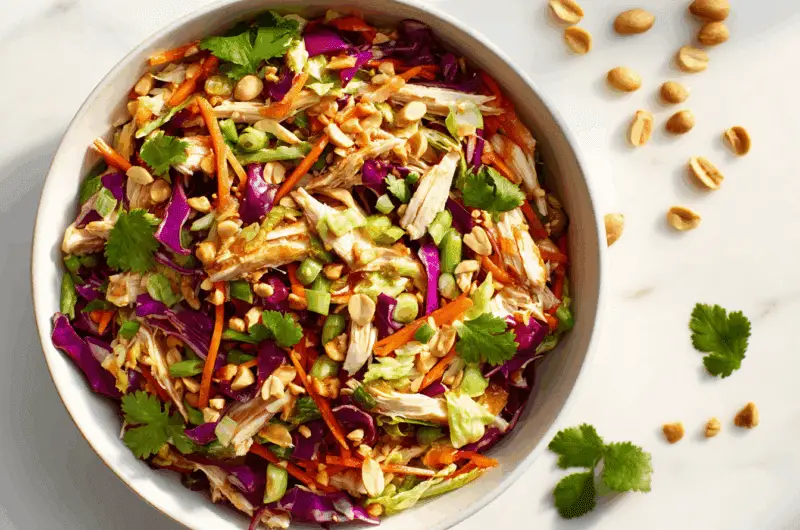
Asian Chicken Salad in 10 Minutes
Course: LunchCuisine: Asian2-3
servings10
minutes675
kcalThis quick and delicious Asian chicken salad combines tender shredded chicken with crispy vegetables and an amazing peanut dressing that comes together in just 10 minutes.
Ingredients
3 cups shredded cooked chicken breast meat
4 cups shredded Napa cabbage
1 cup shredded radicchio
2 medium carrots, peeled and grated
2 green onions, sliced thinly
1/4 cup chopped roasted peanuts
1/4 cup powdered peanut butter
1/4 cup unseasoned rice vinegar
2 tablespoons soy sauce
2 tablespoons peanut oil
2 tablespoons honey
1 tablespoon sambal oelek
1/2 teaspoon fish sauce
1 tablespoon grated fresh ginger root
2 cloves garlic, minced
Directions
- Place the shredded chicken meat, Napa cabbage, radicchio, grated carrots, sliced green onions and chopped peanuts in a large mixing bowl. Make sure all ingredients are evenly distributed throughout the bowl for the best mixing results.
- In a separate bowl or measuring cup, combine the powdered peanut butter, rice vinegar, soy sauce, peanut oil, honey, sambal oelek, fish sauce, grated ginger, and minced garlic. Whisk all ingredients together until the mixture is completely smooth and well combined with no lumps remaining.
- Pour the prepared dressing over the salad ingredients in the large mixing bowl. Using your hands, gently massage and toss all ingredients together, making sure to bruise the cabbage and radicchio slightly to help them absorb the dressing better.
- Continue mixing with your hands for about 2-3 minutes until every ingredient is evenly coated with dressing and the vegetables have softened slightly. The salad can be served immediately or refrigerated for about an hour to allow the flavors to meld together even more.
Notes
- If you don’t have powdered peanut butter, regular peanut butter can be substituted but you may need to thin it with extra rice vinegar or water to achieve the right consistency.
- This salad is best consumed within 1-2 days of making it to maintain the crunch of the vegetables.
- For meal prep, store the dressing separately and combine with the salad ingredients just before serving to prevent soggy vegetables.
Frequently asked questions
Q: Can I use regular peanut butter instead of powdered peanut butter?
A: Yes, you can substitute regular peanut butter, but start with about 2 tablespoons and thin it out with extra rice vinegar or water until you reach the desired consistency. The flavor won’t be quite as intense, but it will still be delicious.
Q: How long can I store this salad in the refrigerator?
A: The salad will stay fresh for up to 2 days when stored in an airtight container in the refrigerator. After that, the vegetables start to lose their crunch and become soggy.
Q: Can I make this salad ahead of time for meal prep?
A: For best results with meal prep, store the dressing separately from the salad ingredients and combine them just before eating. This prevents the vegetables from getting wilted and soggy.
Q: What can I substitute for sambal oelek if I don’t have it?
A: You can use sriracha, chili garlic sauce, or even a pinch of red pepper flakes as substitutes. Start with less than called for and adjust to your heat preference since spice levels vary between different products.