

Ever find yourself staring at your lunch options, wondering why everything seems so boring? That leftover sandwich is calling your name, but so is the desire for something fresh and exciting. The answer might be sitting in your pantry right now: Greek chicken grain bowls that combine the best of Mediterranean ingredients with the convenience of meal prep.
Why this recipe beats restaurant versions
Restaurant grain bowls can cost upwards of $15 and often skimp on the good stuff like protein and cheese. Making them at home means controlling every ingredient while spending less than half the price. The secret lies in that three-ingredient feta sauce that transforms ordinary chicken and quinoa into something restaurant-worthy.
This Greek chicken recipe delivers 50 grams of protein per serving, making it incredibly satisfying. The combination of textures – creamy feta sauce, tender chicken, crunchy cucumbers, and fluffy quinoa – creates an eating experience that keeps you coming back for more. Plus, everything can be prepped ahead for easy weekday lunches.
Getting that perfect chicken every time
Chicken thighs are the secret weapon here instead of breasts. They stay juicy even when reheated and pack more taste than their leaner counterparts. The marinade combines lemon juice, oregano, marjoram, and garlic for that authentic Greek restaurant experience. Twenty minutes of marinating time is enough to infuse serious Mediterranean vibes.
Roasting at 425°F for 18-20 minutes gives perfectly cooked thighs with slight caramelization on the edges. Using an instant-read thermometer ensures they hit that safe 165°F internal temperature without overcooking. The spice combination of onion powder, garlic powder, coriander, and paprika creates a crust that locks in moisture while adding layers of taste.
The game-changing feta sauce technique
Forget crumbled feta that falls to the bottom of your bowl. This three-ingredient sauce transforms regular feta cheese into a creamy dressing that coats every bite. The food processor breaks down the cheese while water and olive oil create the perfect consistency. It takes less than two minutes but makes all the difference.
Start with 4 ounces of good-quality feta – the kind packed in brine tastes better than pre-crumbled versions. Add 2.5 tablespoons of water and 1 tablespoon of extra-virgin olive oil, then process until smooth. The sauce keeps in the refrigerator for up to five days, making it perfect for multiple meal prep sessions throughout the week.
Quinoa cooking mistakes to avoid
Rinsing quinoa before cooking removes the natural coating that makes it taste bitter or soapy. Many people skip this step and wonder why their grain bowls taste off. Use a fine-mesh strainer and rinse under cold water for about a minute until the water runs clear. This simple step transforms the final result.
The perfect quinoa-to-water ratio is 1.25 cups quinoa to 2 cups water with half a teaspoon of salt. Bring it to a boil, then reduce the heat to low and simmer covered for 15 minutes. Let it rest off the heat for 5 minutes before fluffing with a fork. This method produces fluffy, separate grains instead of mushy quinoa that ruins the bowl’s texture.
Building the perfect vegetable combination
Persian cucumbers work better than regular cucumbers because they have fewer seeds and stay crunchier longer. Cut them into thick rounds instead of thin slices – they hold up better during storage and provide satisfying crunch. Cherry tomatoes should be halved or quartered, depending on size, to distribute evenly throughout each bite.
The red onion gets a quick pickle treatment with lemon juice that tames its sharp bite while adding acidic brightness. Kalamata olives provide that essential briny element that ties all the Mediterranean elements together. Fresh spinach adds color and nutrients without overwhelming the other ingredients. Each component serves a specific purpose in the final bowl.
Meal prep strategy that actually works
Sunday meal prep becomes manageable when you batch cook the chicken and quinoa together. While the chicken roasts for 20 minutes, the quinoa simmers on the stovetop. Use that time to chop vegetables and make the feta sauce. Everything can be done in under 45 minutes with proper timing and organization.
Store components separately for the first day, then assemble the remaining bowls for the week. The feta sauce actually improves the next day as ingredients meld together. These bowls taste great cold, making them perfect for grab-and-go lunches. They’ll stay fresh in the refrigerator for up to four days when stored in airtight containers.
Customization options for different preferences
Swap quinoa for other grains like farro, bulgur, or even couscous, depending on what’s in your pantry. Each brings a different texture and cooking time, but the basic assembly remains the same. Brown rice works well too, though it takes longer to cook and has a chewier texture than quinoa.
Vegetarians can substitute the chicken with chickpeas, white beans, or even crispy baked tofu. The feta sauce works equally well with plant-based proteins. For extra richness, add a dollop of Greek yogurt or hummus. Roasted red peppers, artichoke hearts, or fresh herbs like dill or parsley make excellent additions without changing the basic recipe structure.
Storage tips that maintain freshness
Glass meal prep containers work better than plastic for these bowls because they don’t absorb odors from the feta sauce or olives. Layer ingredients strategically with quinoa on the bottom, then chicken, then vegetables on top. This prevents the quinoa from getting soggy while keeping delicate vegetables crisp.
Keep the feta sauce in a separate small container until ready to eat, or store it in one corner of the main container using a silicone divider. The red onion continues to mellow over time, becoming sweeter and less sharp. Cherry tomatoes might release some juice, but this actually adds to the overall taste rather than detracting from it.
Common mistakes that ruin grain bowls
Overseasoning the individual components leads to an overwhelming final product. The feta sauce provides plenty of salt and richness, so go easy on additional seasonings. Similarly, using too much olive oil in the quinoa makes everything greasy rather than light and fresh. A little goes a long way with Mediterranean ingredients.
Cutting vegetables too small makes them disappear into the quinoa, while cutting them too large makes eating awkward. Aim for bite-sized pieces that provide textural contrast without requiring a knife to eat. The chicken should be chopped into pieces roughly the same size as the vegetables for consistent bites throughout the bowl.
Greek grain bowls prove that healthy eating doesn’t have to be boring or expensive. With a little weekend prep work, you can have restaurant-quality lunches ready for the entire week. The combination of protein, whole grains, fresh vegetables, and that incredible feta sauce creates a meal that’s both satisfying and energizing.
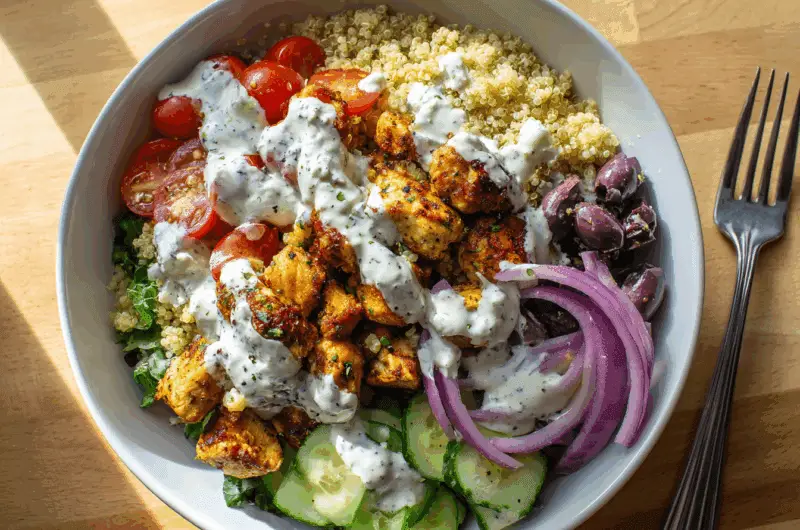
Greek Chicken Grain Bowls with Feta Sauce
Course: LunchCuisine: Greek4
servings15
minutes20
minutes580
kcalMediterranean-inspired grain bowls with herb-marinated chicken, fresh vegetables, quinoa, and a creamy three-ingredient feta sauce that transforms ordinary ingredients into restaurant-quality meals.
Ingredients
4 ounces feta cheese, drained
2 1/2 tablespoons water
1 tablespoon extra-virgin olive oil
4 boneless, skinless chicken thighs (about 1 1/2 pounds)
1/4 cup plus 1 tablespoon fresh lemon juice, divided
1 clove garlic, minced
2 teaspoons dried oregano
1/2 teaspoon dried marjoram
1 1/2 teaspoons kosher salt, divided
1/4 teaspoon freshly ground black pepper
1 1/4 cups quinoa, rinsed well
2 cups water
1/2 medium red onion, thinly sliced
2 Persian cucumbers, sliced into rounds
1 cup cherry tomatoes, halved
1/2 cup pitted Kalamata olives
Directions
- Preheat oven to 425°F and line a rimmed baking sheet with aluminum foil. Crumble the feta into a food processor and pulse several times to break into small pieces. With the machine running, gradually pour in water and olive oil, processing for 30 seconds until smooth.
- Place sliced red onion in a small bowl with 1 tablespoon lemon juice and toss to combine. Set aside to quick pickle while preparing other ingredients. This step helps mellow the sharp bite of raw onion.
- In a large bowl, combine minced garlic, oregano, marjoram, black pepper, 1 teaspoon salt, and the remaining 1/4 cup lemon juice. Add chicken thighs and toss to coat evenly with the marinade. Let it sit for at least 5 minutes while the oven preheats.
- Place marinated chicken on the prepared baking sheet and roast for 18-20 minutes until cooked through and internal temperature reaches 165°F. Remove from oven and let cool for 5 minutes before chopping into bite-sized pieces.
- Meanwhile, place rinsed quinoa, water, and remaining 1/2 teaspoon salt in a medium saucepan. Bring to a boil over medium-high heat, then reduce the heat to low and cover. Simmer for 15 minutes until quinoa is tender and water is absorbed.
- Remove quinoa from heat and let stand covered for 5 minutes. Fluff with a fork and set aside to cool slightly. While quinoa cooks, prepare the remaining vegetables by slicing cucumbers and halving cherry tomatoes.
- Divide the cooked quinoa evenly between 4 bowls, creating a base layer. Top each bowl with chopped chicken, arranging it on one side of the bowl for an attractive presentation.
- Divide the pickled red onion, cucumber slices, cherry tomatoes, and Kalamata olives between the bowls, arranging each ingredient in its own section. Drizzle generously with the feta sauce and serve immediately, or refrigerate for up to 4 days.
Notes
- Rinse quinoa thoroughly before cooking to remove the bitter coating that can affect the taste
- Chicken thighs stay juicier than breasts and reheat better for meal prep
- Store feta sauce separately if meal prepping to prevent other ingredients from getting soggy
- Substitute quinoa with farro, bulgur, or brown rice if preferred
- For a vegetarian version, replace chicken with chickpeas or white beans
Frequently asked questions
Q: Can I use chicken breasts instead of thighs?
A: Yes, but chicken thighs stay more tender and juicy when reheated. If using breasts, reduce cooking time to 15-18 minutes and check internal temperature frequently to avoid overcooking.
Q: How long does the feta sauce keep in the refrigerator?
A: The feta sauce stays fresh for up to 5 days when stored in an airtight container. It may thicken slightly, but you can thin it with a teaspoon of water if needed.
Q: Can these bowls be frozen for longer storage?
A: The chicken and quinoa freeze well for up to 3 months, but fresh vegetables like cucumbers and tomatoes don’t freeze properly. Freeze the cooked components separately and add fresh vegetables when ready to eat.
Q: What can I substitute for quinoa if I don’t like it?
A: Farro, bulgur wheat, brown rice, or even couscous work well as quinoa substitutes. Adjust cooking times according to package directions, but the assembly method remains the same.