

Picture waking up to a creamy, delicious breakfast that’s already waiting for you in the fridge. No cooking, no mess, no rushing around trying to figure out what to eat before work. That’s exactly what happens when you master the art of overnight oats. Most people think they’re complicated or bland, but the truth is they’re one of the simplest breakfast solutions out there. With just two basic ingredients and endless possibilities for customization, these no-cook oats will transform your mornings from chaotic to calm.
Why everyone’s switching to overnight oats
Sunday nights used to mean dreading Monday morning breakfast decisions. Now millions of people prep their entire week’s worth of breakfasts in under five minutes. The concept is ridiculously simple: raw oats soak in liquid overnight, softening into a creamy, pudding-like consistency without any cooking required. Unlike traditional oatmeal that requires standing over a hot stove stirring and timing everything perfectly, overnight oats do all the work while you sleep.
The beauty lies in the simple ratio that works every single time. You get all the nutritional benefits of oats – protein, fiber, and lasting energy – without the morning hassle. Plus, they taste incredible cold, making them perfect for hot summer mornings when the last thing you want is a steaming bowl of anything. They’re like having a personal chef who works the night shift, except that chef is just your refrigerator doing what it does best.
The foolproof basic recipe that never fails
The magic happens with just oats and milk, but adding a few extras transforms them from basic to incredible. Start with half a cup of old-fashioned rolled oats – never use quick oats because they’ll turn mushy. Add half a cup of any milk you like, whether that’s regular dairy milk, almond milk, or oat milk. This 1:1 ratio creates the perfect consistency every time, thick enough to feel satisfying but not so thick you need a knife to eat it.
Here’s where things get interesting: add a quarter cup of Greek yogurt for creaminess and protein, one tablespoon of chia seeds for that pudding-like texture, and a drizzle of maple syrup for sweetness. These additional ingredients aren’t absolutely necessary, but they’re what separate good overnight oats from absolutely amazing ones. The chia seeds especially work like tiny sponges, absorbing liquid and creating that thick, satisfying consistency that makes you forget you’re eating something healthy.
Mason jar vs bowl method
Those Instagram-worthy mason jar photos aren’t just for show – they actually make practical sense. A 16-ounce mason jar gives you enough room to stir everything together without making a mess, plus it’s perfectly portable for busy mornings. The wide mouth versions work even better because you can actually fit a spoon inside to mix properly. Glass jars also don’t absorb odors or stains like plastic containers, so your strawberry oats won’t make your next batch taste weird.
The bowl method works great for batch preparation when you’re making multiple servings at once. Mix everything in a large bowl, cover it, and let it sit overnight. The next morning, just scoop out individual portions into smaller containers or bowls. This approach saves time if you’re feeding a family or meal-prepping for the entire week. Either way works perfectly – it’s really about what fits your lifestyle and kitchen setup better.
Timing secrets that make all the difference
The minimum soaking time is two hours, but overnight really is better. Those extra hours let the oats fully absorb the liquid, creating a much creamier texture than rushed versions. If you’re in a pinch, two hours will work, but the oats might still have a slightly chewy texture that some people don’t love. Plan ahead and let time do the heavy lifting – your taste buds will thank you for the patience.
Here’s something most people don’t know: overnight oats actually get better after the first night. Day two and three often have even better texture as everything continues to meld together. They’ll stay good for up to five days in the refrigerator, though if you’re adding fresh fruit, stick to three days maximum. The oats themselves never go bad quickly, but fresh berries and bananas start breaking down and can make everything watery if you wait too long.
Popular mix-ins that everyone loves
Peanut butter and jelly combinations never get old, even in oat form. Mix in two tablespoons of peanut butter and your favorite jam or fresh strawberries for that nostalgic sandwich taste in breakfast form. The peanut butter adds protein and richness, while the fruit provides natural sweetness and a pop of color. Some people like to layer the jam on the bottom of the jar for an even more sandwich-like experience when they eat it.
Apple pie versions using diced apples, cinnamon, and a handful of chopped pecans taste like dessert but count as breakfast. Banana combinations work incredibly well too – mash half a banana right into the mixture or slice it on top the next morning. Chocolate lovers can add cocoa powder and mini chocolate chips for a healthy version of chocolate pudding. The key is balance – sweet enough to be enjoyable, but not so sweet that you crash an hour later.
Common mistakes that ruin the texture
Using quick oats instead of rolled oats is the fastest way to end up with mushy disappointment. Quick oats are already partially cooked and break down too much during the soaking process, creating a texture that’s more like baby food than breakfast. Old-fashioned rolled oats hold their shape much better and give you that satisfying, chewy texture that makes overnight oats so appealing. Steel-cut oats go too far in the other direction – they stay too hard even after soaking all night.
Adding too much liquid is another rookie mistake that leads to soupy, unsatisfying oats. Start with the basic ratio and adjust from there based on your preferences. Some people like them thicker, others prefer them more liquid, but you can always add more milk in the morning if needed. It’s much harder to fix oats that are too thin than ones that are too thick. Remember, the oats will absorb quite a bit of liquid overnight, so what looks like too much liquid initially often turns out just right by morning.
Hot vs cold serving preferences
Most people assume overnight oats must be eaten cold, but they’re actually delicious heated up too. Thirty seconds in the microwave transforms them into something closer to traditional oatmeal, perfect for cold winter mornings when you want something warm and comforting. The texture changes slightly when heated – they become a bit more creamy and porridge-like rather than the firmer, pudding texture they have when cold.
Cold overnight oats shine during summer months or when you’re rushing out the door. There’s something refreshing about eating them straight from the fridge, especially with fresh berries on top. The temperature really comes down to personal preference and the season. Many people switch between hot and cold depending on their mood or the weather outside. Either way, you’re getting the same nutritional benefits and convenience factor that makes overnight oats such a game-changer for busy mornings.
Storage and meal prep strategies
Sunday meal prep becomes incredibly simple when overnight oats are involved. Make five jars at once and you’re set for the entire work week. Line them up in your refrigerator like little breakfast soldiers, ready to grab and go each morning. Use identical jars so they stack neatly and take up less fridge space. Label them with days of the week if you’re making different varieties, or just grab whichever one appeals to you that particular morning.
For longer storage, overnight oats actually freeze surprisingly well. They’ll keep for up to three months in the freezer, though the texture might be slightly different when thawed. This works great for batch cooking – make a huge batch when you have time, portion them into individual containers, and freeze most of them. Take one out the night before you want to eat it and let it thaw in the refrigerator overnight. It’s like having a backup breakfast plan that never fails, even when life gets completely crazy and you forget to prep fresh ones.
Budget-friendly ingredient swaps
Overnight oats don’t have to break the bank to taste amazing. Regular old-fashioned oats from the big container cost a fraction of fancy steel-cut varieties and work perfectly fine. Store-brand Greek yogurt does the same job as expensive organic versions for this purpose. Even water works as the liquid if money’s tight, though milk definitely tastes better. The beauty of this breakfast is that it’s naturally economical – oats are one of the cheapest ingredients in the grocery store.
Frozen fruit costs much less than fresh and works just as well mixed into overnight oats. The fruit thaws overnight and releases natural juices that sweeten everything naturally. Generic maple syrup or even regular honey provides sweetness without the premium price tag of fancy syrups. Basic ingredients often work better anyway because they don’t compete with each other for attention. Save the expensive add-ins for special occasions and stick to simple, affordable ingredients for your everyday breakfast routine.
Once you start making overnight oats regularly, you’ll wonder why you ever bothered with complicated morning routines or expensive grab-and-go breakfast options. They’re proof that the best solutions are often the simplest ones, requiring nothing more than a few basic ingredients and the patience to let time work its magic. Whether you stick to classic combinations or get creative with wild mix-ins, you’ll have a breakfast that’s ready when you are, tastes better than most restaurant options, and costs a fraction of what you’d spend on convenience foods.
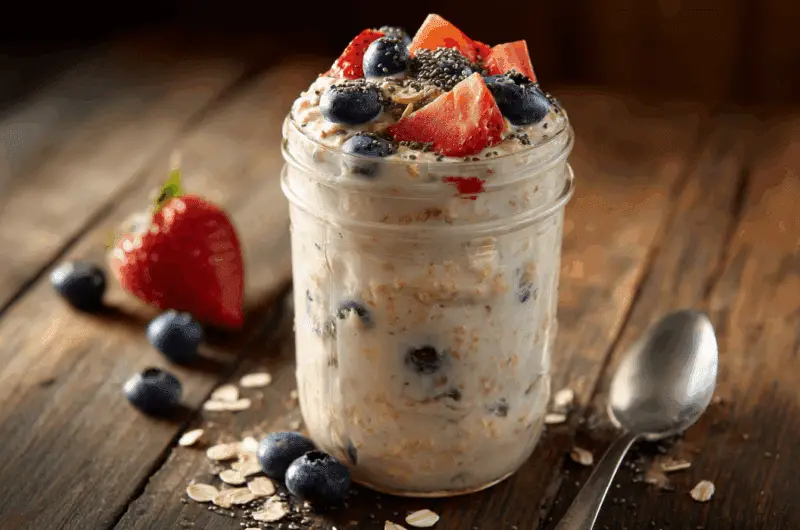
Perfect Overnight Oats
Course: BreakfastCuisine: American1
servings5
minutes308
kcalCreamy, customizable overnight oats that require no cooking and taste like dessert for breakfast.
Ingredients
1/2 cup old-fashioned rolled oats
1/2 cup milk of choice (dairy or non-dairy)
1/4 cup plain Greek yogurt
1 tablespoon chia seeds
1 tablespoon maple syrup or honey
1/2 teaspoon vanilla extract (optional)
Pinch of salt
Fresh fruit for topping
Nuts or seeds for topping (optional)
Directions
- Add the rolled oats to a 16-ounce mason jar or bowl. Make sure to use old-fashioned rolled oats rather than quick oats for the best texture. The jar should be large enough to allow for easy stirring without spilling.
- Pour in the milk of your choice, followed by the Greek yogurt and chia seeds. The chia seeds will help thicken the mixture and create that perfect pudding-like consistency. Add the maple syrup, vanilla extract, and a pinch of salt.
- Stir everything together thoroughly until all ingredients are well combined and no clumps remain. Make sure the oats are completely submerged in the liquid mixture. This ensures even absorption and prevents any dry spots.
- Cover the jar with a tight-fitting lid or cover the bowl with plastic wrap. Refrigerate for at least 2 hours, but overnight is preferred for the best texture. The longer soaking time allows the oats to fully absorb the liquid.
- The next morning, give the mixture a good stir as the ingredients may have separated slightly. Check the consistency and add a splash more milk if you prefer it thinner. The oats should have a creamy, pudding-like texture.
- Add your favorite toppings such as fresh berries, sliced banana, chopped nuts, or additional seeds. These can be mixed in or layered on top depending on your preference. The toppings add texture and extra nutrition.
- Serve immediately straight from the refrigerator for a refreshing cold breakfast. Alternatively, warm in the microwave for 30-60 seconds if you prefer them heated. Both ways are delicious and offer different textures.
- Store any leftovers covered in the refrigerator for up to 5 days. The oats actually improve in texture after the first day as they continue to absorb liquid. Perfect for meal prep and busy mornings.
Notes
- For vegan version, use plant-based milk and yogurt instead of dairy products
- Oats will keep in the refrigerator for up to 5 days, but add fresh fruit just before serving for best quality
- If mixture seems too thick after chilling, add more milk one tablespoon at a time until desired consistency is reached
- Can be frozen for up to 3 months – thaw overnight in refrigerator before eating
Common questions about overnight oats
Q: Can I use quick oats instead of rolled oats?
A: It’s not recommended because quick oats become too mushy during the soaking process. Old-fashioned rolled oats hold their texture much better and give you that satisfying, chewy consistency that makes overnight oats so appealing.
Q: How long do overnight oats last in the refrigerator?
A: They’ll stay fresh for up to 5 days when stored properly in covered containers. However, if you’re adding fresh fruit, it’s best to consume them within 3 days as the fruit can start to break down and make the mixture watery.
Q: Do I have to eat them cold or can I heat them up?
A: Both ways are delicious! You can eat them straight from the fridge for a refreshing breakfast, or microwave them for 30-60 seconds if you prefer them warm. Heating them creates a more porridge-like texture similar to traditional oatmeal.
Q: What’s the minimum soaking time if I’m in a rush?
A: While overnight is ideal, you can get away with just 2 hours of soaking time. The texture won’t be quite as creamy, but they’ll still be perfectly edible and tasty. The longer you wait, the better the consistency becomes.