

Picture this: it’s Tuesday evening, you’re staring into your refrigerator wondering what to make for dinner, and all you see are some random greens that need to be used up soon. Instead of ordering takeout again, what if you could whip up something creamy, satisfying, and actually healthy in just one pot? This creamy pasta with greens recipe turns those wilting vegetables into a restaurant-quality meal that takes less than 30 minutes from start to finish.
Why Greek yogurt works better than cream
Most people automatically reach for heavy cream when they want to make pasta sauce creamy, but Greek yogurt creates an even better texture without the heaviness. The tanginess cuts through the richness while still giving you that luxurious mouthfeel everyone craves. Plus, it’s something most people already have in their fridge, unlike heavy cream, which goes bad quickly.
The secret is mixing the Greek yogurt with Parmesan cheese and a splash of pasta water. The starch from the pasta water helps everything bind together smoothly, while the cheese adds that savory depth. This technique creates a sauce that’s light enough for weeknight dinners but fancy enough for company.
What greens actually taste good in pasta
Not all greens are created equal when it comes to pasta dishes. Spinach wilts quickly and has a mild taste that won’t overpower the sauce, making it perfect for picky eaters. Kale adds a bit more bite and holds up well to cooking, while Swiss chard brings a slightly earthy sweetness that pairs beautifully with garlic and cheese.
Broccoli and zucchini technically aren’t leafy greens, but they work wonderfully in this dish because they cook at the same rate as the pasta. Frozen peas are another great addition since they just need to be warmed through. The key is cutting everything into similar-sized pieces so they finish cooking at the same time as your pasta.
Timing your vegetables perfectly
The biggest mistake people make with one-pot pasta is throwing all the vegetables in at once. Dense vegetables like broccoli and zucchini need more cooking time, so they go in when the pasta has about 3-4 minutes left. Frozen peas only need 2 minutes, while delicate greens like spinach should be added in the very last 30 seconds.
This staggered approach ensures everything finishes cooking at the same moment. Nobody wants mushy spinach or crunchy broccoli in their pasta. Watch your timer closely and taste-test as you go – the vegetables should be tender but still have a little bite to them when you drain the pasta.
Pasta shapes that hold onto the sauce
Short pasta shapes like penne, fusilli, or rigatoni work best for this dish because they trap the creamy sauce in their curves and ridges. Chickpea pasta is another excellent choice since it adds extra protein and has a slightly nutty taste that complements the greens perfectly. Avoid long, thin pasta like angel hair since the sauce tends to slide right off.
Whole wheat pasta adds a heartier texture and nutty taste that pairs well with the earthy greens. If you’re cooking for someone with dietary restrictions, there are plenty of gluten-free options that work just as well. The most important thing is cooking the pasta just until al dente, since it will continue cooking slightly when you mix in the hot sauce.
Adding protein without extra pans
Canned tuna is probably the easiest protein addition – just drain it and stir it in at the end. Rotisserie chicken from the grocery store works perfectly, too; just shred it and add it when you’re mixing in the sauce. Hot-smoked salmon flakes beautifully and adds a sophisticated touch that makes this feel like a restaurant dish.
For vegetarian options, chickpeas are fantastic because they’re already cooked and just need to be warmed through. White beans work equally well and have a creamy texture that complements the sauce. Even leftover cooked chicken or turkey can be diced up and stirred in during the last few minutes of cooking.
Making it garlicky without burning anything
Fresh garlic can burn easily and turn bitter, especially in a one-pot dish where things move quickly. Garlic powder is actually a better choice here because it distributes evenly and won’t burn. You can also use pre-minced garlic from a jar, which is already partially cooked and more forgiving.
If you want to use fresh garlic, add it to the pot with a little olive oil after you’ve drained the pasta but before the heat gets too high. This method gives you maximum garlic taste without the risk of burning. Three large cloves are plenty for most people, but garlic lovers can definitely go heavier.
Getting the sauce consistency just right
The sauce should coat the pasta nicely without being too thick or too thin. Start with less pasta water than you think you need – you can always add more, but you can’t take it out. The sauce will continue to thicken as it cools, so it should look slightly looser than your final desired consistency.
If your sauce gets too thick, add pasta water one tablespoon at a time while stirring. If it’s too thin, let it sit off the heat for a minute or two – the starches will continue working to thicken it up. The key is working quickly once you start combining everything, since the residual heat from the pasta is what helps everything come together smoothly.
Storage and reheating tricks
This pasta keeps well in the refrigerator for up to three days, but the sauce will thicken considerably as it cools. When reheating, add a splash of milk or pasta water to loosen it back up. Avoid using the microwave if possible – gentle reheating on the stovetop over low heat gives much better results.
The dish doesn’t freeze particularly well because dairy-based sauces can separate when thawed. However, you can prep all your vegetables ahead of time and store them in the refrigerator. This makes the actual cooking process even faster on busy weeknights when every minute counts.
Common mistakes that ruin the dish
The biggest error is adding the yogurt while the pasta is still too hot, which can cause it to curdle and look lumpy instead of creamy. Let everything cool for just a minute after draining before stirring in the sauce ingredients. Another common mistake is not saving enough pasta water – you need more than you think for the proper sauce consistency.
Oversalting is another issue since both the pasta water and parmesan cheese already contain plenty of salt. Taste before adding any additional seasoning. Finally, don’t skip the black pepper and red pepper flakes – they add important depth and heat that balances out the creaminess of the yogurt and cheese combination.
This one-pot creamy pasta with greens proves that weeknight dinners don’t have to be boring or complicated. With just a few simple techniques and ingredients you probably already have, you can create something that feels special without the fuss. Next time those greens are looking a little sad in your crisper drawer, you’ll know exactly what to do with them.
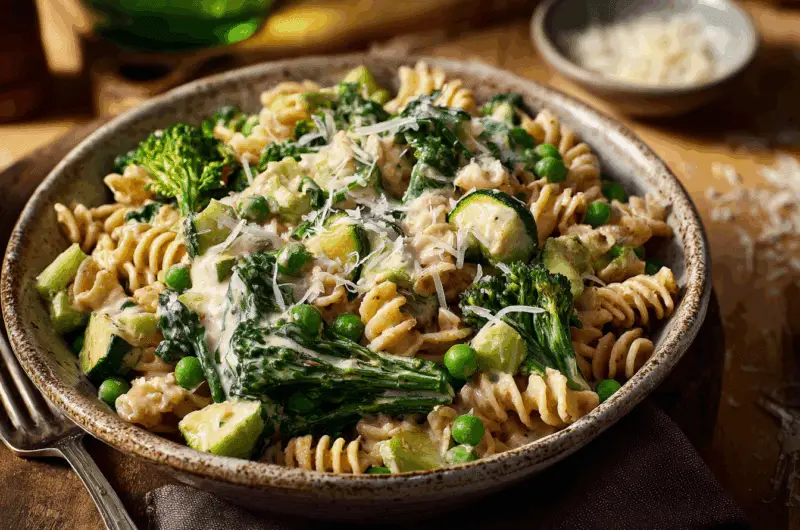
One Pot Creamy Pasta with Greens
Course: Main CourseCuisine: Italian4
servings10
minutes15
minutes375
kcalTransform wilting greens into a restaurant-quality creamy pasta dinner in just one pot with this simple weeknight recipe.
Ingredients
1.5-2 cups dried pasta (chickpea spirals or wholemeal)
1 small-medium zucchini, chopped into small pieces
1 cup broccoli florets, cut small
1 large handful of baby spinach
1/2 cup frozen peas
1 teaspoon garlic powder
1 tablespoon extra virgin olive oil
4 tablespoons Greek yogurt (unsweetened)
1/4 cup grated Parmesan cheese, plus extra for serving
Directions
- Bring a large saucepan of salted water to boil and add the pasta. Cook according to package directions, reducing the heat to maintain a steady bubble. The pasta should cook at a gentle simmer rather than a rolling boil to prevent it from breaking apart.
- While pasta cooks, prepare vegetables by washing and chopping the zucchini and broccoli into small, uniform pieces. This ensures even cooking when they’re added to the pasta water. Keep the spinach whole as it will wilt quickly.
- When pasta has about 3 minutes of cooking time remaining, add the frozen peas, chopped zucchini, and broccoli to the pot. Stir gently to distribute vegetables evenly. The vegetables will cook alongside the pasta using the same boiling water.
- In the final 30 seconds of cooking time, add the baby spinach to the pot and stir well. The spinach will wilt quickly from the heat. Before draining, reserve about 1/2 cup of the starchy pasta cooking water in a measuring cup.
- Drain the pasta and vegetables thoroughly, then return them to the saucepan off the heat. Let the mixture cool for about 30 seconds to prevent the yogurt from curdling when added. This brief cooling period is crucial for achieving a smooth, creamy sauce.
- Add the garlic powder, olive oil, Greek yogurt, and Parmesan cheese to the pasta mixture. Stir vigorously to combine all ingredients and create a creamy coating on the pasta. The residual heat will warm the yogurt and melt the cheese.
- Gradually add the reserved pasta water, one tablespoon at a time, stirring constantly until you achieve your desired sauce consistency. The sauce should coat the pasta nicely without being too thick or too thin. Start with less water than you think you need.
- Season with salt, black pepper, and red pepper flakes to taste. Remember that the Parmesan is already salty, so taste before adding additional salt. Serve immediately with extra Parmesan cheese on the side for those who want more.
Notes
- You can substitute any combination of greens you have on hand – kale, Swiss chard, or even cabbage works well. Just adjust cooking times accordingly, with heartier greens needing a bit more time.
- For added protein, stir in canned tuna, shredded rotisserie chicken, or chickpeas during the last step. Hot-smoked salmon flakes also work beautifully for a more sophisticated dish.
- Leftovers keep in the refrigerator for 3 days, but will thicken considerably. When reheating, add a splash of milk or pasta water to restore the creamy consistency.
Frequently asked questions
Q: Can I use regular yogurt instead of Greek yogurt?
A: Regular yogurt works but has more water content, so your sauce will be thinner. Greek yogurt creates a richer, creamier texture that’s closer to traditional cream sauces. If using regular yogurt, you may need less pasta water to achieve the right consistency.
Q: What if I don’t have any of the specific greens mentioned?
A: Almost any vegetable works in this recipe! Try asparagus, Brussels sprouts, or even frozen mixed vegetables. The key is adjusting the cooking time based on how dense the vegetable is. Harder vegetables need more time, while delicate ones should be added at the very end.
Q: Can this recipe be made dairy-free?
A: Yes, substitute the Greek yogurt with a thick coconut cream or cashew cream, and use nutritional yeast instead of Parmesan cheese. The texture will be slightly different but still delicious. You might need to add a pinch of lemon juice for tanginess.
Q: Why does my sauce look lumpy instead of creamy?
A: This usually happens when the pasta mixture is too hot when you add the yogurt, causing it to curdle. Always let the drained pasta cool for 30 seconds before adding dairy ingredients. If it happens, try whisking vigorously or adding a bit of pasta water to smooth it out.