

Most people think stuffing is just bread, celery, and maybe some herbs thrown together. But what if the most glamorous woman in Hollywood had a secret recipe that included hard-boiled eggs, raisins, and ground beef? Marilyn Monroe’s handwritten stuffing recipe reads more like a treasure hunt than a traditional side dish, packed with ingredients that would make most home cooks do a double-take.
Why this stuffing shocked food writers everywhere
When food experts first saw Marilyn’s handwritten recipe on insurance company stationery, they couldn’t believe their eyes. This wasn’t the simple bread stuffing most families knew. Instead, Monroe had created something that mixed Italian influences with unexpected combinations that shouldn’t work together but somehow do. The recipe includes chicken livers, Parmesan cheese, walnuts, and raisins all in one dish.
Food historians believe the unusual combination came from her marriage to baseball legend Joe DiMaggio and their time living in San Francisco. The Italian influences are obvious, but Monroe added her own twist with ingredients like hard-boiled eggs and specific instructions that read “no garlic” right at the top. Professional chefs who have tried recreating it describe the result as intensely savory with surprising bursts of sweetness.
The ingredients that make this recipe so different
Most stuffing recipes call for basic ingredients like bread cubes, onions, and stock. Monroe’s version reads like she raided three different sections of the grocery store. The protein alone includes both ground beef and chicken livers, which need to be boiled and chopped into coffee bean-sized pieces. Then there are two chopped hard-boiled eggs, a cup and a half of raisins, and a full cup of grated Parmesan cheese.
The base uses sourdough bread that gets soaked in cold water for 15 minutes instead of being dried out like most recipes suggest. Monroe also specified a mix of nuts, including walnuts, pine nuts, or roasted chestnuts, depending on what’s available. Home cooks who have made this recipe say the texture is unlike anything they’ve tried before, with each bite offering something different to chew on.
How to handle the sourdough bread preparation
The bread preparation in Monroe’s recipe throws most people off because it goes against everything they know about stuffing. Instead of using day-old bread or drying out fresh bread, this recipe calls for soaking a whole loaf of sourdough in cold water. The bread sits in a large bowl for exactly 15 minutes, then gets wrung out by hand over a colander before being shredded into pieces.
This technique creates a completely different texture than traditional stuffing methods. The soaked bread holds more moisture and creates a denser final product that some describe as almost pudding-like in consistency. Professional recipe testers suggest using chicken or vegetable stock instead of plain water for the soaking process, which adds extra depth without changing Monroe’s original method too drastically.
Preparing the meat components properly
The meat preparation in this recipe requires more attention than most home cooks expect. The chicken livers need to be boiled in salted water for exactly 8 minutes, then cooled and chopped until no piece is larger than a coffee bean. Meanwhile, the ground beef gets browned in a skillet over medium-high heat, with careful stirring to break up the meat into pieces no bigger than pistachios.
Many people who try this recipe suggest using fattier ground beef, like 80/20 chuck, instead of lean 90/10 to add moisture to the final dish. The combination of beef and liver creates an intensely savory base that’s unlike traditional poultry-based stuffings. Some modern adaptations substitute bacon for the liver or Italian sausage for the ground beef, but purists insist Monroe’s original combination can’t be improved.
Getting the herb mixture exactly right
Monroe’s herb blend is surprisingly complex for someone who wasn’t known as a cook. The recipe calls for dried rosemary, oregano, thyme, bay leaves, salt-free poultry seasoning, salt, and black pepper, all mixed together before being scattered over the other ingredients. The key is crushing the dried herbs slightly to release more oils, and making sure the poultry seasoning doesn’t contain garlic since Monroe specifically noted “no garlic” on her original recipe card.
Finding salt-free, garlic-free poultry seasoning can be tricky in regular grocery stores. Food experts suggest making your own blend using one teaspoon dried sage, one teaspoon marjoram, half a teaspoon ground ginger, and half a teaspoon ground nutmeg. Recipe testers say this homemade blend actually works better than most commercial versions and gives the stuffing a more authentic 1950s taste.
The surprising role of raisins and eggs
Adding raisins to stuffing might sound weird, but they serve an important purpose in Monroe’s recipe. The cup and a half of raisins provides bursts of sweetness that balance out the intense savory elements from the meat and cheese. They also add a chewy texture that contrasts with the soft bread and tender vegetables. Some people substitute golden raisins or dried cranberries, but regular purple raisins seem to work best with the other strong ingredients.
The two hard-boiled eggs get chopped up and mixed throughout the stuffing, though many people who make this recipe say they barely notice them in the final dish. The eggs seem to blend into the background, adding richness without a distinct egg taste. They probably help bind everything together while contributing protein and fat that keep the stuffing from being too dry when baked outside of a turkey cavity.
Baking techniques that actually work
Monroe’s original recipe was designed to stuff a large turkey with extra baked separately as dressing. Most home cooks today prefer baking it all in dishes rather than dealing with the food safety concerns of stuffing a bird. The recipe makes enough for about 20 servings, so it needs to be divided between two 9-inch square baking dishes or three cast-iron skillets for even cooking.
Baking at 350 degrees takes about 40 minutes in skillets or up to an hour in deeper baking dishes. The top should be evenly browned, and an instant-read thermometer should register 165 degrees in the center. Many recipe testers suggest covering the dishes with foil for the first 30 minutes to prevent the top from burning, then removing the foil to let the surface get crispy and golden.
Common problems and how to fix them
The biggest complaint about Monroe’s stuffing is that it comes out too dry when baked as dressing rather than stuffed in a turkey. The original recipe doesn’t include any liquid beyond what’s absorbed during the bread soaking process. Modern cooks solve this by dotting the top with butter cubes before baking or drizzling a small amount of chicken stock over the mixture before it goes in the oven.
Another common issue is that some ingredients don’t distribute evenly throughout the large batch. Professional testers recommend mixing everything by hand rather than using spoons or spatulas, which helps ensure the raisins and chopped eggs get spread around properly. Some people also find the liver flavor too strong and substitute it with mushrooms or additional ground meat instead.
What people really think about the final result
Reviews of Monroe’s stuffing recipe are mixed, with people either loving the complex combination or finding it too busy for their taste. Those who grew up with simple bread stuffing often find the mixture of sweet and savory ingredients overwhelming. However, people familiar with Italian-American cooking or Middle Eastern dishes that combine meat with dried fruit usually appreciate the sophisticated blend of tastes and textures.
Most people agree that the stuffing smells incredible while baking, filling the kitchen with herbs and savory aromas that make everyone hungry. The texture gets high marks for being interesting and varied, with something different in every bite. Even people who don’t love the final result admit that it’s unlike any other stuffing they’ve tried and represents a fascinating glimpse into Monroe’s personal tastes and the influences in her life during the 1950s.
Monroe’s stuffing recipe proves that even Hollywood stars had their own quirky cooking preferences. Whether it becomes a new family tradition or just a fun experiment, this recipe offers a unique way to connect with one of America’s most beloved icons. The combination might seem strange on paper, but sometimes the most unexpected mixtures create the most memorable meals.
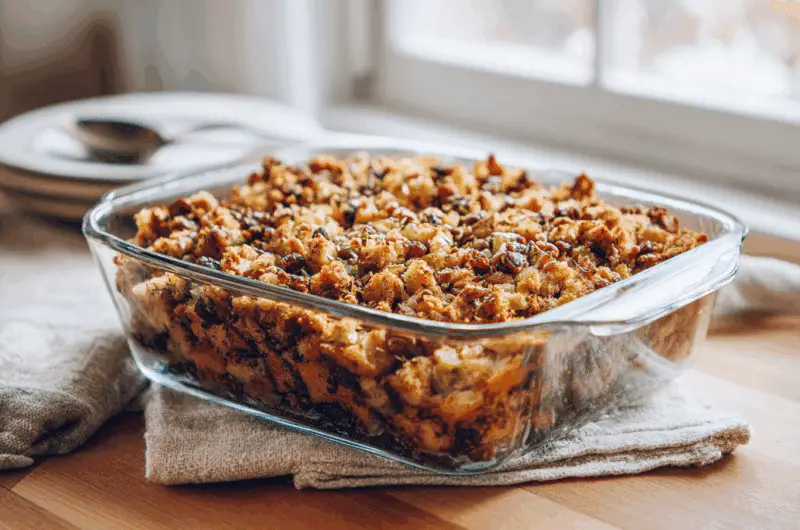
Marilyn Monroe’s Famous Stuffing
Course: Side DishCuisine: American20
servings45
minutes1
hour285
kcalA surprisingly complex stuffing recipe with ground beef, chicken livers, raisins, and hard-boiled eggs that belonged to Hollywood’s most famous star.
Ingredients
1 loaf (10 oz) sourdough bread
1/2 pound chicken or turkey livers
1/2 pound ground beef (80/20 recommended)
1 tablespoon vegetable oil
4 stalks of celery, chopped
1 large onion, chopped
2 cups fresh curly parsley, chopped
2 hard-boiled eggs, chopped
1 1/2 cups raisins
1 cup grated Parmesan cheese
1 1/4 cups chopped walnuts or pine nuts
2 teaspoons dried rosemary, crushed
2 teaspoons dried oregano
2 teaspoons dried thyme
3 bay leaves, crumbled
1 tablespoon salt-free poultry seasoning
1 tablespoon salt
1 tablespoon black pepper
Directions
- Cut the sourdough loaf in half and place both pieces in a large bowl filled with cold water. Let the bread soak for exactly 15 minutes, allowing it to absorb the liquid completely. Working over a colander, squeeze each piece of bread firmly with clean hands to remove excess water, then tear the bread into irregular bite-sized pieces.
- Bring a pot of salted water to a boil and add the chicken livers. Cook for exactly 8 minutes, then drain and let cool completely. Once cooled, chop the livers into pieces no larger than coffee beans, removing any tough membranes as needed.
- Heat the oil in a large skillet over medium-high heat and add the ground beef. Cook while stirring frequently to break up the meat into pieces no larger than pistachios. Continue cooking until the beef is well browned and no pink remains, about 8-10 minutes.
- In a very large mixing bowl, combine the torn sourdough pieces, chopped livers, and cooked ground beef. Add the chopped celery, onion, parsley, hard-boiled eggs, raisins, Parmesan cheese, and nuts. Using clean hands, toss all ingredients gently but thoroughly to distribute everything evenly.
- In a small bowl, whisk together the rosemary, oregano, thyme, bay leaves, poultry seasoning, salt, and pepper until well combined. Scatter this herb mixture evenly over the stuffing ingredients and toss again with your hands until the seasonings are distributed throughout.
- Preheat oven to 350°F and butter two 9-inch square baking dishes or three 10-inch cast iron skillets. Divide the stuffing mixture evenly between the prepared pans, spreading it out but not packing it down too firmly.
- Cover the pans completely with aluminum foil and bake for 30 minutes. Remove the foil and continue baking for 10-30 minutes more, until the top is evenly golden brown from edge to edge.
- Check that the internal temperature reaches 165°F with an instant-read thermometer inserted into the center of the stuffing. Let rest for 10 minutes before serving to allow the stuffing to set up properly.
Notes
- Use 80/20 ground beef instead of lean varieties for better moisture and richness in the final dish.
- If you can’t find salt-free poultry seasoning, make your own with 1 tsp dried sage, 1 tsp marjoram, 1/2 tsp ground ginger, and 1/2 tsp ground nutmeg.
- For extra moisture when baking as a dressing, dot the top with butter cubes before covering with foil.
- This recipe makes enough for 20 servings, so feel free to halve all ingredients for smaller gatherings.
- Leftover stuffing can be frozen in individual portions for up to 3 months.
Frequently asked questions about Monroe’s stuffing
Q: Can I make this stuffing without the chicken livers?
A: Yes, many people substitute the liver with mushrooms, bacon, or additional ground beef. The liver adds a distinctive savory depth, but the stuffing still works without it if the taste is too strong for your preference.
Q: Why does the recipe specifically say “no garlic” at the top?
A: Food historians believe this was because of Joe DiMaggio’s Italian family preferences or possibly Monroe’s own taste. The recipe relies on other herbs and seasonings to create complex flavors without garlic.
Q: Can I stuff this mixture inside a turkey instead of baking it separately?
A: The original recipe was designed for stuffing a turkey, but modern food safety guidelines recommend baking stuffing separately. If you do stuff a turkey, make sure the stuffing reaches 165°F internal temperature.
Q: How do I prevent the stuffing from being too dry when baked as dressing?
A: Add butter cubes on top before baking, cover with foil for the first 30 minutes, and consider drizzling a small amount of chicken stock over the mixture. The original was meant to absorb turkey juices during roasting.