

Picture waking up to the smell of a perfectly baked breakfast without lifting a finger that morning. Most people think making a decent breakfast requires waking up early and spending precious morning time in the kitchen. This make-ahead egg casserole changes everything by letting busy families prepare a hearty, satisfying breakfast the night before and simply bake it fresh in the morning.
Why make-ahead breakfast casseroles work so well
Weekend mornings often become chaotic when everyone wants breakfast at different times. Traditional breakfast requires constant attention – flipping pancakes, scrambling eggs, watching toast. A breakfast casserole eliminates this stress by cooking everything together in one dish. The real magic happens when ingredients sit overnight in the refrigerator, allowing bread to absorb liquid and seasonings to blend perfectly.
This overnight resting period creates a better texture than cooking immediately. The eggs become fluffier and the bread develops a custardy consistency that holds everything together. Many families prepare two casseroles on Sunday evening – one for Monday morning and another to freeze for later in the week.
Essential ingredients that make the difference
The foundation starts with twelve large eggs whisked with milk or half-and-half. This ratio creates the perfect custard base that sets properly without becoming rubbery. Crusty bread works better than soft sandwich bread because it maintains structure while absorbing liquid. Sourdough, ciabatta, or day-old French bread create the ideal texture that won’t turn mushy during baking.
Sharp cheddar cheese provides the best melt and strong enough taste to stand up to other ingredients. Ground pork sausage adds protein and richness, while bell peppers and onions contribute sweetness and crunch. The combination of vegetables can change based on what’s available, but always include onions for foundational sweet notes that complement the eggs perfectly.
Perfect assembly technique for best results
Start by greasing a 9×13 inch baking dish thoroughly with butter to prevent sticking. Layer four cups of cubed crusty bread evenly across the bottom – this creates the foundation that absorbs liquid and provides structure. Cook the sausage with vegetables until everything softens and the meat browns completely, then spread this mixture over the bread layer.
Whisk eggs with milk, salt, pepper, and cheese until completely smooth, then pour evenly over the sausage and bread layers. The liquid should reach most corners of the dish without overflowing. Cover tightly with plastic wrap or aluminum foil and refrigerate for at least 30 minutes, though overnight works best for maximum absorption and enhanced taste development.
Baking temperature and timing secrets
Remove the casserole from refrigerator 15 minutes before baking to prevent thermal shock that could cause cracking. Preheat oven to 375°F for even cooking throughout the thick casserole. Bake uncovered for 40-45 minutes until the center feels set when gently shaken and a toothpick inserted in the middle comes out mostly clean with just a few moist crumbs.
The top should turn golden brown with slightly crispy edges while the center remains creamy. Don’t overbake or the eggs become rubbery and dry. The casserole will puff up dramatically during baking, similar to a soufflé, then settle back down as it cools. Let it rest for 10 minutes before cutting to allow the structure to firm up for cleaner slices.
Smart ingredient swaps for different preferences
Replace sausage with chopped ham, cooked bacon, or ground turkey for different protein options. Vegetarians can substitute extra vegetables like mushrooms, spinach, or zucchini for the meat while maintaining the same proportions. Cheese varieties work interchangeably – try Swiss, pepper jack, or smoked gouda for unique taste profiles that complement the base ingredients differently.
For gluten-free versions, substitute the bread with frozen hash browns or cubed potatoes that have been partially cooked. The potato version requires about three cups of hash browns spread in the bottom of the dish. Fresh herbs like rosemary, thyme, or chives added to the egg mixture create more sophisticated taste combinations without overwhelming the basic recipe structure.
Storage and reheating for maximum convenience
Leftover casserole keeps well refrigerated for up to five days when stored in airtight containers or covered tightly with plastic wrap. Individual portions reheat beautifully in the microwave for 60-90 seconds on medium power, making weekday breakfast prep effortless. The microwave method preserves moisture better than oven reheating for single servings.
For larger portions, reheat covered in a 325°F oven for 15-20 minutes until warmed through. Freezing works exceptionally well – wrap individual portions in plastic wrap, then aluminum foil for up to three months. Thaw overnight in refrigerator before reheating. Many families cut the entire casserole into serving squares immediately after cooling, then wrap each piece separately for grab-and-go breakfast convenience throughout the week.
Common mistakes that ruin the texture
Using fresh soft bread instead of day-old crusty bread creates a soggy, mushy bottom layer that never firms up properly. The bread needs enough structure to absorb liquid without completely falling apart. Adding vegetables without cooking them first introduces excess water that makes the final casserole watery and prevents proper setting of the egg mixture.
Overbaking creates rubbery, tough eggs that lose their creamy texture and become unappetizing. The casserole continues cooking slightly from residual heat even after removing from the oven. Skipping the resting period before cutting results in runny, messy slices that don’t hold their shape. Patience during cooling creates much better presentation and easier serving.
Scaling recipes for different crowd sizes
The basic recipe serves 8-10 people generously, making it perfect for average family breakfasts or small gatherings. For larger crowds, double the recipe and use two 9×13 inch dishes rather than one oversized pan. Cooking times remain the same, but check both dishes since oven hot spots might cause uneven cooking between different positions.
Halving the recipe works well for smaller families using an 8×8 inch square dish with reduced cooking time of about 25-30 minutes. The key ratios remain consistent regardless of size – maintain the proportion of eggs to milk, and ensure enough bread to absorb the liquid properly. Smaller casseroles cook faster, so watch carefully to avoid overbaking the reduced portion size.
Creative serving suggestions and accompaniments
Fresh fruit salad provides a light, refreshing contrast to the rich, hearty casserole. Sliced avocado, salsa, or hot sauce add bright acidity that cuts through the creamy egg and cheese combination. Simple mixed greens with vinaigrette create a more substantial meal for brunch gatherings when guests expect multiple courses.
Coffee cake, muffins, or cinnamon rolls round out the meal for special occasions when extra indulgence feels appropriate. The casserole pairs well with both sweet and savory accompaniments, making it versatile for different entertaining styles. Consider offering several hot sauces, fresh herbs, or grated cheese as toppings so guests can customize their portions according to personal preferences.
This make-ahead egg casserole transforms breakfast from a daily chore into an effortless pleasure. The combination of convenience, adaptability, and satisfying taste makes it an essential recipe for anyone who values both good food and precious morning time. Once this becomes part of regular meal planning, those rushed breakfast moments become a thing of the past.
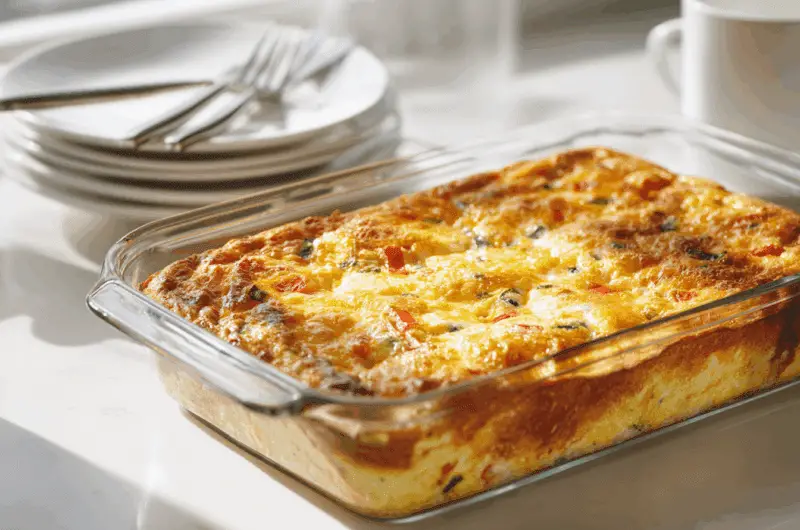
Make-Ahead Breakfast Egg Casserole
Course: BreakfastCuisine: American8
servings20
minutes45
minutes320
kcalThis easy overnight breakfast casserole combines eggs, sausage, cheese, and bread for a hearty meal that feeds a crowd with minimal morning effort.
Ingredients
4 cups cubed crusty bread (sourdough or ciabatta)
1 teaspoon olive oil
1 pound ground pork sausage, casings removed
1 teaspoon dried rosemary or Italian seasoning
3/4 cup chopped yellow onion
2 garlic cloves, minced
2 cups chopped bell peppers
1 cup sliced mushrooms
1 cup roughly chopped fresh spinach
12 large eggs
2/3 cup milk or half-and-half
1 cup shredded cheddar cheese
1/4 teaspoon salt
1/8 teaspoon freshly ground black pepper
Directions
- Grease a 9×13-inch baking dish with butter and arrange the cubed bread evenly across the bottom. Make sure the bread pieces are distributed uniformly to create a stable foundation for the casserole.
- Heat olive oil in a large skillet over medium heat and add the sausage with rosemary or Italian seasoning. Break up the sausage into bite-sized pieces using a wooden spoon as it cooks and begins to brown.
- Add the chopped onion, minced garlic, bell peppers, mushrooms, and spinach to the skillet with the sausage. Continue cooking for 5-6 minutes until the vegetables soften and the sausage is completely cooked through.
- Remove the sausage and vegetable mixture from heat and spread it evenly over the bread layer in the prepared baking dish. Distribute the mixture to ensure every portion of the casserole will have balanced ingredients.
- In a large bowl, whisk together the eggs, milk, salt, pepper, and cheddar cheese until the mixture is completely smooth and well combined. Make sure no streaks of egg white remain visible in the mixture.
- Pour the egg mixture evenly over the sausage and vegetables, ensuring it reaches all corners of the dish. Gently shake the dish to help the liquid settle between the ingredients.
- Cover the casserole tightly with plastic wrap or aluminum foil and refrigerate for at least 30 minutes, though overnight works best for optimal texture. The resting time allows the bread to absorb liquid and the ingredients to meld together.
- Remove the casserole from the refrigerator 15 minutes before baking and preheat oven to 375°F. Bake uncovered for 40-45 minutes until the center is set, the top is golden brown, and a toothpick inserted in the middle comes out mostly clean. Let cool for 10 minutes before slicing and serving.
Notes
- Can be assembled up to 24 hours ahead of time and refrigerated before baking
- For gluten-free version, substitute bread with 3 cups frozen hash browns
- Leftovers keep in refrigerator for 5 days and reheat well in microwave
- Freezes beautifully for up to 3 months when wrapped in individual portions
- Try different cheese varieties like Swiss, pepper jack, or smoked gouda for flavor variations
Frequently asked questions
Q: Can I prepare this casserole completely and freeze it before baking?
A: Yes, you can assemble the entire casserole and freeze it unbaked for up to 3 months. Wrap it tightly in plastic wrap and aluminum foil. When ready to bake, thaw overnight in the refrigerator, then let it sit at room temperature for 15 minutes before baking as directed. You may need to add 5-10 extra minutes to the baking time.
Q: What happens if I don’t have stale bread available?
A: You can make fresh bread stale by cutting it into cubes and leaving them out overnight, or toast the cubes lightly in a 300°F oven for 10-15 minutes until slightly dried. Fresh bread will work but may create a slightly softer texture. Day-old croissants, bagels, or biscuits also work wonderfully as substitutes.
Q: How do I know when the casserole is properly cooked through?
A: The casserole is done when the center feels set when gently shaken, the top is golden brown, and a toothpick inserted in the middle comes out with just a few moist crumbs. The internal temperature should reach 160°F. It will puff up during baking and settle as it cools, which is completely normal.
Q: Can I make this vegetarian while keeping the same texture and satisfaction?
A: Absolutely! Replace the sausage with extra vegetables like diced zucchini, chopped broccoli, or additional mushrooms. You can also add vegetarian sausage crumbles or extra cheese for protein. The key is maintaining the same total volume of ingredients so the egg-to-filling ratio stays balanced for proper setting.