

Toast might seem like the most basic breakfast food, but what if there was a simple way to transform it into something special? Most people stick to the same old butter and jam routine, but chefs around the world have discovered that fancy butter can completely change everything about your morning slice. This upgrade costs just a few extra dollars but delivers restaurant-quality results right in your kitchen.
European butter makes all the difference
Regular American butter contains about 80% butterfat, but European-style butter packs in 82% or more. This might sound like a tiny difference, but those extra few percentage points create a much richer, creamier spread that melts beautifully on warm toast. Brands like Kerrygold, Plugrá, and President offer this European-style richness in most grocery stores. The higher fat content also means the butter holds up better to spreading without tearing your bread.
French butter takes things even further with its cultured, tangy edge that comes from added bacteria cultures – similar to how yogurt gets made. Chef Marc Orfaly specifically recommends expensive salted French butter for his morning toast. Le Beurre Bordier is one premium option that some chefs swear by, though it can cost $15 or more per pound. Even mid-range French butters from brands like Elle & Vire deliver noticeable improvements over standard American varieties.
Cold butter beats room temperature every time
Most people leave butter out to soften before spreading, but many professional chefs do the opposite. Cold, hard butter creates an entirely different experience when it hits hot toast fresh from the toaster. The butter melts slowly and unevenly, creating pockets of pure butterfat that soak into the bread while leaving creamy chunks on the surface. This technique works best with thick-cut artisan bread that can handle aggressive spreading without breaking apart.
Chef Steve Corry waits for his toast to cool slightly before applying cold Irish butter with lots of salt. The contrast between the warm bread and cold butter creates layers of temperature and texture that you simply can’t get with pre-softened butter. Salted varieties work especially well for this technique since the salt crystals add another textural element that enhances each bite.
Flavored butters open up endless possibilities
Once the basic butter upgrade hooks you, flavored varieties become the next logical step. Herb butters infused with garlic, rosemary, or thyme turn plain toast into something that tastes like it came from a fancy restaurant. Sweet options like cinnamon honey butter or maple butter work perfectly for weekend breakfast treats. Many grocery stores now carry these specialty butters in their dairy sections, though making your own costs less and tastes fresher.
Some chefs create their own signature combinations that sound unusual but work amazingly well. Chef Bryan Moscatello uses Le Beurre Bordier Piment d’Espelette, a French butter infused with mild red peppers that delivers richness and gentle heat in perfect balance. You can recreate similar effects by mixing softened butter with paprika, chili powder, or even a tiny amount of hot sauce, then refrigerating it back to spreading consistency.
Whipped butter spreads like a dream
Whipped butter contains the same ingredients as regular butter but incorporates air during production, creating a lighter, fluffier texture that spreads effortlessly even when cold. This makes it perfect for delicate breads that might tear under the pressure of hard butter. The airy texture also means each bite delivers butter in a different way – it melts faster on your tongue and distributes more evenly across the bread surface.
Land O’Lakes and Challenge both make excellent whipped butters that cost only slightly more than regular versions. The whipped texture also makes the butter seem more generous since it covers more surface area with less actual product. Many chefs prefer whipped butter for its ability to blend seamlessly with other ingredients like honey, jam, or even savory additions like minced herbs or garlic.
Grass-fed butter brings deeper richness
Butter from grass-fed cows contains higher levels of beta-carotene, which gives it a naturally golden color and more complex, nutty taste. The cows’ diet of fresh grass instead of grain creates butter with a different fat composition that many people find more satisfying and less greasy than conventional butter. Brands like Organic Valley, Straus, and Vital Farms offer grass-fed options that are becoming easier to find in regular supermarkets.
The seasonal variation in grass-fed butter adds another layer of interest – spring butter tends to be more golden and grassy, while fall butter becomes paler and nuttier as the cows eat hay instead of fresh grass. This natural variation means your toast can actually taste different throughout the year. Grass-fed butter also tends to be firmer at room temperature, making it ideal for the cold butter spreading technique that many chefs prefer.
Raw butter offers the most intense experience
Raw butter made from unpasteurized cream delivers the most intense, pure butter experience possible. The lack of heat treatment preserves enzymes and bacteria that create more complex, vibrant tastes that you simply can’t get from pasteurized products. However, raw butter can be harder to find since many states restrict its sale. Farmers markets and specialty food stores are the most likely sources, though some states allow direct sales from dairy farms.
The texture of raw butter also differs significantly from regular butter – it tends to be softer and more spreadable even when cold, with a silkier mouthfeel that coats the tongue differently. Raw butter usually costs considerably more than pasteurized versions, sometimes $8-12 per pound, but the intense richness means a little goes much further. Some people describe the taste as more “alive” or “bright” compared to regular butter.
Cultured butter adds tangy complexity
Cultured butter starts with cream that’s been fermented with bacteria cultures before churning, similar to how sour cream or crème fraîche gets made. This fermentation process creates lactic acid that gives the butter a subtle tanginess and more complex depth than regular sweet cream butter. The cultures also break down some of the milk proteins, creating a smoother, more refined texture that melts beautifully on toast.
Vermont Creamery and Organic Valley both make excellent cultured butters that are widely available. The tangy edge makes cultured butter particularly good for savory toast toppings since the acidity balances rich ingredients like cheese or avocado. Some artisan creameries age their cultured butter for several days, developing even more complex tastes that can rival fine cheese in their depth and sophistication.
Salt choices matter more than expected
Not all salted butters use the same type of salt, and this makes a bigger difference than most people realize. Regular table salt creates a sharp, straightforward saltiness, while sea salt adds mineral complexity that enhances the butter’s natural sweetness. Some premium butters use flaky finishing salts like Maldon or fleur de sel that create little bursts of salinity when they hit your tongue, rather than uniform saltiness throughout.
You can also add your own salt to unsalted butter for complete control over the amount and type. Smoked salts create an almost bacon-like depth, while pink Himalayan salt adds subtle mineral notes. Finishing salts work especially well when sprinkled on top of buttered toast rather than mixed into the butter itself, since the crystals maintain their distinct texture and deliver concentrated bursts of flavor with each bite.
Storage and serving temperature tips
Premium butter requires different storage than regular butter to maintain its quality. European-style and cultured butters often taste best when stored in the refrigerator and brought to just slightly below room temperature before serving – still cool but spreadable. A butter bell or butter crock can keep small amounts at perfect spreading consistency while protecting the butter from air exposure that can cause off-flavors to develop.
Some professional chefs like Paola Velez are so serious about butter that they travel with empty suitcases to bring back specialty varieties from different regions. For home use, buying smaller quantities of premium butter ensures it gets used while still fresh, since the complex tastes can fade over time. Most artisan butters taste best within two weeks of purchase, though they remain safe to eat much longer when properly refrigerated.
This simple switch from regular to premium butter transforms breakfast from routine to special occasion. The extra cost – usually just a few dollars more per pound – delivers outsized improvements in taste and satisfaction that make every piece of toast feel like a small luxury worth savoring.
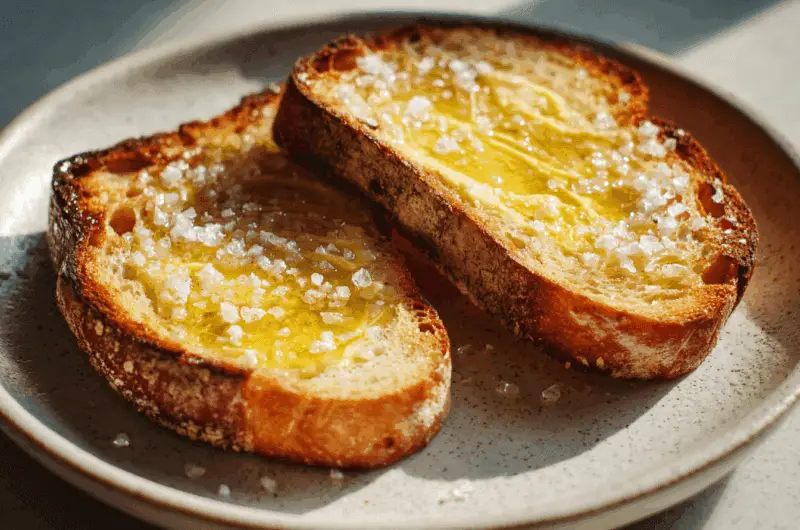
Fancy Butter Toast with French Cultured Butter
Course: BreakfastCuisine: French2
servings5
minutes3
minutes180
kcalTransform ordinary toast into a gourmet breakfast with premium French cultured butter and finishing salt.
Ingredients
2 slices thick-cut artisan bread (sourdough or whole grain)
3 tablespoons premium cultured butter (cold)
1/2 teaspoon flaky sea salt (Maldon or fleur de sel)
1 tablespoon extra virgin olive oil (optional)
Directions
- Toast the bread slices to a deep golden brown color, ensuring they’re hot and crispy. The bread should be well-toasted to provide the right contrast with the cold butter. Remove from toaster and place on serving plates immediately.
- Let the toast cool for about 30 seconds to prevent the butter from melting too quickly. The bread should still be warm but not scorching hot. This timing is crucial for achieving the perfect butter-to-bread temperature contrast.
- Apply the cold cultured butter generously using firm pressure, allowing it to create uneven patches and chunks. Don’t worry if the butter seems hard to spread – this creates the desired texture. The butter should partially melt while leaving creamy pieces on the surface.
- Sprinkle the flaky sea salt evenly over the buttered toast, focusing on areas with visible butter chunks. The salt crystals should sit on top rather than dissolving completely. Add a light drizzle of olive oil if desired for extra richness and glossy appearance.
Notes
- VermontCreamery and Organic Valley make excellent cultured butters available in most supermarkets
- The butter must be cold for this technique to work properly – don’t let it come to room temperature
- Thicker bread works better than thin slices as it won’t tear under the pressure of cold butter
Frequently asked questions
Q: Where can I find premium cultured butter in regular grocery stores?
A: Most major supermarkets carry cultured butter in their specialty cheese section or near the organic dairy products. Vermont Creamery, Organic Valley, and Kerrygold are the most widely available brands, though some stores keep them in a separate gourmet section rather than with regular butter.
Q: How much more expensive is premium butter compared to regular butter?
A: Premium cultured or European-style butter typically costs $2-4 more per pound than regular butter, so expect to pay $6-8 per pound instead of $3-4. While this seems like a big jump, the richer taste means you often use less per serving, making the actual cost difference smaller.
Q: Can I make my own flavored butter at home?
A: Yes, simply let premium butter soften slightly, then mix in herbs, spices, honey, or other additions before refrigerating back to spreading consistency. This costs much less than buying pre-made flavored butters and lets you control exactly how much of each ingredient goes in.
Q: Does the type of salt really matter for buttered toast?
A: Absolutely – flaky finishing salts like Maldon create little bursts of flavor when they hit your tongue, while regular table salt dissolves quickly and provides uniform saltiness. The texture contrast of flaky salt adds another layer of interest that makes each bite more exciting.