

Picture this: you’re running late for work, coffee is still brewing, and your stomach is demanding breakfast. Instead of grabbing another sad granola bar, what if you could have a hot, homemade breakfast sandwich ready in minutes? These make-ahead breakfast sandwiches solve the eternal morning struggle. Unlike those rubbery fast-food versions, these sandwiches stay moist and delicious even after freezing, thanks to a few simple tricks that transform your morning routine.
Why regular breakfast sandwiches fail after freezing
Most homemade breakfast sandwiches turn into cardboard discs after a trip to the freezer. The eggs become rubbery, the bread gets soggy, and the whole thing tastes like it spent a month in food storage. This happens because traditional cooking methods don’t account for the reheating process. When eggs are scrambled too hard initially, they become even tougher after microwaving.
The secret lies in understanding that baked eggs behave differently than stovetop scrambled eggs. Baking eggs in a large pan creates a more stable texture that holds up to freezing and reheating. The eggs stay tender because they cook more gently and evenly. Plus, you can make twelve servings at once instead of standing over the stove making individual portions like some short-order cook.
The baked egg method changes everything
Forget everything you know about making breakfast sandwich eggs. Instead of scrambling eggs in a pan, whisk twelve eggs with milk, salt, and pepper, then pour the mixture into a greased 9×13 pan. Bake at 325 degrees for 18-22 minutes until the center is just set. This creates a giant egg sheet that cuts into perfect sandwich-sized squares.
The magic happens because baked eggs cook more gently than stovetop eggs. When you reheat them later, they don’t become tough and rubbery like traditionally scrambled eggs do. The milk keeps them creamy, while the gentle oven heat creates a texture that actually improves after freezing. Cutting rounds with a biscuit cutter or glass creates perfectly sized portions that fit English muffins without hanging over the edges.
English muffins beat bagels every time
While bagels might seem like the obvious choice for breakfast sandwiches, English muffins actually perform better for make-ahead versions. Their porous texture absorbs just enough moisture without becoming soggy, and they reheat more evenly than dense bagel bread. The nooks and crannies grab onto egg and cheese, creating a better structure that holds together during eating.
Thomas’ English Muffins work perfectly, but any brand will do the job. The key is toasting them lightly before assembly – this creates a barrier that prevents sogginess during storage. Whole wheat versions add fiber without changing the basic technique. Skip the fancy artisanal breads for this recipe; simple English muffins actually outperform expensive alternatives because their texture is specifically designed for this type of use.
Assembly order prevents soggy disasters
The order you stack ingredients makes a huge difference in how well these sandwiches hold up. Start with the bottom English muffin half, add your cooked sausage patty or bacon, then the egg square, followed by cheese, and finally the top muffin half. This specific order isn’t arbitrary – it creates moisture barriers that prevent sogginess.
The meat acts as a barrier between the muffin and egg, while the cheese on top helps seal everything together when it melts during reheating. Never put wet ingredients directly against the bread, or you’ll end up with mushy sandwiches that fall apart. Wrapping individually in foil or parchment paper creates portion control and prevents freezer burn that ruins texture and taste.
Smart storage extends shelf life significantly
Proper storage transforms these sandwiches from a weekend project into a month-long breakfast solution. Wrap each sandwich individually in wax paper, parchment paper, or foil, then place all wrapped sandwiches in a freezer-safe resealable bag. The double protection prevents ice crystals from forming and maintains texture during frozen storage.
Label everything with contents and date – trust me, frozen breakfast sandwiches all look the same after a few weeks. These keep for up to one month in the freezer without losing quality. For shorter-term storage, assembled sandwiches stay fresh in the refrigerator for 2-3 days. The individually wrapped portions make it easy to grab exactly what you need without defrosting extras you won’t eat.
Reheating techniques that actually work
The microwave gets a bad reputation, but it’s actually perfect for reheating frozen breakfast sandwiches when used correctly. Remove the wrapping and place the frozen sandwich on a paper towel-lined plate. Microwave for one minute on defrost or 50% power, flip the sandwich, then microwave for 30 seconds to one minute on high power until warmed through.
The paper towel absorbs excess moisture while the two-stage heating prevents hot spots that make some parts molten while others stay cold. For crispier results, remove the top English muffin half and toast it separately while the rest heats. This adds fresh crunch that makes the sandwich taste like it was just made. Toaster ovens work great too – just wrap in foil and heat at 350 degrees for 10-15 minutes.
Meat choices that freeze and reheat well
Not all breakfast meats handle freezing equally well. Sausage patties and Canadian bacon reheat beautifully, maintaining their texture and taste after freezing. Regular bacon works but can become slightly chewy. Ham tends to dry out, though thick-cut varieties perform better than thin deli slices that turn leathery.
Cook all meats completely before assembly, since the reheating process won’t fully cook raw ingredients. Jimmy Dean sausage patties are convenient and consistent, but homemade patties work just as well. Turkey alternatives like turkey bacon or turkey sausage follow the same rules as their pork counterparts. For vegetarian versions, plant-based sausage patties from brands like Beyond or Lightlife maintain their texture surprisingly well through the freeze-reheat cycle.
Cheese selection makes or breaks the sandwich
Cheddar cheese reigns supreme for breakfast sandwiches because it melts evenly and maintains good taste after freezing. American cheese works well, too, though it’s more processed. Swiss, Monterey Jack, and pepper jack all perform admirably. Avoid fresh mozzarella or soft cheeses that release too much moisture and create soggy bread.
Pre-sliced cheese works better than blocks you slice yourself because the thickness stays consistent. Kraft singles might not be gourmet, but they melt perfectly and don’t separate during reheating like some natural cheeses do. One slice per sandwich provides enough coverage without overwhelming the other ingredients. The cheese acts as a moisture barrier and helps hold everything together when melted.
Batch cooking saves serious time and money
Making twelve sandwiches at once feels like a big project, but the time investment pays off immediately. Instead of spending ten minutes every morning making breakfast, you spend an hour on Sunday afternoon and have breakfast sorted for nearly two weeks. The ingredient cost per sandwich works out to roughly $2, compared to $4-6 for store-bought frozen versions or $8-10 from coffee shops.
The math gets even better when you consider the time saved. Five minutes of morning prep versus 15-20 minutes of cooking and cleanup adds up quickly over two weeks. You’ll also avoid the temptation of an expensive drive-through breakfast when you know a homemade sandwich is waiting in the freezer. Plus, you control the ingredients and can avoid the preservatives and excess sodium found in commercial versions.
These make-ahead breakfast sandwiches prove that convenience doesn’t require sacrificing quality. With the right techniques, you can have restaurant-quality breakfast sandwiches ready in minutes, not hours. The secret lies in understanding how different cooking methods affect texture after freezing, then using that knowledge to create something better than anything you can buy. Your future hungry self will thank you for the effort.
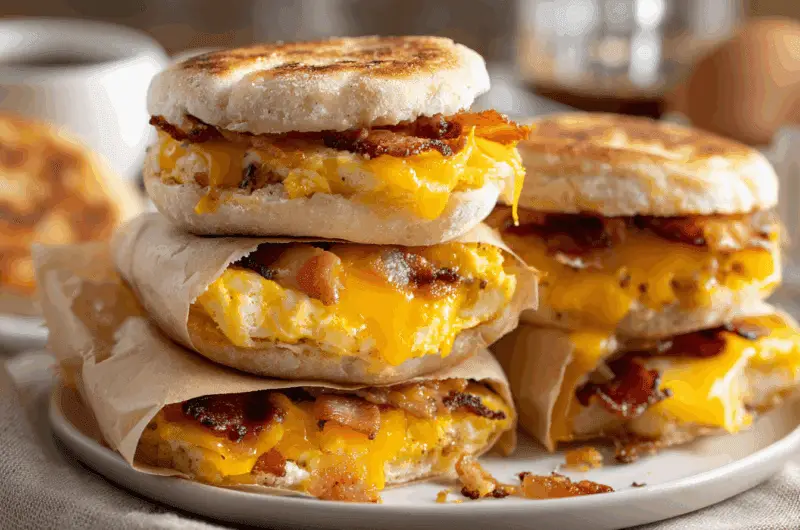
Make Ahead Breakfast Sandwiches
Course: BreakfastCuisine: American12
servings15
minutes25
minutes356
kcalFreezer-friendly breakfast sandwiches with perfectly textured baked eggs, crispy bacon, and melted cheese on toasted English muffins that reheat beautifully.
Ingredients
12 large eggs
2 tablespoons whole milk
1 teaspoon salt
1/2 teaspoon freshly ground black pepper
12 English muffins, halved
12 slices cooked bacon or sausage patties
12 slices of cheddar cheese
Cooking spray for greasing
Butter for toasting (optional)
Directions
- Preheat oven to 325°F and generously grease a 9×13 inch baking pan with cooking spray. This prevents the eggs from sticking and makes removal much easier. Make sure to coat the sides as well as the bottom of the pan.
- Whisk together eggs, milk, salt, and pepper in a large bowl until completely smooth and well combined. Using an electric mixer makes this step easier and ensures no lumps remain. Pour the egg mixture into the prepared baking pan.
- Bake for 18-22 minutes, or until the center is just set but still slightly jiggly. Don’t overcook the eggs as they will continue cooking when reheated. Remove from oven and let cool completely before cutting into 12 equal squares.
- Toast English muffin halves lightly until golden brown. This step is crucial for preventing soggy sandwiches during storage. You can brush them with butter before toasting for extra richness if desired.
- Assemble sandwiches by placing one egg square on each English muffin bottom half. Top with one slice of cheese and one piece of cooked bacon or sausage patty. This order prevents moisture from making the bread soggy.
- Add the English muffin tops to complete each sandwich. Press down gently to compress slightly, which helps the sandwich hold together better during storage and reheating.
- Wrap each sandwich individually in wax paper, parchment paper, or aluminum foil. This prevents freezer burn and allows you to reheat individual portions. Label each wrapped sandwich with contents and date.
- Place all wrapped sandwiches in a freezer-safe resealable bag or container. Freeze for up to 1 month. For immediate consumption, heat assembled sandwiches at 350°F for 5 minutes until cheese melts.
Notes
- To reheat from frozen: Remove wrapping, place on paper towel-lined plate, microwave 1 minute on 50% power, flip, then microwave 30 seconds to 1 minute on high until heated through
- Don’t overcook the eggs initially – they’ll finish cooking during reheating and become tough if overcooked twice
- For crispier results, remove the English muffin top and toast it separately while reheating the rest of the sandwich
- Refrigerated assembled sandwiches stay fresh for 2-3 days, while frozen versions keep for up to 1 month
- Turkey bacon or sausage can be substituted for pork versions, and whole wheat English muffins work just as well as regular
Frequently asked questions about make-ahead breakfast sandwiches
Q: Can I use whole wheat English muffins instead of regular ones?
A: Absolutely! Whole wheat English muffins work just as well and add extra fiber. They toast and freeze the same way as regular muffins. Just make sure to toast them lightly before assembly to prevent sogginess.
Q: How long can I keep these breakfast sandwiches in the freezer?
A: Properly wrapped breakfast sandwiches stay good in the freezer for up to one month. After that, they’re still safe to eat but may develop freezer burn that affects taste and texture. Always label with the date so you know how long they’ve been stored.
Q: Can I add vegetables like spinach or peppers to the eggs?
A: Yes, but cook vegetables first to remove excess moisture. Sauté spinach, peppers, mushrooms, or onions until tender, then mix them into the egg mixture before baking. Raw vegetables release too much water during storage and make the sandwiches soggy.
Q: Is it better to reheat in the microwave or toaster oven?
A: Both work well, but microwaving is faster for frozen sandwiches. Use 50% power first, then high power to prevent hot spots. Toaster ovens give crispier results but take longer – wrap in foil and heat at 350°F for 10-15 minutes.