

Most people assume that getting tender, juicy meat means spending big money on premium cuts. That is not true at all. Butchers and experienced home cooks have been using cheap, everyday ingredients to soften up tough meat for years. The best part? These tricks take almost no effort. Whether it is something already sitting in the pantry or a piece of fruit from the kitchen counter, making meat tender is way easier than most people think.
Why some cuts of meat are tough
Ever bought a cheap steak, cooked it perfectly, and still ended up chewing forever? That happens because of the proteins and connective fibers inside the meat. Tougher cuts like flank steak, skirt steak, and chuck roast have a lot of these fibers. They come from parts of the animal that do more work, like the legs and shoulders. The more a muscle is used, the tougher it gets. That is just how it works. These cuts are usually much cheaper, which is great for the wallet but not always great for dinner.
The good news is that tough does not have to mean bad. In fact, many of these cheaper cuts have way more taste than expensive ones like filet mignon. The trick is knowing how to soften them up before cooking. That is where tenderizing comes in. Breaking down those stubborn fibers can turn a bargain cut into something that practically melts in the mouth. And it does not require fancy tools or expensive marinades to get there.
Baking soda is a butcher’s secret weapon
Here is one that might sound a little weird at first. Baking soda — the same stuff used in cookies and banana bread — can make steak incredibly tender. Celebrity chef Robbie Shoults of Bear Creek Smokehouse swears by it. He told Food Republic that baking soda is one of the best products for tenderizing steak. It works differently than most other methods. Instead of physically breaking down fibers, it creates a chemical reaction on the surface of the meat.
When baking soda touches raw meat, it raises the pH level on the surface. That means the outside of the meat becomes more alkaline. This stops the proteins from bonding too tightly together while cooking. The result is looser fibers and meat that holds onto its juices much better. It is one of those tricks that sounds too simple to actually work, but it absolutely does. Just a teaspoon of baking soda mixed with half a cup of water is all it takes to make a noticeable difference on thinner cuts.
How to use baking soda on steak
The process is dead simple. Mix one teaspoon of baking soda into half a cup of water to make a thin slurry. Stir it until the baking soda dissolves completely. Then add the steak to the mixture and let it sit at room temperature for about 15 minutes. That is it. After the soak, rinse the steak really well under cold water and pat it completely dry with paper towels. This step is important because leftover baking soda can leave a slightly soapy or metallic taste if not washed off properly.
One important tip from Shoults: always use fresh baking soda straight from the box. Do not grab the open one sitting in the back of the fridge absorbing odors. That old box will transfer weird smells and off-putting taste to the meat. After rinsing and drying, season the steak however it would normally be prepared. Add salt, pepper, garlic powder, or any favorite rub. The baking soda treatment works best on thinner cuts like flank steak or skirt steak. For anything thicker than half an inch, other methods might work better.
Fresh fruit can also tenderize meat
This one is even more surprising than baking soda. Certain fresh fruits have natural enzymes that can break down tough proteins in meat. Kiwi, pineapple, papaya, and mango all have this power. It sounds like something made up, but there is actual science behind it. Each of these fruits contains a specific enzyme that attacks the protein structure in meat. Kiwi has actinidin. Pineapple has bromelain. Papaya has papain. And mango has amylases.
These enzymes go to work as soon as they come in contact with raw meat. They soften muscle fibers and break down the tough stuff that makes cheap cuts hard to chew. On top of that, the fruit adds a subtle sweetness that pairs really well with the savory taste of cooked meat. This is not some new trend either. Cooks in Southeast Asia have been using green papaya on grilled meats for generations. In India, Bihari Kabab is traditionally made with kiwi to get that melt-in-the-mouth result. It is a trick passed down through many cultures.
How to marinate meat with fruit
The key is using fresh fruit, not canned. The enzymes that do all the tenderizing work do not survive heat processing. So canned pineapple or jarred mango will not have the same effect. Start by finely dicing the fruit or blending it into a smooth paste. About one tablespoon of fruit per pound of meat is plenty. Spread it evenly so the entire cut is coated. A zip-top bag works great for this because it keeps everything in close contact without making a mess.
Always do this in the fridge, not on the counter. The enzymes in fruit work fast, so tender cuts only need about 30 minutes. Tougher meats can go up to 24 hours, but be careful. Leaving fruit on too long will turn the meat mushy, and nobody wants that. After marinating, wipe off the excess fruit and cook as usual. Adding a squeeze of lime juice or some spices to the fruit blend can boost the taste even more. Pick the fruit based on the final dish — kiwi and pineapple are more neutral, while mango and papaya are sweeter.
Which method works best for which cut
Not every trick works the same on every piece of meat. Baking soda is best for thin, flat cuts. Think skirt steak, flank steak, or thinly sliced beef for stir-fry. It does not penetrate deeply, so thicker cuts will not benefit as much. For those quick-cooking thin steaks that tend to get chewy, the baking soda slurry is the way to go. It takes just 15 minutes and makes a huge difference when searing over high heat in a cast iron pan.
Fruit marinades, on the other hand, are more versatile. They can work on everything from pork loins to lamb shanks to chicken thighs. Because the enzymes in fruit break down proteins over time, they are great for longer marinating sessions on bigger, tougher cuts. A kiwi marinade on a beef chuck roast before slow cooking can produce incredible results. The rule of thumb is simple: thin and fast equals baking soda, thick and slow equals fruit. Matching the right method to the right cut makes all the difference.
Common mistakes that ruin the process
The biggest mistake with baking soda is leaving it on too long. Fifteen minutes is the sweet spot for thin steaks. Going much beyond that can start to change the taste and give the surface a strange feel. Another common error is not rinsing thoroughly enough. Every bit of baking soda needs to come off before seasoning and cooking. Skipping this step will result in a weird aftertaste that no amount of seasoning can cover up.
With fruit, the number one mistake is over-marinating. It is tempting to think that more time equals more tenderness, but that is not how it works. The enzymes are powerful and keep working non-stop. Leave a thin steak in pineapple paste for too long and it will fall apart into a mushy mess. Also, using canned or pasteurized fruit is a waste of time since the enzymes are already destroyed. Stick with fresh, ripe fruit for the best results. Timing and freshness are really the only two things to get right.
Other simple ways to soften tough meat
Baking soda and fruit are amazing, but they are not the only options. Salt is another powerful tenderizer. Dry brining a steak with kosher salt for 40 minutes to an hour draws out moisture, which then gets reabsorbed along with the salt. This breaks down some of the proteins and seasons the meat all the way through. A good meat mallet also works wonders on thin cuts. Pounding the meat physically breaks apart tough fibers and makes everything cook more evenly.
Acidic marinades using vinegar, wine, or citrus juice can also help. The acid slowly denatures the proteins on the surface, making the outer layer more tender. However, acid-based marinades work slowly and can make the outside tough if left too long. That is why many experienced cooks combine methods. A quick baking soda soak followed by an acidic marinade with spices gives both deep tenderness and great taste. There is no single perfect method — the best approach depends on the cut, the recipe, and how much time is available.
A complete recipe using these tricks
Putting all of this together makes a real difference at dinner. The recipe below uses a baking soda soak plus a kiwi-based marinade on skirt steak for incredible results. Skirt steak is naturally tough and affordable, making it the perfect candidate. The baking soda loosens up the fibers first, and then the kiwi marinade adds tenderness and a hint of sweetness that pairs perfectly with lime, garlic, and cumin.
This is a great recipe for tacos, rice bowls, or just eating sliced on its own with some grilled vegetables. The total hands-on time is minimal even though the steak needs to sit for a bit. Once grilled, it should be sliced thin against the grain for maximum tenderness. That last part is important — cutting against the grain shortens those muscle fibers even more, making every bite easy to chew. It is a cheap weeknight dinner that tastes like it came from a restaurant.
Getting tender meat does not require spending a fortune or mastering complicated techniques. A box of baking soda or a couple of fresh kiwis can do what expensive cuts promise but do not always deliver. The key is matching the right method to the right cut and paying attention to timing. Once these simple tricks become part of the routine, tough and chewy steaks will be a thing of the past — and the grocery bill will be a lot lighter too.
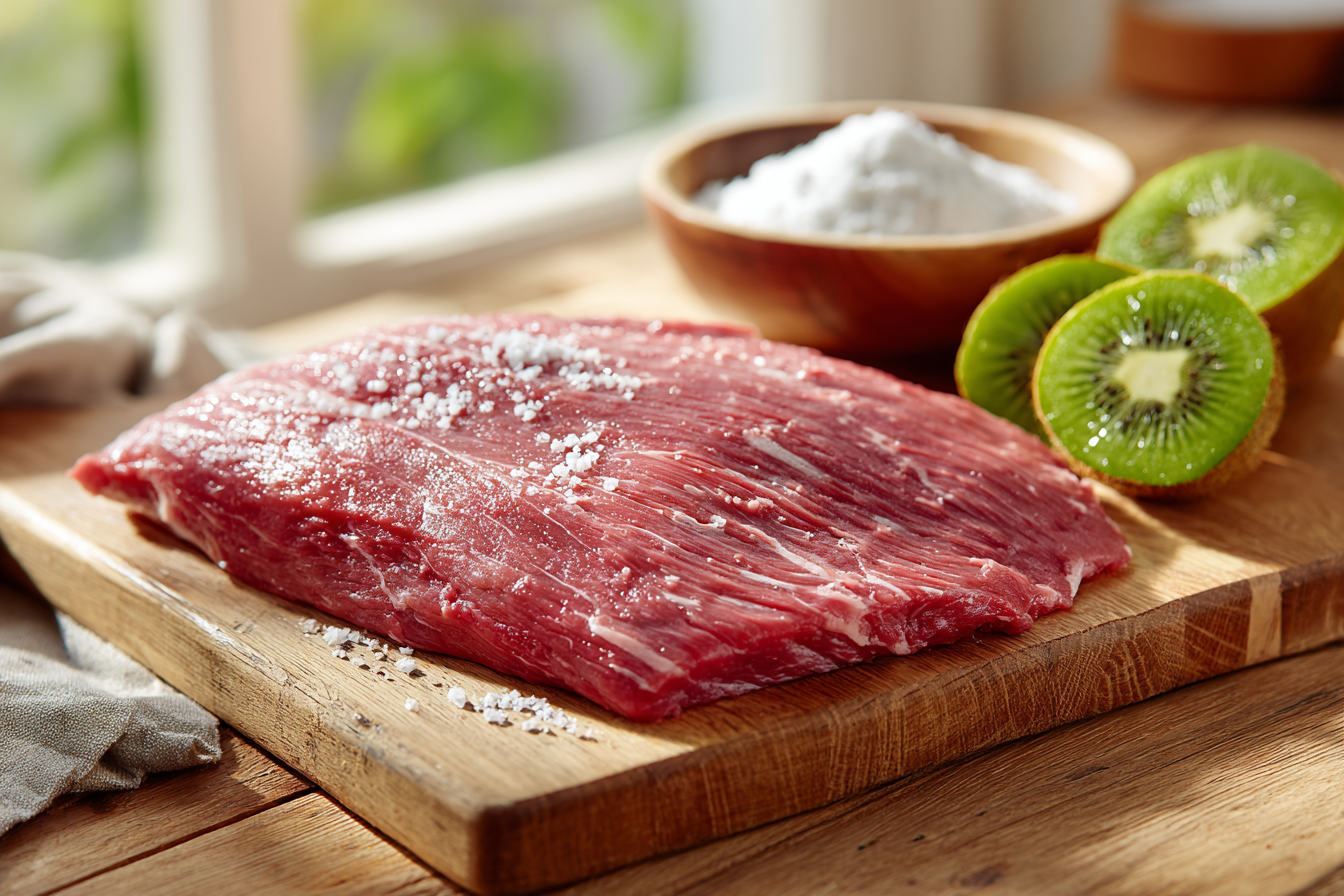
Kiwi-Marinated Skirt Steak with Garlic and Lime
Course: DinnerCuisine: American4
servings20
minutes10
minutes380
kcalThis cheap skirt steak turns impossibly tender using a baking soda soak and a fresh kiwi marinade that does all the hard work.
Ingredients
1.5 lbs skirt steak
1 teaspoon baking soda
1/2 cup water
1 ripe kiwi, peeled and mashed
3 cloves garlic, minced
Juice of 2 limes
2 tablespoons olive oil
1 teaspoon ground cumin
Salt and black pepper to taste
Directions
- Mix the baking soda into the water and stir until fully dissolved to create a thin slurry. Place the skirt steak into a shallow dish or zip-top bag and pour the slurry over it. Let it sit at room temperature for exactly 15 minutes.
- Remove the steak from the baking soda slurry and rinse it very thoroughly under cold running water. Make sure no baking soda residue remains on the surface. Pat the steak completely dry on all sides with paper towels.
- In a small bowl, combine the mashed kiwi, minced garlic, lime juice, olive oil, and ground cumin. Stir everything together until it forms a smooth, well-mixed paste. This will be the tenderizing marinade.
- Spread the kiwi marinade evenly over both sides of the steak and place it in a zip-top bag or covered dish. Refrigerate for 30 to 45 minutes — do not exceed one hour or the meat may become mushy from the kiwi enzymes.
- Remove the steak from the refrigerator about 10 minutes before cooking to take the chill off. Wipe off any large pieces of kiwi from the surface with a paper towel. Season both sides generously with salt and black pepper.
- Preheat a grill or cast iron skillet to high heat. The cooking surface needs to be very hot to get a good sear. If using a skillet, add a thin layer of oil with a high smoke point like avocado oil.
- Cook the skirt steak for 3 to 4 minutes per side for medium-rare, or 5 minutes per side for medium. Avoid moving the steak around while it cooks so a nice crust can form. The high heat will lock in all the moisture.
- Transfer the steak to a cutting board and let it rest for 5 to 8 minutes before slicing. Always slice skirt steak thin and against the grain for the most tender results. Serve immediately with your favorite sides.
Notes
- Use fresh baking soda from a sealed box — not the open one in the fridge that absorbs odors, as it will affect the taste of the meat.
- Do not marinate in the kiwi mixture for more than one hour. The enzymes work fast and will make the steak mushy if left too long.
- This recipe also works great with flank steak or thinly sliced beef sirloin if skirt steak is not available at the store.
Frequently Asked Questions
Q: Can I use baking powder instead of baking soda to tenderize meat?
A: No, baking powder and baking soda are not the same thing. Baking soda is pure sodium bicarbonate, which raises the pH on the meat’s surface and prevents proteins from bonding tightly. Baking powder contains additional ingredients like cream of tartar and cornstarch that will not have the same tenderizing effect. Always use plain baking soda for this method.
Q: Does canned pineapple work the same as fresh pineapple for tenderizing?
A: No, canned pineapple will not tenderize meat. The canning process involves high heat, which destroys the bromelain enzyme responsible for breaking down proteins. The same goes for jarred or pasteurized fruit juices. Only fresh, raw fruit contains the active enzymes needed to soften tough cuts of meat.
Q: Will the baking soda method change the way my steak tastes?
A: It should not, as long as the steak is rinsed thoroughly after soaking. If any baking soda residue is left on the surface, it can create a slightly metallic or soapy taste. Rinsing under cold running water for at least 30 seconds and then patting the steak dry with paper towels will prevent any off-putting aftertaste.
Q: Can I combine the baking soda soak and the fruit marinade on the same piece of meat?
A: Yes, and that is exactly what this recipe does. The baking soda soak goes first for 15 minutes, followed by a thorough rinse. Then the fruit marinade is applied separately. Using both methods together on a tough, thin cut like skirt steak gives the best possible tenderness without overdoing either one. Just be careful not to exceed the recommended timing for each step.