

Anyone who’s tried Olive Garden’s famous alfredo sauce knows there’s something special about that creamy, cheesy perfection. The good news? That restaurant-quality sauce isn’t some impossible mystery locked away in a corporate vault. With just a few simple ingredients and the right technique, making this beloved sauce at home is easier than most people think.
What makes Olive Garden’s alfredo different
Most traditional alfredo sauces stick to just butter, parmesan, and pasta water. Olive Garden takes a different approach that explains why their version tastes so rich and satisfying. The restaurant uses both heavy cream and milk in equal amounts, creating a base that’s creamy without being too heavy.
The real secret lies in their cheese combination. Instead of using only parmesan, Olive Garden uses equal parts parmesan and romano cheese. This blend gives the sauce more depth and a sharper bite than single-cheese versions. They also add a small amount of flour to help thicken the sauce and keep it stable when reheated.
Getting your ingredients ready
Success with alfredo sauce starts at the grocery store. For the best results, buy blocks of parmesan and romano cheese instead of pre-shredded bags. Those convenient bags contain cellulose to prevent clumping, but that same additive makes the cheese melt poorly and can leave your sauce grainy instead of smooth.
Let your cheese come to room temperature before you start cooking. Cold cheese dropped into warm cream is more likely to clump up instead of melting smoothly. High-quality butter makes a difference too – brands like Land O’Lakes create a richer base than generic store brands. Fresh garlic beats garlic powder every time for that aromatic punch that makes restaurant alfredo so appealing.
The step-by-step cooking process
Start by melting butter in a medium saucepan over medium-low heat. Once it’s melted, add minced garlic and cook for about a minute until fragrant. Don’t let the garlic brown or it will taste bitter. Whisk in flour and cook for another minute to eliminate that raw flour taste.
Add the heavy cream and milk gradually while whisking continuously. This prevents lumps from forming and helps everything combine smoothly. Bring the mixture to a gentle simmer, then reduce the heat to low. Gradually whisk in your room-temperature cheese, adding it slowly so it melts evenly. The sauce should simmer gently for about 8 minutes until it reaches the right thickness.
Temperature control is everything
The biggest mistake people make with alfredo sauce is cranking up the heat too high. High temperatures cause the dairy proteins to separate, leaving you with a grainy, broken sauce instead of creamy perfection. Keep the heat at medium-low throughout the entire cooking process, and adjust down if needed.
Watch for gentle bubbling around the edges rather than a rolling boil. If your sauce starts to bubble aggressively, immediately turn down the heat and whisk continuously. A broken sauce can sometimes be saved by removing it from heat and whisking vigorously, but prevention is much easier than trying to fix a curdled mess.
Why the sauce gets thicker as it sits
Don’t panic if your alfredo sauce seems too thin while cooking. The flour continues to work its thickening magic even after you remove the pan from heat. When you add the hot sauce to pasta, it thickens even more as the pasta absorbs some of the liquid and the temperature equalizes.
This is why many home cooks make the mistake of adding extra cheese to thicken their sauce. Resist that urge! The additional cheese can make the sauce too thick and heavy. Trust the process and let the flour do its job. If anything, err on the side of making the sauce slightly thinner than you think it should be.
Choosing the right pasta shape
Fettuccine remains the classic choice for alfredo sauce, and there’s a good reason why. Those wide, flat noodles create more surface area for the sauce to cling to, ensuring every bite delivers maximum creaminess. The shape also holds up well to the rich, heavy sauce without getting overwhelmed.
Other pasta shapes work too, though. Penne, rigatoni, or even tortellini pair beautifully with alfredo sauce. Cook your pasta until it’s just shy of al dente – it will finish cooking when you toss it with the hot sauce. Reserve a cup of pasta water before draining, just in case you need to thin the sauce slightly when combining everything.
Storage and reheating tips
Leftover alfredo sauce keeps in the refrigerator for up to three days, though it will thicken considerably as it cools. The flour in the recipe helps maintain the sauce’s consistency better than flour-free versions, making it more forgiving for meal prep and leftovers.
For reheating, low and slow wins the race. Use a microwave on medium power, stirring every 30 seconds, or warm it gently on the stovetop. Add a splash of milk or chicken broth if the sauce seems too thick. A makeshift double boiler – a bowl set over simmering water – provides the gentlest reheating method and helps restore the sauce to its original creamy texture.
Creative ways to use leftover sauce
Alfredo sauce isn’t limited to pasta dishes. It makes an excellent base for chicken and broccoli casseroles, or as a pizza sauce for white sauce pies. Many people love using it as a dipping sauce for breadsticks – just like Olive Garden does with their famous unlimited breadsticks.
Try it as a sauce for baked potatoes, steamed vegetables, or even as a base for soup. A few spoonfuls stirred into chicken broth creates an instant creamy chicken soup. The sauce also freezes well for up to two months, though it may need a good whisking when thawed and reheated to restore its smooth texture.
Common mistakes to avoid
The most frequent error is adding cold cheese to hot cream, which causes clumping and an uneven texture. Always bring your cheese to room temperature first, and add it gradually while stirring constantly. Using pre-shredded cheese is another shortcut that often backfires, creating a sauce that never gets completely smooth.
Overcooking is equally problematic. Once the sauce reaches your desired thickness, remove it from heat promptly. Continued cooking breaks down the dairy proteins and can turn your silky sauce into a separated mess. Remember that the sauce continues thickening off the heat, so what looks thin in the pan will be perfect on the plate.
Making restaurant-quality alfredo sauce at home isn’t about secret ingredients or complicated techniques. It’s about using good ingredients, controlling temperature, and being patient with the process. Once you master this basic recipe, you’ll wonder why you ever thought it was complicated. Your kitchen will smell amazing, and your family will think you’ve become a gourmet chef overnight.
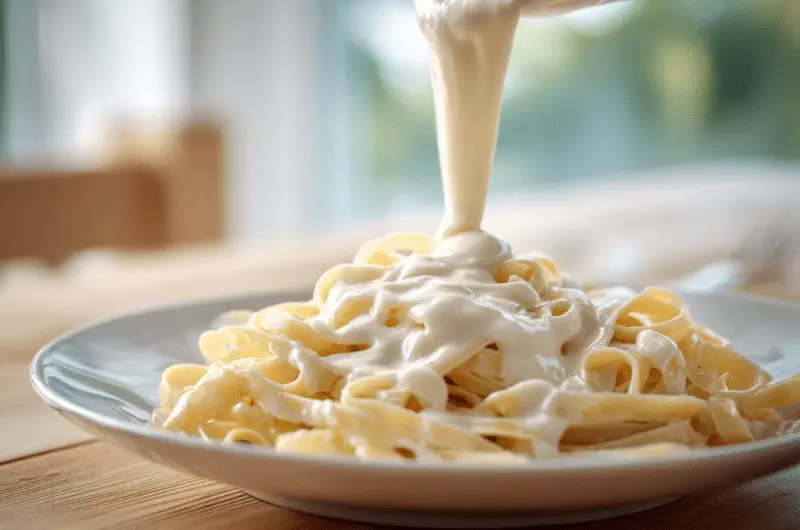
Olive Garden Alfredo Sauce
Course: Main CourseCuisine: Italian6
servings5
minutes15
minutes280
kcalRich and creamy homemade alfredo sauce that tastes just like Olive Garden’s famous version.
Ingredients
6 tablespoons salted butter
1 tablespoon fresh garlic, minced
2 tablespoons all-purpose flour
1½ cups heavy cream
1½ cups whole milk
½ cup freshly grated Parmesan cheese, room temperature
½ cup freshly grated Romano cheese, room temperature
Salt and black pepper to taste
1 pound fettuccine pasta
Directions
- Start boiling water for pasta according to package directions. While water heats, begin making the alfredo sauce.
- Melt butter in a large saucepan over medium-low heat. Add minced garlic and cook for 1 minute until fragrant, stirring constantly to prevent browning.
- Whisk in flour and cook for 1 minute, stirring continuously to eliminate raw flour taste. This creates a light roux base for thickening.
- Gradually add heavy cream while whisking constantly, then slowly pour in milk while continuing to whisk. This prevents lumps from forming in the sauce.
- Bring mixture to a gentle simmer, then immediately reduce heat to low. Watch for gentle bubbling around edges rather than aggressive boiling.
- Slowly stir in both cheeses, adding them gradually while stirring constantly. The room temperature cheese will melt more smoothly than cold cheese.
- Continue simmering gently for 8 minutes until sauce thickens, stirring occasionally. The sauce will continue thickening after removing from heat.
- Taste and season with salt and pepper as desired. Toss cooked, drained pasta with sauce until well combined, then serve immediately.
Notes
- For best results, grate cheese fresh from blocks rather than using pre-shredded cheese which contains anti-caking agents
- If sauce seems too thin while cooking, don’t add extra cheese – it will thicken as it cools and when mixed with pasta
- Leftover sauce keeps in refrigerator for 3 days and can be frozen for up to 2 months
- Reheat gently on stovetop or microwave on medium power, adding a splash of milk if needed to thin
Frequently asked questions
Q: Can I use half-and-half instead of heavy cream and milk?
A: Yes, you can substitute 3 cups of half-and-half for the heavy cream and milk combination. The sauce will be slightly less rich but still creamy and delicious.
Q: Why did my alfredo sauce turn grainy or lumpy?
A: This usually happens when the cheese is too cold when added, the heat is too high, or pre-shredded cheese with anti-caking agents was used. Always use room temperature freshly grated cheese and keep heat at medium-low.
Q: Can I make this sauce ahead of time?
A: Absolutely! The sauce can be made up to 3 days ahead and stored in the refrigerator. Reheat gently on the stovetop or in the microwave, adding a splash of milk if it seems too thick.
Q: What if I don’t have Romano cheese?
A: You can use all Parmesan cheese instead, though the sauce won’t have quite the same sharp bite that Romano provides. Asiago or aged white cheddar also work as substitutes.