

Ever opened a lunchbox at the end of the school day only to find everything exactly where it started? That sinking feeling hits hard when the sandwich sits untouched, the apple remains unbitten, and the carrots look as fresh as they did that morning. The truth is, most packed lunches fail because they’re either too boring, too complicated, or missing that magic combination that makes kids actually want to eat. Building a lunchbox that feels like a real meal isn’t about fancy bento boxes or Pinterest-perfect arrangements – it’s about understanding a simple formula that works every single time.
Start with the magic formula
The secret to a lunchbox that gets devoured lies in hitting five key categories: protein and fat, grain, fruit, vegetable, and something crunchy. This isn’t about creating complicated meals – it’s about checking boxes that ensure satisfaction. Think of it like building blocks, where each piece serves a purpose. The protein keeps kids full, the grain provides energy, the fruit adds sweetness, the vegetable sneaks in nutrition, and the crunchy element makes eating fun.
Sometimes one item covers multiple categories, which makes packing even easier. A Sunbutter and banana sandwich hits protein, fat, fruit, and grain all at once. Hard-boiled eggs with whole-grain crackers cover protein and grain. The beauty of this system is its flexibility – missing one category won’t ruin the meal, and doubling up on favorites (especially fruit) often works better than forcing something they won’t eat anyway.
Pack the night before
Morning chaos and lunchbox packing don’t mix well. Rushing to throw together a meal while searching for matching socks and signing permission slips usually results in grabbed snacks and forgotten components. Packing lunches the night before transforms hectic mornings into smooth sailing. The cutting board is already out from dinner prep, leftovers are still warm and easy to portion, and there’s actual time to think about what goes where.
Having two sets of containers makes this system foolproof – one set is always clean and ready while the other gets washed. Leftovers become lunchbox gold when packed immediately after dinner. Cold pasta salad, room-temperature meatballs, or yesterday’s roasted vegetables all taste great the next day. If the school has microwaves available, the options expand dramatically. Even without reheating, many dinner leftovers work perfectly at room temperature or slightly chilled.
Choose the right container
Container choice makes or breaks lunchbox success. Single-compartment boxes lead to soggy sandwiches when fruit juice leaks over, while too many tiny sections create more work than necessary. The sweet spot is a container with four to six sections that keeps different foods separate but doesn’t require individual packaging for every item. Stainless steel options are dishwasher safe and durable, though they cost more upfront.
Size matters more than parents realize – those sections should be smaller than expected. Kids eat less than adults think they should, and overpacking leads to waste and overwhelm. Small portions of several different things work better than large portions of fewer items. For items that might leak, like ranch dressing or fruit cups, small airtight containers prevent disasters. An insulated lunchbox with an ice pack keeps everything at safe temperatures, especially important for dairy and meat items.
Protein options that actually work
Protein doesn’t have to mean complicated cooking or expensive deli meat. Hard-boiled eggs prepared on Sunday provide protein for several days and pair with almost anything. Sunbutter (or peanut butter, where allowed) works on sandwiches, with apple slices, or even by itself with crackers. String cheese, cubed cheese, or those little mozzarella balls are grab-and-go proteins that most kids willingly eat.
Leftover chicken, turkey, or ham can be repurposed into roll-ups, added to pasta salad, or eaten plain with crackers. Jerky or meat sticks provide protein and satisfy the need for something chewy. Greek yogurt counts as protein and comes in kid-friendly flavors. Tuna salad, chicken salad, or egg salad made on weekends stores well and makes multiple lunches. Even refried beans with melted cheese create a protein-rich option that many kids find appealing.
Grains that provide lasting energy
Bread isn’t the only grain option, though it remains the easiest. Whole-grain versions provide more staying power than white bread, but any bread beats no grain at all. Crackers work just as well and often appeal to picky eaters who reject sandwiches. Pretzels, rice cakes, or even leftover rice from dinner all count as grain servings.
Pasta salad made with whole-grain noodles combines the grain with vegetables and protein in one dish. Leftover pancakes or waffles, even eaten cold, provide grains with built-in appeal. Whole grain options help sustain energy levels throughout the afternoon, preventing the post-lunch crash that leaves kids sluggish during later classes. Tortillas work for roll-ups, quesadillas, or even eaten plain. The key is finding grain options that your specific child will actually consume, not what seems healthiest on paper.
Fruits and vegetables that are eaten
Raw vegetables often work better than cooked ones in lunchboxes because they maintain their crunch and don’t get mushy. Baby carrots, snap peas, cherry tomatoes, and cucumber slices travel well and provide satisfying crunch. Bell pepper strips in different colors add visual appeal. Even pickles count as vegetables, and many kids love them. Vegetables with dips like ranch or hummus often disappear faster than plain ones.
Fruit should be easy to eat during short lunch periods. Apple slices, grapes, berries, and clementine segments require no utensils or complicated peeling. Dried fruits like raisins or banana chips provide concentrated sweetness kids crave. Applesauce cups are mess-free and universally loved. Pre-washing berries on Sunday saves time during weekday packing. Frozen grapes or berries act as natural ice packs while thawing into perfect snacks by lunchtime.
The importance of the crunch factor
Crunchy foods serve multiple purposes beyond nutrition. They help kids feel satisfied, provide sensory stimulation, and often disappear first from lunchboxes. Some children need that crunch to help them focus and calm down during busy school days. Pretzels, crackers, nuts (where allowed), and vegetable chips all provide satisfying crunch while contributing to the meal’s substance.
Trail mix combining nuts, seeds, and dried fruit hits multiple categories while delivering serious crunch appeal. Granola, chips, and crackers can make or break a lunchbox’s success with certain kids. Even roasted chickpeas or edamame provide plant-based protein with satisfying crunch. The key is finding the right balance – enough crunch to satisfy without making it the only thing they eat. Sometimes pairing crunchy items with softer options creates the perfect textural variety.
Sweet treats that make sense
Every successful lunchbox needs something sweet, but it doesn’t have to be cookies or candy. Dried fruit provides natural sweetness while contributing actual nutrition. A small piece of dark chocolate, a few chocolate chips mixed with nuts, or a homemade granola bar can satisfy the sweet tooth without derailing the whole meal. The goal is to include enough sweetness to make the lunch feel complete and special.
Fruit often serves double duty as both the fruit category and the sweet treat. Grapes, berries, or apple slices with a small container of caramel dip turn healthy fruit into dessert. Low-sugar gummies or a small cookie can complete a lunch without overwhelming it. Yogurt with mix-ins like granola or fruit provides sweetness and protein together. The portion size matters more than the specific item – a few bites of something sweet often satisfy better than trying to eliminate sweets entirely.
Avoiding the most common mistakes
The biggest lunchbox mistake is repeating the same meal too often, even when kids seem to love it. Variety prevents boredom and food strikes that can last months. Another common error is packing adult-sized portions that overwhelm kids and create waste. School lunch periods are short, so complicated foods that require assembly or careful eating often get abandoned.
Packing foods that have never been tried at home sets everyone up for failure. Lunchtime isn’t the place for food experiments – stick to known winners and introduce new items during relaxed home meals first. Temperature-sensitive foods without proper cooling can spoil or become unappetizing. Finally, forgetting to include eating utensils for foods that need them, or packing foods that require utensils when none are available, guarantees an untouched lunch.
Building a lunchbox that feels like a real meal comes down to understanding what kids actually need during their busy school days. The magic formula works because it addresses hunger, energy, satisfaction, and enjoyment all at once. When every lunchbox component serves a purpose and appeals to young taste buds, those empty containers at day’s end become the norm rather than the exception.
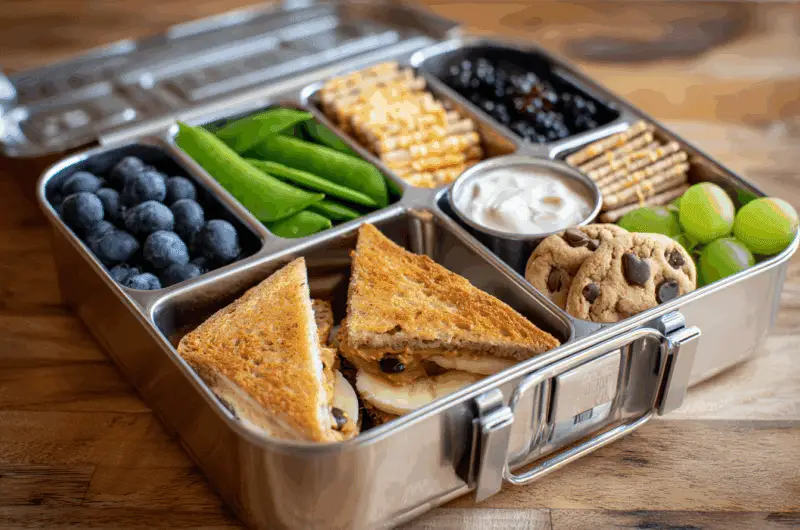
The Ultimate Build-Your-Own Lunchbox Formula
Course: LunchCuisine: American1
servings10
minutes400
kcalA foolproof system for creating satisfying lunches that kids will actually eat, using simple ingredients and smart combinations.
Ingredients
2 slices whole-grain bread
2 tablespoons sunbutter or peanut butter
1/2 banana, sliced
1 string cheese
1 cup snap peas
1/2 cup blueberries
10 whole-grain crackers
2 tablespoons ranch dressing
1 small cookie or 10 chocolate chips
Directions
- Spread sunbutter evenly on both slices of bread, creating a barrier that prevents the banana from making the bread soggy. This technique keeps sandwiches fresh until lunchtime. Place banana slices on one piece of bread and press the second slice on top.
- Cut the sandwich into manageable pieces that fit easily in small hands and can be eaten quickly during short lunch periods. Triangles or rectangles both work well. Wrap in parchment paper or place in the largest compartment of your lunchbox container.
- Wash snap peas and pat them completely dry to maintain their satisfying crunch. Place them in one compartment of your lunchbox along with the string cheese. The combination provides both protein and vegetables in easy-to-eat finger foods.
- Rinse blueberries gently and allow them to air dry completely before packing. Wet berries can make other foods soggy and don’t taste as good. Place them in a separate compartment to prevent them from rolling around and getting squished.
- Pack ranch dressing in a small, leak-proof container to prevent spills that can ruin the entire lunch. These small containers also work perfectly for other dips like hummus or peanut butter. Place crackers in a separate compartment to maintain their crispiness.
- Add your sweet element to complete the meal and give kids something to look forward to. A single small cookie or a small handful of chocolate chips provides just enough sweetness without overwhelming the nutritious components. This makes the lunch feel complete and special.
- Pack everything in an insulated lunchbox with a cold pack to keep perishable items safe and fresh. Check that all compartments are properly closed to prevent mixing of foods. This system ensures food safety while maintaining the appeal of each component.
- Prepare this lunch the night before for stress-free mornings. Store the assembled lunchbox in the refrigerator overnight, then simply grab and go in the morning. This advance preparation ensures nothing gets forgotten in the morning rush.
Notes
- Substitute any components based on your child’s preferences – turkey and cheese roll-ups work instead of the sandwich, apple slices can replace blueberries, and carrots can substitute for snap peas
- This formula works for any dietary restrictions – use seed butter instead of nut butter, dairy-free cheese alternatives, or gluten-free crackers and bread as needed
- Leftovers from dinner can replace any component – cold pasta salad covers grain and vegetable, leftover chicken provides protein, and fruit salad handles the fruit category
- Keep portions smaller than you think necessary – kids eat less at school than at home, and overpacking leads to waste and overwhelmed eaters
Frequently asked questions
Q: What if my child refuses to eat vegetables in their lunchbox?
A: Start with vegetables they already eat at home, even if it’s just pickles or cherry tomatoes. Many kids will try vegetables at school that they reject at home because of peer influence. You can also hide vegetables in familiar foods like pasta salad or muffins until they become more adventurous.
Q: How do I keep foods from getting soggy or spoiled?
A: Use compartmentalized containers to separate wet and dry foods, pack dressings and sauces separately in leak-proof containers, and always include an ice pack in an insulated lunchbox. Put spreads like butter on both sides of the sandwich bread to create a moisture barrier.
Q: Can I use this formula for kids with food allergies?
A: Absolutely! The formula works with any dietary restrictions. Use sunbutter instead of peanut butter, dairy-free alternatives for cheese, and gluten-free options for grains. The key categories remain the same regardless of specific ingredients.
Q: What should I do when my child gets tired of their usual lunch items?
A: Rotate through different options within each category rather than serving the same exact lunch repeatedly. If they love turkey sandwiches, try turkey roll-ups, turkey and crackers, or turkey pasta salad. Small changes prevent boredom while staying within their comfort zone.