

Making restaurant-quality Asian turkey lettuce wraps at home takes just 15 minutes and costs a fraction of ordering takeout. These protein-packed wraps combine savory ground turkey with crisp vegetables and bold Asian-inspired sauce, all nestled in tender butter lettuce cups. The best part? Most people already have the basic ingredients sitting in their pantries right now.
Why ground turkey makes perfect lettuce wraps
Ground turkey cooks faster than most other proteins, making it ideal for busy weeknight dinners. The lean meat absorbs the Asian sauce beautifully while staying tender and juicy when cooked properly. Unlike ground beef, turkey won’t overpower the delicate lettuce cups or compete with the bright, tangy sauce. Most grocery stores carry ground turkey year-round, and it typically costs less than ground chicken or specialty meats.
The neutral taste of turkey also makes it incredibly versatile for different sauce combinations. Whether using hoisin and soy sauce for a sweet-savory profile or coconut aminos for a soy-free version, the turkey adapts to whatever flavors are added. Ground turkey breast offers the leanest option, while ground dark meat provides more moisture and richness for those who prefer a heartier texture.
The secret sauce that brings everything together
Restaurant-style lettuce wraps rely on a balanced sauce that hits sweet, salty, and tangy notes all at once. The combination of hoisin sauce, low-sodium soy sauce, and rice vinegar creates this perfect harmony. Hoisin provides the sticky sweetness that makes the filling cling to the lettuce, while soy sauce adds the essential umami depth. Rice vinegar brightens the entire mixture and prevents the sauce from becoming too heavy or cloying.
Adding roasted red chili paste or sriracha gives the sauce a gentle heat that doesn’t overwhelm. Fresh garlic and ginger are non-negotiable ingredients that provide aromatic warmth and complexity. Coconut aminos can easily replace soy sauce for those avoiding gluten or soy, while maintaining the same savory depth. The key is preparing the sauce separately and adding it after the turkey is cooked to prevent burning the sugars in the hoisin.
Choosing the right lettuce makes all the difference
Butter lettuce, also called Bibb lettuce, creates the perfect natural cups for holding the turkey mixture. The leaves are sturdy enough to support the filling without tearing, yet tender enough to bite through easily. Each leaf forms a natural bowl shape that keeps the filling contained while eating. Butter lettuce also has a mild, slightly sweet taste that complements rather than competes with the savory turkey filling.
Iceberg lettuce works as a backup option, offering more crunch but less flexibility. Boston lettuce provides similar cup shapes to butter lettuce but with slightly thicker leaves. Romaine lettuce can work for larger appetites, though the leaves are more rigid and harder to wrap. Fresh lettuce leaves should be completely dry before serving to prevent the sauce from sliding off the filling and making the wraps soggy.
Water chestnuts add the perfect crunch factor
Canned water chestnuts provide the signature crunch that separates homemade lettuce wraps from basic ground turkey salad. These mild, crispy vegetables maintain their texture even after being heated with the turkey mixture. They add substance to each bite without introducing competing flavors or changing the overall taste profile. Most grocery stores stock canned water chestnuts in the Asian food aisle or canned vegetable section.
Chopping the water chestnuts into small, uniform pieces ensures they distribute evenly throughout the mixture. Some cooks prefer to add them during the last minute of cooking to preserve maximum crunch. Fresh water chestnuts offer superior texture when available, though they require more preparation time. Diced celery, jicama, or even crisp apples can substitute for water chestnuts while providing similar textural contrast to the soft turkey mixture.
Green onions and carrots boost color and nutrition
Sliced green onions provide a mild onion flavor that doesn’t overpower the other ingredients while adding vibrant color contrast. They’re best added after cooking to maintain their bright green appearance and fresh bite. The white parts can be cooked with the turkey for a deeper onion flavor, while the green tops are reserved for finishing. Fresh green onions keep for weeks in the refrigerator when stored properly in water.
Grated carrots introduce natural sweetness and bright orange color that makes the filling more visually appealing. They cook quickly when grated finely, softening just enough to be pleasant while retaining some texture. Fresh ginger and garlic provide aromatic foundations that can’t be replicated with dried versions. Pre-grated carrots from the produce section save prep time, though freshly grated carrots offer better texture and flavor.
Cooking techniques that prevent dry turkey
Ground turkey can quickly become dry and rubbery if overcooked, so monitoring the cooking process closely is essential. Start with a hot skillet and a small amount of oil to prevent sticking. Break up the turkey as it cooks, but avoid stirring too frequently, which can make the meat tough. The turkey is done when it loses its pink color, usually within 6-8 minutes over medium-high heat.
Adding the aromatics after the turkey is mostly cooked prevents the garlic and ginger from burning. The sauce should be added last and cooked just long enough to warm through and coat the meat. Removing the pan from the heat before adding the final vegetables preserves their texture and prevents overcooking. A meat thermometer should read 165°F for food safety, but the turkey will continue cooking slightly from residual heat.
Serving suggestions that complete the meal
These lettuce wraps work perfectly as appetizers for Asian-themed dinners or as light main courses for casual meals. Providing small bowls of extra sauce allows diners to customize their spice level and flavor intensity. Lime wedges on the side add fresh acidity that brightens each bite. Some people prefer to serve the turkey mixture warm, while others enjoy it at room temperature for outdoor gatherings.
Setting up a DIY lettuce wrap bar lets everyone assemble their own portions according to their preferences. Include extra green onions, sesame seeds, or cilantro for additional toppings. The wraps pair well with steamed rice for heartier appetites or Asian cucumber salad for a complete light meal. Water chestnuts and carrots can be prepared ahead of time to speed up assembly when guests arrive.
Make-ahead tips for busy schedules
The turkey mixture can be prepared up to three days in advance and stored in the refrigerator. The flavors actually improve overnight as the sauce has time to penetrate the meat fully. Reheat gently in a skillet or microwave, adding a splash of water if the mixture seems dry. Avoid freezing the prepared mixture, as the water chestnuts become mushy and the texture suffers significantly.
Washing and drying the lettuce leaves ahead of time saves precious minutes during meal preparation. Store clean, dry leaves between paper towels in the refrigerator for up to two days. The sauce components can be mixed together and stored separately from the cooked turkey. Meal prep containers work well for portioning individual servings, though the lettuce should always be stored separately to prevent wilting.
Common mistakes that ruin homemade lettuce wraps
Using regular soy sauce instead of low-sodium versions often makes the final dish too salty, especially when combined with hoisin sauce. Overcooking the turkey creates a dry, unappetizing texture that no amount of sauce can fix. Adding the sauce too early in the cooking process can cause the sugars to burn and create bitter flavors. Wet lettuce leaves cause the filling to slip and slide, making the wraps impossible to eat neatly.
Chopping the vegetables too large creates uneven distribution and makes the wraps difficult to bite through cleanly. Skipping the water chestnuts removes the signature texture that makes restaurant-style lettuce wraps special. Using dried garlic and ginger instead of fresh versions results in flat, one-dimensional flavors. Assembly timing matters too – filling the lettuce cups too far in advance leads to soggy, wilted wraps that fall apart when picked up.
These Asian turkey lettuce wraps deliver restaurant-quality taste and satisfaction in just 15 minutes of active cooking time. The combination of savory turkey, crunchy vegetables, and bold sauce creates a memorable meal that works for casual dinners or special occasions. With proper technique and quality ingredients, homemade lettuce wraps often surpass their restaurant counterparts while costing significantly less.
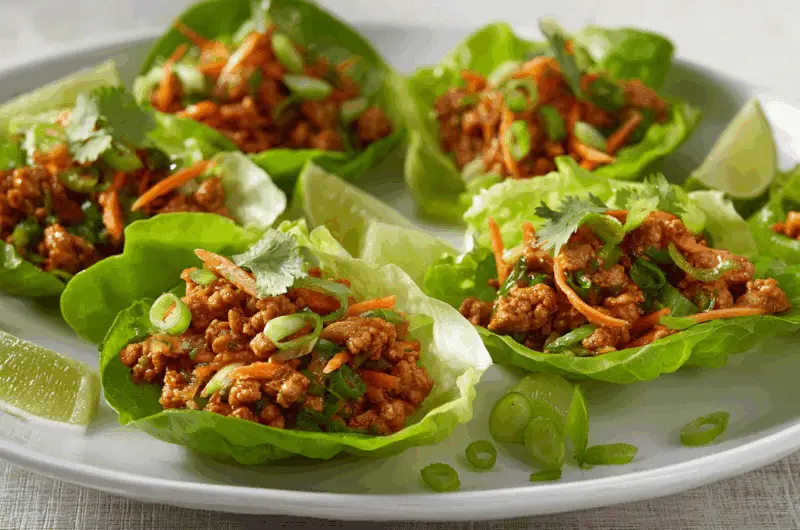
Asian Turkey Lettuce Wraps
Course: DinnerCuisine: Asian6
servings10
minutes10
minutes162
kcalRestaurant-quality lettuce wraps with savory ground turkey, crisp vegetables, and bold Asian-inspired sauce ready in just 15 minutes.
Ingredients
1¼ lb lean ground turkey
1 tablespoon olive oil
1 clove garlic, minced
1/8 teaspoon ground ginger
4 green onions, thinly sliced
1 8-oz can sliced water chestnuts, drained and chopped
3 tablespoons hoisin sauce
2 tablespoons low-sodium soy sauce
1 tablespoon rice vinegar
2 teaspoons roasted red chili paste
Pinch of salt
12 Bibb/Butter lettuce leaves
Directions
- Heat olive oil in a large skillet over medium-high heat until shimmering. Add the ground turkey, breaking it apart with a wooden spoon as it cooks. Cook for about 6 minutes, stirring occasionally, until the turkey is browned and cooked through with no pink remaining.
- Add the minced garlic and ground ginger to the cooked turkey. Stir continuously for 1-2 minutes until fragrant, being careful not to let the garlic burn. The aromatics should sizzle gently and release their oils.
- In a small bowl, whisk together the hoisin sauce, low-sodium soy sauce, rice vinegar, and roasted red chili paste until smooth. This creates the signature sweet and savory coating that makes the wraps irresistible.
- Remove the skillet from the heat and immediately stir in the chopped water chestnuts and half of the sliced green onions. The residual heat will warm the vegetables while preserving their crisp texture.
- Pour the prepared sauce over the turkey mixture and toss thoroughly until every piece is well coated. The sauce should cling to the meat and vegetables, creating a glossy, appetizing appearance.
- Carefully wash and dry the butter lettuce leaves, ensuring they form natural cup shapes. Pat each leaf completely dry with paper towels to prevent the filling from sliding around.
- Spoon about ¼ cup of the turkey mixture into each lettuce cup, being careful not to overfill. The filling should sit comfortably in the natural bowl shape of the lettuce without spilling over the edges.
- Garnish each wrap with the remaining sliced green onions and serve immediately while the filling is still warm. Provide lime wedges and extra sauce on the side for those who want additional flavor.
Notes
- Ground chicken can be substituted for turkey with identical results, while ground beef or pork works well but will change the flavor profile slightly.
- The turkey mixture can be prepared up to 3 days ahead and stored in the refrigerator, though the lettuce should always be filled just before serving.
- Coconut aminos can replace soy sauce for a gluten-free version, while tamari works as another soy sauce alternative.
- If water chestnuts aren’t available, diced celery, jicama, or crisp apples provide a similar textural contrast.
- Romaine or iceberg lettuce can substitute for butter lettuce, though they won’t form cups as naturally and may require more careful handling.
Frequently asked questions
Q: Can I make these lettuce wraps ahead of time for a party?
A: The turkey filling can be prepared up to 3 days in advance and stored in the refrigerator, but don’t fill the lettuce cups until just before serving. Wet lettuce will make the wraps soggy and difficult to handle. Store the washed lettuce separately and assemble individual wraps as needed.
Q: What can I substitute for water chestnuts if I can’t find them?
A: Diced celery, jicama, or even crisp apples work well as water chestnut substitutes. The key is maintaining that signature crunch factor. Celery provides the most similar texture, while jicama adds slight sweetness. Avoid softer vegetables like mushrooms or zucchini that won’t hold their texture.
Q: How do I prevent the ground turkey from becoming dry and tough?
A: Cook the turkey over medium-high heat for only 6-8 minutes until just cooked through, then remove from the heat immediately. Don’t overcook or stir too frequently. Adding the sauce after cooking helps retain moisture. Using ground turkey with some dark meat content also helps prevent dryness.
Q: Can I freeze the leftover turkey mixture for later use?
A: Freezing isn’t recommended because the water chestnuts become mushy and lose their crisp texture, which is essential to good lettuce wraps. The mixture stays fresh in the refrigerator for 3-4 days and actually tastes better the next day as the flavors meld together.