

Most home cooks have been making meatballs the same way for years – browning them in a pan or baking them in the oven before adding sauce. But what if there’s a completely different method that makes softer, more flavorful meatballs? This traditional Italian technique breaks all the conventional rules and creates meatballs so tender they practically melt in your mouth. The secret comes straight from Italian grandmothers who’ve been perfecting this method for generations.
Skip the browning step completely
The biggest mistake most people make is cooking their meatballs before adding them to sauce. Traditional methods call for frying or baking meatballs first, but this actually makes them tougher and less flavorful. When you brown meatballs in a pan, they develop a hard crust that keeps the sauce from penetrating inside.
Instead of pre-cooking, Italian grandmothers drop raw meatballs directly into simmering sauce. This method comes straight from Naples and has been used for centuries. The raw meatballs cook gently in the sauce, staying incredibly tender while absorbing all those rich tomato flavors. No hard crust forms, so every bite stays soft and juicy.
Mix beef and pork for perfect texture
Using only ground beef creates dense, heavy meatballs that can taste bland. The secret to lighter, more flavorful meatballs lies in combining different meats. A mix of lean ground beef with ground pork creates the perfect balance of flavor and texture that makes these meatballs special.
Ground pork adds richness and keeps the meatballs moist during cooking. The fat content in pork prevents the meatballs from drying out, while beef provides the hearty, meaty flavor everyone expects. This combination has been used in traditional Italian cooking for generations because it creates meatballs that are tender inside with incredible depth of flavor.
Add breadcrumbs soaked in milk
Dry breadcrumbs mixed directly into meat create dense, heavy meatballs that shrink during cooking. The trick that makes restaurant-quality meatballs at home is creating what Italian cooks call a panade – breadcrumbs soaked in milk until they form a paste-like mixture.
This soggy breadcrumb mixture might look weird, but it works like magic inside meatballs. The milk-soaked breadcrumbs keep the meat mixture loose and tender, preventing the proteins from tightening up during cooking. This technique ensures your meatballs stay the same size and don’t turn into dense little rocks. Let the breadcrumbs sit in milk for at least five minutes before mixing with the meat.
Don’t overmix the meat mixture
Mixing meatball ingredients seems straightforward, but most people work the mixture way too much. Overmixing develops the proteins in the meat, creating tough, chewy meatballs that feel more like little hockey pucks than tender bites of comfort food.
Use your hands or a fork to gently combine ingredients until just mixed together. Stop as soon as everything is evenly distributed – don’t keep mixing to make it perfectly smooth. The mixture should look a bit shaggy and loose, not compact and dense. This gentle handling keeps the final meatballs light and tender instead of tough and rubbery.
Use fresh herbs and secret spices
Plain salt and pepper won’t create memorable meatballs. Fresh herbs make a huge difference compared to dried ones, bringing bright flavors that complement the rich meat. Fresh parsley and basil add color and freshness that cuts through the richness of the beef and pork mixture.
The real secret ingredient that sets these meatballs apart is a pinch of nutmeg. This warm spice adds subtle depth without being obvious or overwhelming. Traditional recipes also include fresh garlic, grated Parmesan cheese, and just enough salt and pepper to enhance all the other flavors. These seasonings create complex, satisfying meatballs that taste much more interesting than basic versions.
Simmer in sauce for maximum flavor
Cooking raw meatballs directly in sauce might seem risky, but this method creates the most flavorful results possible. The meatballs slowly cook in the simmering tomato sauce, absorbing those rich flavors while releasing their own savory juices into the sauce. Both components become more delicious through this exchange.
Plan for at least 90 minutes of gentle simmering to get the best results. This slow cooking method ensures the meatballs cook evenly throughout while staying incredibly tender. The sauce also benefits from this long cooking time, developing deeper, more complex flavors as it reduces and concentrates. Keep the heat low to prevent the sauce from burning or the meatballs from breaking apart.
Make them ahead for better results
These meatballs actually taste better the next day after all the flavors have time to meld together. Making them ahead also saves time on busy weeknights since you can just reheat and serve. The sauce continues to penetrate the meatballs as they sit, creating even more flavor throughout.
Store cooked meatballs in their sauce in the refrigerator for up to four days. They also freeze beautifully for up to three months, making them perfect for meal prep. Double the recipe and freeze half for an easy future dinner. Just thaw overnight in the refrigerator and reheat gently on the stovetop.
Shape them with a cookie scoop
Rolling meatballs by hand takes forever and creates uneven sizes that cook at different rates. A cookie scoop makes perfectly uniform meatballs in a fraction of the time, and they all finish cooking at the same moment. This simple tool eliminates the messy, time-consuming hand-rolling step completely.
Use a large cookie scoop to portion the meat mixture, then gently roll each portion between your palms just enough to make them round. Don’t compress them too much – loose, lightly formed meatballs stay more tender than tightly packed ones. Aim for golf ball-sized meatballs that will cook evenly in the sauce without falling apart or staying raw in the center.
Serve them beyond spaghetti
Spaghetti and meatballs is classic, but these tender meatballs work in so many other dishes too. Try them in a meatball sub with melted mozzarella, or slice them for homemade meatball pizza. They’re also perfect over rice, in a hearty soup, or even on their own with crusty bread for dipping in the sauce.
For lighter meals, serve the meatballs over zucchini noodles or spaghetti squash. They’re rich enough to be satisfying even without regular pasta. The versatility of these meatballs makes them perfect for using up throughout the week in different combinations. Keep some in the freezer and you’ll always have the foundation for a quick, satisfying dinner.
This traditional Italian method creates meatballs that are genuinely different from anything made with modern techniques. The combination of raw cooking in sauce, proper meat mixing, and careful seasoning produces results that will change how you think about this classic comfort food. Once you try this grandmother’s method, regular meatballs will seem dry and flavorless by comparison.
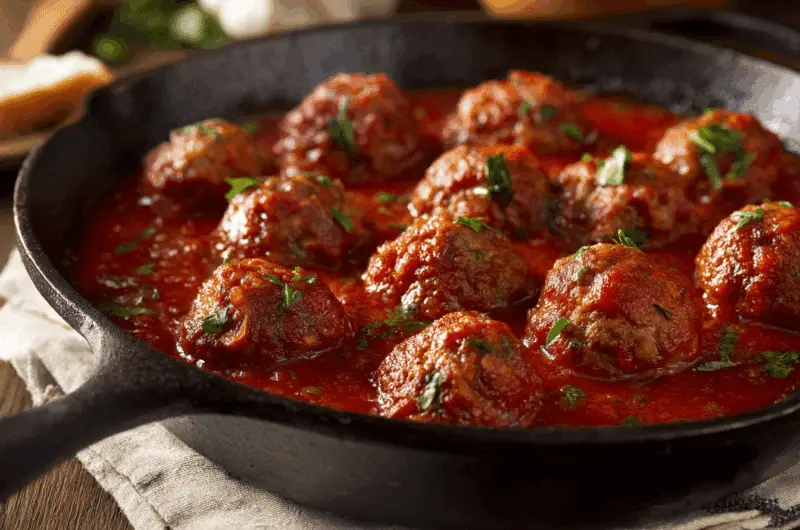
Traditional Italian Grandmother’s Meatballs
Course: DinnerCuisine: Italian4
servings30
minutes1
hour30
minutes350
kcalTender, flavorful meatballs cooked directly in sauce using a generations-old Italian method.
Ingredients
1 pound lean ground beef (90% lean)
1/2 pound ground pork
1 cup plain breadcrumbs
1/2 cup whole milk
2 large eggs, lightly beaten
1/2 cup grated Parmesan cheese
1/4 cup fresh parsley, finely chopped
3 cloves garlic, minced
1 teaspoon dried basil
1/2 teaspoon ground nutmeg
1 teaspoon salt
1/2 teaspoon black pepper
4-5 cups homemade tomato sauce
Directions
- Combine breadcrumbs and milk in a large bowl, stirring until the breadcrumbs are completely soaked. Let this panade mixture sit for 5 minutes until it becomes paste-like. This step is crucial for keeping the meatballs tender and preventing them from shrinking during cooking.
- Add ground beef, ground pork, beaten eggs, Parmesan cheese, parsley, garlic, basil, nutmeg, salt, and pepper to the bowl with the panade. Using your hands or a fork, gently mix just until all ingredients are combined. Don’t overmix as this will create tough meatballs.
- Using a large cookie scoop or your hands, portion the mixture into golf ball-sized meatballs, about 2 inches in diameter. Gently roll each portion between your palms just enough to form a round shape. Don’t compress them tightly – loose meatballs stay more tender.
- Heat your tomato sauce in a large, deep skillet or Dutch oven over medium heat until it reaches a gentle simmer. The sauce should be bubbling lightly but not boiling vigorously. Taste and adjust seasoning with salt and pepper as needed.
- Carefully drop the raw meatballs directly into the simmering sauce, leaving space between each one. Don’t worry about browning them first – this traditional method cooks them gently in the sauce. The meatballs will initially look pale but will develop color as they cook.
- Reduce heat to low and cover the pan partially. Let the meatballs simmer gently in the sauce for 90 minutes, turning them carefully once halfway through cooking. The low, slow cooking allows the flavors to exchange between meatballs and sauce.
- Check that meatballs have reached an internal temperature of 160°F with a meat thermometer. They should be firm but tender, with no pink remaining in the center. The sauce should be rich and thickened from the long cooking time.
- Serve immediately over pasta, in sandwiches, or on their own with crusty bread. Garnish with fresh grated Parmesan cheese and chopped parsley. Store leftovers in the refrigerator for up to 4 days or freeze for up to 3 months.
Notes
- Never skip the panade (milk-soaked breadcrumbs) – it’s essential for tender meatballs
- The nutmeg adds subtle warmth and depth – don’t leave it out
- Cooking raw meatballs in sauce is traditional and safe when done properly
- These meatballs taste even better the next day as flavors continue to develop
- Freeze cooked meatballs in sauce for easy future meals
Frequently asked questions
Q: Is it safe to cook raw meatballs directly in sauce?
A: Yes, this traditional Italian method is completely safe when done properly. The meatballs simmer in the sauce for 90 minutes, reaching the safe internal temperature of 160°F. Use a meat thermometer to check doneness if you’re concerned.
Q: Can I make these meatballs ahead of time?
A: Absolutely! These meatballs actually taste better the next day as the flavors continue to develop. Store them in the refrigerator for up to 4 days or freeze for up to 3 months. They reheat beautifully on the stovetop.
Q: Why do my meatballs fall apart in the sauce?
A: This usually happens from overmixing the meat mixture or making the meatballs too loose. Mix ingredients gently just until combined, and make sure each meatball holds together when shaped. Also, keep the sauce at a gentle simmer, not a rolling boil.
Q: Can I substitute different meats in this recipe?
A: The beef and pork combination creates the best texture and flavor, but you can use all beef if needed. Ground turkey or chicken will work but may be drier. If using leaner meats, add an extra tablespoon of milk to the panade.