

Most people think they know how to make good spaghetti sauce, but there’s one simple trick that transforms ordinary tomato sauce into something restaurant-worthy. The secret isn’t exotic herbs or expensive ingredients – it’s adding butter at the very end of cooking. This single addition creates a silky, rich sauce that clings perfectly to pasta and elevates every bite.
Why finishing with butter changes everything
When butter melts into hot tomato sauce at the last moment, it creates an emulsion that transforms the texture completely. The sauce becomes glossy and velvety, coating pasta strands instead of sliding off. This technique works because butter contains both fat and water, which helps bind the sauce components together naturally.
The timing matters more than most people realize. Adding butter too early means it gets absorbed into the sauce and loses its distinct richness. Stirring butter in during the final minutes preserves its creamy character while still allowing it to meld with the other ingredients. This creates layers of taste that make each forkful more satisfying than plain tomato sauce alone.
The perfect spice blend that makes sauce memorable
Great spaghetti sauce needs more than just tomatoes and herbs to stand out from jarred versions. A thoughtful spice combination creates depth without overwhelming the tomato base. Essential seasonings include dried basil, oregano, and parsley for that classic Italian profile, but the real magic happens with unexpected additions like fennel seed and celery salt.
Sugar might seem strange in savory sauce, but it balances the natural acidity of tomatoes perfectly. Two tablespoons of granulated sugar in a full batch creates harmony without making the sauce taste sweet. Paprika adds subtle smokiness, while red pepper flakes provide gentle heat that builds slowly. The key is combining all dried spices before adding them to ensure even distribution throughout the sauce.
Fresh herbs make the biggest difference
Dried herbs form the foundation of good sauce, but fresh basil and parsley added at the end create bright notes that wake up the entire dish. Fresh herbs lose their potency when cooked too long, so adding them during the last five minutes preserves their vibrant character. The contrast between the long-cooked base and the fresh herb finish creates complexity that keeps people coming back for more.
Chopping fresh herbs properly matters more than most home cooks realize. Tearing basil leaves by hand prevents bruising and maintains their delicate oils. Parsley should be chopped finely so it distributes evenly without creating large green chunks. When fresh herbs meet the hot sauce, they release aromatic compounds that make the kitchen smell like an Italian restaurant.
Building layers starts with proper aromatics
The foundation of exceptional spaghetti sauce begins before any tomatoes hit the pan. Cooking diced onions until they turn golden and translucent creates a sweet base that supports all other ingredients. This process takes patience – rushing leads to harsh, uncooked onion bits that never fully integrate with the sauce.
Garlic requires careful attention to prevent burning, which creates bitter notes that ruin the entire batch. Adding minced garlic after the onions have softened ensures it cooks just enough to release its aroma without becoming acrid. The combination of properly cooked onions and garlic creates an aromatic foundation that makes homemade sauce taste completely different from anything that comes from a jar.
Choosing the right tomato products matters
Not all canned tomatoes work equally well for sauce making. Diced tomatoes with added herbs and seasonings provide texture and convenience, while plain tomato sauce creates the smooth base most families prefer. Hunt’s brand consistently delivers good results, but any quality canned tomato product works as long as it doesn’t contain too much added salt or sugar.
The ratio of diced tomatoes to sauce determines the final texture. More diced tomatoes create a chunkier sauce that works well with heartier pasta shapes, while extra sauce makes it smoother for delicate noodles. Some cooks prefer crushing the diced tomatoes by hand for a rustic texture, while others leave them whole for distinct tomato pieces in every bite.
Proper simmering develops a deep taste
Good sauce needs time for all ingredients to meld together, but overcooking can make it taste flat and lifeless. Twenty to thirty minutes of gentle simmering allows the spices to bloom while concentrating the tomato base. The sauce should bubble lazily, not boil vigorously, which can make it splatter and lose moisture too quickly.
Adding a bay leaf during simmering contributes subtle earthiness that most people notice but can’t identify. This classic technique adds complexity without changing the fundamental character of the sauce. Stirring occasionally prevents sticking, but constant stirring isn’t necessary if the heat stays at the right level. The sauce is ready when it coats a spoon lightly and has reduced slightly from its original volume.
Getting the meat perfectly integrated
Ground beef can turn into tough, chewy chunks if handled incorrectly during cooking. Breaking it up with a spatula or specialized ground meat chopper creates even pieces that distribute throughout the sauce. Seasoning the meat while it cooks ensures every piece absorbs the spices properly, rather than having bland meat in seasoned sauce.
Draining excess fat prevents a greasy sauce that leaves an unpleasant coating in the mouth. However, removing all the fat eliminates the rich mouthfeel that makes meat sauce satisfying. Finding the balance means draining most of the rendered fat while leaving just enough to carry the meat’s savory notes throughout the sauce. Well-cooked, properly seasoned ground beef should taste like an integral part of the sauce, not an afterthought.
Simple additions that create restaurant-quality
Small tweaks can transform basic sauce into something special without requiring advanced cooking skills. A splash of red wine adds depth and helps balance acidity, while a handful of black olives contributes briny complexity. Pepperoni pieces create smoky, spicy notes that work especially well for pizza sauce applications.
Grated Parmesan cheese stirred in during the last few minutes creates umami richness that makes the sauce taste more complete. Fresh bell peppers add sweetness and crunch, while Italian sausage provides more complex meat character than plain ground beef. The key is adding one or two special ingredients rather than overwhelming the base recipe with too many competing elements.
Storage and reheating preserve the magic
Homemade sauce actually improves after a day in the refrigerator as all the ingredients continue to meld together. Proper storage in airtight containers keeps it fresh for up to five days, making it perfect for meal planning. Freezing works well for longer storage, though the texture may change slightly after thawing.
Reheating requires gentle heat to prevent separation or burning. Adding a splash of water or broth helps restore the proper consistency if the sauce has thickened too much. Stirring in a small pat of fresh butter when reheating brings back that silky texture and rich mouthfeel that makes homemade sauce special. The sauce tastes even better the second day, making leftovers something to look forward to rather than just convenient.
Making exceptional spaghetti sauce doesn’t require expensive ingredients or complicated techniques – just understanding how simple elements work together. The butter finish, proper spice balance, and careful timing create restaurant-quality results that make jarred sauce seem like a completely different food. Once you experience the difference these techniques make, regular spaghetti night becomes something the whole family gets excited about.
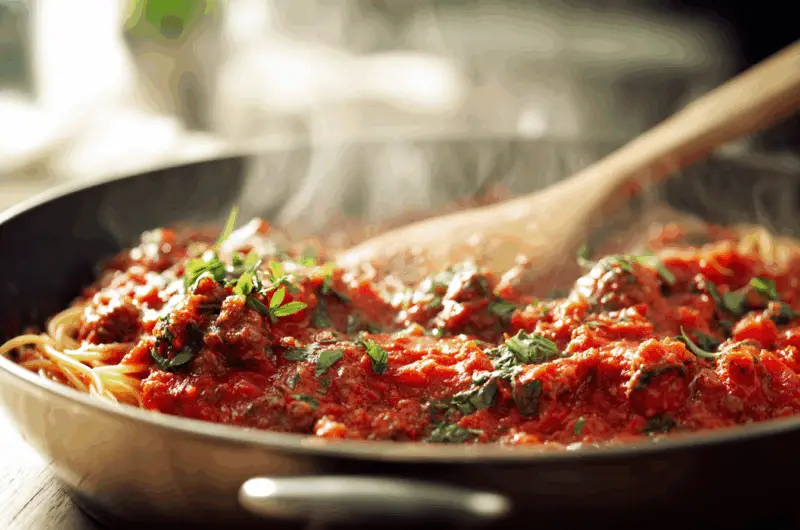
Grandma Barb’s Perfect Spaghetti Sauce
Course: DinnerCuisine: Italian8
servings15
minutes30
minutes280
kcalRich, chunky homemade spaghetti sauce with the perfect blend of herbs and spices that tastes better than any restaurant.
Ingredients
1 tablespoon extra virgin olive oil
1 cup yellow onion, diced
2-3 tablespoons garlic, minced
1 lb ground beef
2 (14 oz) cans diced tomatoes with basil, garlic, and oregano
1 (30 oz) can tomato sauce
2 tablespoons granulated sugar
1 teaspoon each: dried basil, parsley, oregano, garlic powder, onion powder
1/2 teaspoon each: dried thyme, celery salt, paprika
1/8 teaspoon each: black pepper, red pepper flakes
1 generous pinch of fennel seed
1 bay leaf
2-4 tablespoons fresh basil, chopped
1-2 tablespoons fresh parsley, chopped
2-3 tablespoons butter
Directions
- Heat olive oil in a large deep skillet over medium-high heat. Add diced onions and cook until they become tender and translucent, about 5-7 minutes. The onions should be golden but not browned, as this creates the sweet foundation for your sauce.
- Add minced garlic to the pan and cook for 1-2 minutes until fragrant, being careful not to let it burn. The garlic should sizzle gently and release its aroma without turning brown, which would make it bitter.
- Add ground beef to the skillet, breaking it up with a rubber spatula or ground meat chopper. Season the beef with salt, pepper, and garlic powder while cooking. Cook until the beef is completely browned and no pink remains, about 8-10 minutes, then drain excess fat.
- Add the diced tomatoes and tomato sauce to the skillet, stirring to combine with the meat mixture. If you prefer smaller tomato pieces, you can break them up with your spoon at this point. The mixture should be bubbling gently.
- In a small bowl, combine all dried spices: sugar, dried basil, parsley, oregano, thyme, garlic powder, onion powder, fennel seed, celery salt, paprika, black pepper, and red pepper flakes. Stir this spice mixture into the sauce along with the bay leaf, ensuring even distribution throughout.
- Bring the sauce to a boil, then reduce the heat to low and simmer covered for 20-30 minutes, stirring occasionally. The sauce should bubble gently and reduce slightly, concentrating the ingredients. If it gets too thick, add a splash of water or chicken broth.
- Stir in the fresh chopped basil and parsley during the last 5 minutes of cooking. This preserves their bright character and prevents them from becoming dull. The fresh herbs should still look vibrant when you serve the sauce.
- Remove from heat and stir in 2-3 tablespoons of butter until completely melted and incorporated. This creates a silky, rich texture that clings perfectly to pasta. Taste and adjust seasonings as needed, remembering the sauce will taste even bolder the next day.
Notes
- For a deeper tomato character, add 1-2 tablespoons of tomato paste when cooking the onions
- The sauce can be made meatless by simply omitting the ground beef
- Store in refrigerator for up to 5 days or freeze for up to 3 months
- Go easy on salt if serving with Parmesan cheese
- This recipe works well with Italian sausage instead of ground beef
Frequently asked questions
Q: Can I make this sauce without meat?
A: Absolutely! Simply skip the ground beef step and proceed with the onions and garlic. The sauce will be just as delicious as a vegetarian marinara. You might want to add a bit more olive oil or even some mushrooms for extra richness and umami.
Q: How long does homemade spaghetti sauce keep in the refrigerator?
A: Properly stored in an airtight container, this sauce will stay fresh for 3-5 days in the refrigerator. The sauce actually tastes better the next day as all the ingredients have more time to meld together.
Q: Why does the recipe call for sugar in spaghetti sauce?
A: Sugar balances the natural acidity of tomatoes without making the sauce taste sweet. It’s a common technique in Italian cooking that creates a more harmonious blend. Two tablespoons is just enough to round out sharp edges without being noticeable.
Q: Can I use fresh tomatoes instead of canned?
A: Yes, but you’ll need about 4-5 pounds of fresh tomatoes, peeled and chopped. However, good quality canned tomatoes often have a better consistent taste than fresh tomatoes, especially when they’re not in peak season.