

Picture coming home after a long day and having dinner ready in under an hour with minimal cleanup. Sheet pan salmon with roasted vegetables delivers exactly that – one pan, maximum results. The beauty lies in everything cooking together while developing those crispy edges and tender centers that make weeknight dinners feel special without the fuss.
Why salmon and vegetables work perfectly together
Timing makes all the difference when cooking different ingredients together. Salmon needs about 10-15 minutes to reach that perfect flaky texture, while most vegetables require 15-25 minutes to become tender with crispy edges. The secret is giving vegetables a head start in the oven before adding the fish. This staggered approach ensures everything finishes cooking at the same time without overcooking either component.
The cooking method also creates amazing results because the vegetables release moisture while roasting, creating steam that helps cook the salmon gently from below. Meanwhile, the direct oven heat creates that coveted crispy skin on top. Both components benefit from the shared cooking environment, with the salmon absorbing some vegetable essence while the vegetables pick up rich fish oils.
Choosing the right vegetables for roasting
Not all vegetables roast at the same rate, so selecting the right combination prevents some from burning while others remain raw. Root vegetables like carrots and potatoes need the longest cooking time, often 30 minutes or more. Medium-cooking vegetables include bell peppers, zucchini, and broccoli, which need about 15-20 minutes. Quick-cooking vegetables like cherry tomatoes and herbs should be added in the final 10 minutes.
The key is cutting everything into uniform pieces so they cook evenly. Vegetable preparation makes the biggest difference in final results. Aim for 1-inch pieces for most vegetables, though thin items like bell pepper strips can be slightly larger. Dense vegetables like carrots should be cut smaller than softer ones like zucchini to ensure everything finishes cooking together.
Getting crispy salmon skin every time
Crispy salmon skin transforms this simple dish into restaurant-quality dining. The secret starts with completely dry fish – pat salmon fillets with paper towels and let them sit uncovered for 15 minutes before cooking. This removes surface moisture that would otherwise create steam and prevent crisping. A light coating of oil helps conduct heat while salt draws out additional moisture and seasons the fish.
High heat is essential for achieving that perfect crispy exterior. Proper temperature control means starting at 400-425°F and finishing with a quick broil if needed. The broiler adds that final blast of intense heat that creates the golden, crackling skin. Don’t skip this step – those extra 2-3 minutes under the broiler make the difference between good and exceptional salmon.
Oil and seasoning combinations that work
The right oil makes everything taste better while preventing sticking and burning. Avocado oil handles high heat exceptionally well without breaking down, while olive oil adds a more pronounced taste. Use about 2-3 tablespoons total – enough to lightly coat everything without creating puddles. Too much oil makes vegetables soggy, while too little leads to burning and sticking.
Simple seasonings often work best, letting the natural ingredients shine. Basic seasoning blends like salt, garlic powder, and paprika complement both fish and vegetables without overwhelming either. Mediterranean combinations with oregano, lemon, and olives create bright, fresh results. For something different, try capers and fresh dill, or go bold with Cajun spices and bell peppers.
Pan selection and setup tips
A large rimmed baking sheet is absolutely essential for success. The rim prevents oil and juices from dripping into the oven, while adequate space allows proper air circulation around food. Overcrowding creates steam instead of roasting, resulting in mushy vegetables and pale salmon. If everything doesn’t fit comfortably in a single layer, use two pans instead of cramming everything together.
Parchment paper makes cleanup easier, but it isn’t strictly necessary if the pan is well-oiled. Proper pan preparation prevents sticking while allowing good heat transfer. Aluminum pans conduct heat quickly and evenly, while darker surfaces promote browning. Avoid glass dishes, which heat unevenly and don’t promote the crispy edges that make roasted vegetables so appealing.
Timing the cooking process perfectly
Getting everything to finish simultaneously requires strategic timing. Start with the longest-cooking vegetables first, typically root vegetables that need 30 minutes. After 15 minutes, add medium-cooking vegetables like bell peppers and zucchini. Finally, nestle the salmon among the vegetables for the last 10-15 minutes, depending on thickness.
Salmon thickness determines final cooking time more than weight. Internal temperature should reach 145°F for food safety, but many prefer salmon slightly under-cooked at 135°F for optimal texture. The fish continues cooking briefly after removal from the oven, so account for this carryover cooking when timing everything.
Common mistakes that ruin the dish
Overcrowding the pan ranks as the most frequent error, leading to steamed rather than roasted food. Everything needs space for air circulation to develop those appealing crispy edges. Another major mistake is adding everything at once, which results in either overcooked vegetables or undercooked salmon. The staggered timing approach prevents these issues entirely.
Temperature problems also derail many attempts. Proper heat management means preheating the oven fully before adding food and avoiding the temptation to open the door frequently. Each opening releases heat and extends cooking time. Using frozen salmon without proper thawing creates uneven cooking, with the outside overdone while the center remains raw.
Storage and reheating for best results
Leftover sheet pan salmon keeps well in the refrigerator for up to five days when stored properly. Let everything cool completely before transferring to airtight containers. Separate the salmon from the vegetables if possible, as they reheat differently. The vegetables usually taste great cold in salads, while salmon benefits from gentle reheating.
Reheating requires care to avoid overcooking the salmon further. Gentle reheating methods work best – either in a low oven at 275°F for 10 minutes or in a skillet with a little oil over medium-low heat. Microwaving works for vegetables, but often makes salmon rubbery. For meal prep purposes, slightly undercook the salmon initially, knowing it will finish cooking during reheating.
Serving suggestions and finishing touches
Simple finishing touches elevate this humble sheet pan dinner into something special. Fresh lemon juice brightened everything, while lemon zest adds aromatic oils that complement both salmon and vegetables. A drizzle of good olive oil just before serving adds richness, while flaky sea salt provides textural contrast and enhanced seasoning.
Fresh herbs make the biggest visual and taste impact for minimal effort. Mediterranean additions like fresh oregano, parsley, or dill work beautifully. Capers add briny pops of flavor, while a dollop of Greek yogurt or tzatziki creates a cooling contrast. These simple additions transform basic roasted food into a restaurant-worthy meal that feels both satisfying and sophisticated.
Sheet pan salmon with roasted vegetables proves that simple techniques produce extraordinary results. The combination of proper timing, temperature control, and quality ingredients creates a meal that satisfies without stress. This approach to cooking delivers both convenience and excellence, making it perfect for busy weeknights when good food still matters.
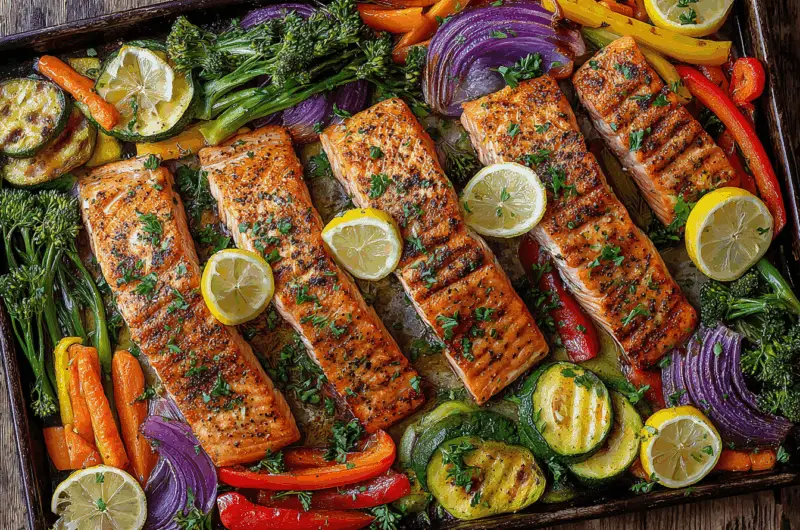
Crispy Sheet Pan Salmon with Roasted Vegetables
Course: DinnerCuisine: American4
servings15
minutes25
minutes465
kcalPerfectly seasoned salmon with crispy skin alongside colorful roasted vegetables, all cooked on one pan for easy weeknight dinners.
Ingredients
1 1/2 lbs salmon, cut into individual fillets
4 large carrots, chopped
2 medium zucchini, chopped
1/2 red onion, sliced
1 bunch broccolini, chopped
1 small red bell pepper, chopped
2-3 tablespoons avocado oil, divided
1 1/4 teaspoons sea salt, divided
2 teaspoons garlic powder
2 teaspoons paprika
Fresh lemon slices for serving
Directions
- Preheat oven to 400°F. Chop all vegetables and spread them over a large rimmed baking sheet in a single layer. Make sure vegetables have enough space for proper air circulation to achieve crispy edges.
- Drizzle vegetables with 2 tablespoons avocado oil and sprinkle with 3/4 teaspoon sea salt. Toss to coat evenly, ensuring vegetables have a light coating of oil to prevent burning. Roast on the center rack for 15 minutes.
- While the vegetables roast, pat the salmon fillets completely dry with paper towels. Coat salmon with remaining avocado oil, then season with remaining sea salt, garlic powder, and paprika. Let salmon sit at room temperature for the best results.
- Remove vegetables from oven and stir thoroughly with a metal spatula. Push vegetables to the edges of the pan, creating space in the center for salmon fillets. This ensures even cooking for both components.
- Place salmon fillets on a baking sheet among vegetables. Return to oven and bake for 10-15 minutes until salmon reaches an internal temperature of 145°F. Cooking time depends on the thickness of the fillets.
- For extra crispy salmon skin, switch oven to high broil setting for final 3-5 minutes. Watch carefully to prevent burning. Salmon should be opaque throughout and flake easily with a fork when done.
- Remove from oven and let rest for 2-3 minutes before serving. The salmon will continue cooking slightly during this time. Squeeze fresh lemon juice over everything just before serving.
- Serve immediately with lemon wedges and your favorite sides. Store any leftovers in the refrigerator for up to 5 days in airtight containers. Reheat gently to maintain salmon texture.
Notes
- Use a meat thermometer to check salmon doneness – 145°F is fully cooked, 135°F for a slightly pink center
- Cut vegetables into uniform 1-inch pieces for even cooking
- Avoid overcrowding the pan – use two sheets if necessary for proper roasting
- Frozen salmon must be completely thawed and patted dry before cooking
- For meal prep, slightly undercook salmon as it will finish cooking when reheated
Frequently asked questions
Q: Can I use frozen salmon fillets for this recipe?
A: Yes, but they must be completely thawed and patted dry before cooking. Frozen salmon creates uneven cooking with the outside overdone while the center remains raw. Thaw overnight in the refrigerator for best results.
Q: What vegetables work best for sheet pan roasting?
A: Root vegetables like carrots and potatoes, medium-cooking vegetables like bell peppers and zucchini, and quick-cooking items like cherry tomatoes all work well. Cut everything into uniform 1-inch pieces and add based on the cooking time needed.
Q: How do I know when the salmon is properly cooked?
A: Use a meat thermometer to check for 145°F internal temperature for fully cooked salmon, or 135°F if you prefer it slightly pink. The fish should be opaque throughout and flake easily with a fork when done.
Q: Can I prepare this dish ahead of time for meal prep?
A: Yes, this works great for meal prep. Slightly undercook the salmon initially since it will finish cooking when reheated. Store components separately if possible and reheat gently in a low oven or skillet to maintain texture.