

Every family has that one recipe that gets passed around like gossip at a church potluck. For many households, egg salad sits somewhere between “forgotten relic” and “emergency lunch solution.” But what if this humble mixture of hard-boiled eggs and mayo could actually become something worth getting excited about? The secret isn’t in fancy ingredients or complicated techniques—it’s in understanding why most egg salads fall flat and how a few simple tweaks can transform this basic dish into something genuinely crave-worthy.
Why most egg salad disappoints
Walk into any deli and you’ll find egg salad that looks like it was made with a sledgehammer. Chunky white bits swimming in a sea of mayo, tasting about as exciting as wet cardboard. The problem starts with technique—most people just chop everything together and call it done. This creates uneven bites where you get a mouthful of plain egg white followed by a glob of pure yolk.
The game-changer comes from separating the yolks from the whites during preparation. Instead of randomly chopping everything together, remove the yolks and mash them completely smooth with the mayo and seasonings. Then fold in the chopped whites separately. This creates a creamy, consistent base that coats every piece evenly, eliminating those dry, flavorless bites that make people avoid egg salad in the first place.
Getting the eggs right from the start
Nothing ruins egg salad faster than rubbery eggs with gray-green rings around the yolks. Those unsightly rings happen when eggs cook too long or cool too slowly, creating sulfur compounds that taste as bad as they look. The perfect hard-boiled egg has a tender white and a bright yellow yolk that crumbles easily when mashed.
Start with cold water covering the eggs by about half an inch. Bring to a rolling boil, then immediately remove from heat and cover. Let them sit for exactly 12-15 minutes for large eggs, then plunge into ice water for at least 5 minutes. This method produces eggs that peel cleanly and have perfect texture. Older eggs (at least a week old) peel much easier than fresh ones, so plan ahead if possible.
Building layers of actual taste
Basic egg salad relies on mayo to do all the heavy lifting, which explains why it often tastes like expensive nothing. Real depth comes from building complementary elements that enhance rather than mask the egg taste. Yellow mustard adds tang and helps emulsify the mixture, while a squeeze of fresh lemon juice brightens everything up.
Green onions provide a mild bite without overwhelming the delicate egg taste, and finely diced celery adds crucial texture contrast. Fresh dill transforms the entire dish—its bright, slightly grassy notes make the whole thing taste more sophisticated and intentional. A pinch of paprika isn’t just for looks; it adds a subtle smokiness that rounds out all the other elements.
The mayo situation needs addressing
Most people dump way too much mayo into egg salad, creating a gloppy mess that slides off bread and overwhelms everything else. The goal is creaminess, not a mayo delivery system with some eggs mixed in. Start with less than you think you need—about 1/2 cup for 8 eggs—and add more gradually if needed.
Quality matters here more than you might expect. Cheap mayo often has a artificial aftertaste that becomes more pronounced when it’s a major component. Brands like Hellmann’s or Duke’s have better balance and don’t compete with the eggs. Some people substitute half the mayo with Greek yogurt, which works if you like tang, but changes the character significantly. The traditional approach of using just mayo creates the smoothest, most classic result.
Texture makes or breaks everything
The best egg salad has contrasting textures in every bite—creamy base, tender egg pieces, and little pops of crunch. This is where many homemade versions go wrong. Chopping the egg whites too fine makes everything mushy, while leaving them too chunky creates uneven distribution and awkward sandwich-making.
Aim for pieces roughly the size of large peas. The celery should be diced small enough that it doesn’t dominate but large enough to provide noticeable crunch. Green onions work best when sliced thin rather than chopped—this gives better distribution and prevents overwhelming pockets of onion taste. Fresh herbs should be chopped fine so they distribute evenly without creating stringy bits.
Seasoning beyond salt and pepper
Eggs are surprisingly bland on their own, so proper seasoning is crucial. Salt enhances everything, but timing matters—add it to the yolk mixture first so it dissolves completely, then taste and adjust after everything’s combined. Black pepper should be freshly ground if possible, as pre-ground pepper loses its bite quickly.
Beyond basics, small amounts of additional seasonings create complexity. A tiny bit of garlic powder (not garlic salt) adds depth without sharpness. Some recipes include capers for briny pops of intensity, while others add sweet pickle relish for contrast. The key is restraint—each addition should enhance rather than compete. Let the mixture sit for at least 20 minutes before serving so all the elements can meld together properly.
Avoiding common preparation mistakes
Even with good ingredients and proper technique, several common mistakes can derail egg salad. Making it too far ahead causes the vegetables to release water, creating a watery mess. The celery and onions stay crispest when the salad is eaten within a day or two of making.
Over-mixing is another problem—once you’ve folded everything together, stop. Continued stirring breaks down the egg whites and creates a mushy texture. Temperature also matters more than people realize. Egg salad tastes best when it’s cool but not ice-cold, so take it out of the fridge about 10 minutes before serving. This allows the components to come together and the seasonings to brighten up.
Making sandwiches that don’t fall apart
Great egg salad deserves better than sad, soggy bread. Choose bread with enough structure to hold up—dense whole grain, sourdough, or even toasted white bread works better than flimsy sandwich bread. Lightly toasting whatever bread you use creates a barrier that prevents sogginess.
Layer strategically for best results. A thin layer of butter or mayo on the bread helps create another moisture barrier. Add lettuce or spinach leaves next, then the egg salad, then any additional toppings like tomato or cucumber. Assemble sandwiches just before eating rather than making them ahead. If you must make them in advance, wrap tightly and eat within a few hours to prevent the dreaded soggy bottom syndrome.
Storage and food safety basics
Egg salad sits in the danger zone for bacterial growth, so proper storage isn’t optional. Keep it refrigerated at all times except when actively serving. It should never sit at room temperature for more than two hours, and that’s being generous—one hour is safer in warm weather.
Store in an airtight container and use within four days maximum. The mixture will continue to release moisture over time, so don’t be surprised if it looks slightly watery after a day or two. Give it a quick stir before serving to redistribute everything. If it smells off, looks slimy, or has changed color significantly, throw it out. Food poisoning from spoiled egg dishes is no joke and not worth the risk.
Perfect egg salad isn’t about revolutionary techniques or exotic ingredients—it’s about understanding why the basics matter and executing them properly. Take the time to separate those yolks, choose good ingredients, and season thoughtfully. The result transforms a humble lunch staple into something actually worth making on purpose, not just when you’re desperate to use up leftover eggs.
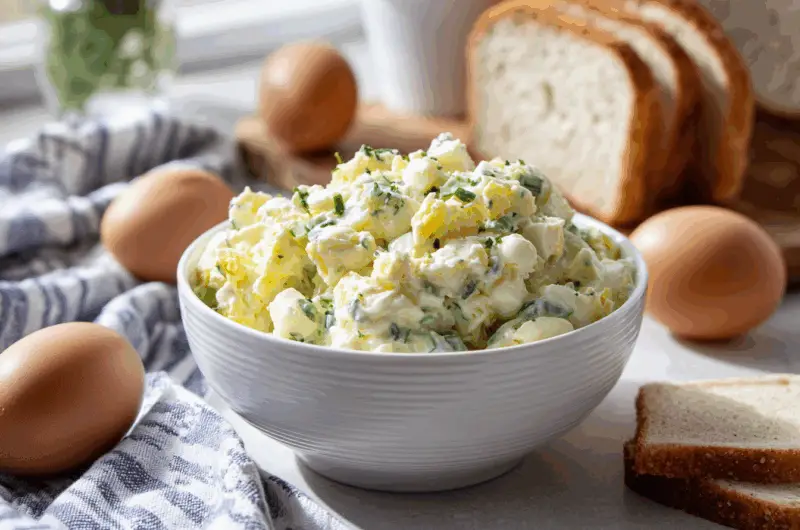
Amazing Egg Salad Recipe
Course: LunchCuisine: American4
servings15
minutes15
minutes320
kcalCreamy, perfectly textured egg salad with the secret technique that makes all the difference.
Ingredients
8 large hard-boiled eggs, cooled and peeled
1/2 cup mayonnaise
1 1/2 teaspoons yellow mustard
1 green onion, thinly sliced
1 rib celery, finely diced
2 teaspoons chopped fresh dill
Salt and black pepper to taste
1/4 teaspoon paprika
Directions
- Cut the hard-boiled eggs in half lengthwise using a sharp knife. Carefully remove all the yolks and place them in a medium mixing bowl. Finely chop the egg whites into pieces about the size of large peas and set aside in a separate bowl.
- Using a fork, mash the egg yolks completely until no lumps remain. Add the mayonnaise, yellow mustard, and a generous pinch of salt and pepper. Mash and stir until the mixture is completely smooth and creamy.
- Add the chopped egg whites to the yolk mixture along with the sliced green onion, diced celery, and chopped fresh dill. Fold everything together gently until well combined, being careful not to over-mix.
- Taste and adjust seasoning with additional salt, pepper, and paprika as needed. Cover and refrigerate for at least 20 minutes before serving to allow the components to meld together.
- Serve on toasted bread with lettuce and tomato for sandwiches, or enjoy with crackers or over salad greens. The egg salad will keep in the refrigerator for up to 4 days in an airtight container.
Notes
- For perfect hard-boiled eggs, place eggs in cold water, bring to a rolling boil, remove from heat, cover and let sit 15 minutes, then cool in ice water.
- Older eggs (at least 1 week old) peel much easier than fresh eggs.
- Don’t over-mix once the egg whites are added – this creates a mushy texture.
- For best results, assemble sandwiches just before eating to prevent soggy bread.
Frequently asked questions
Q: Can I make egg salad ahead of time?
A: Yes, egg salad actually improves after sitting for a few hours as the components meld together. Store it covered in the refrigerator for up to 4 days, but assemble sandwiches just before eating to prevent soggy bread.
Q: Why do my hard-boiled eggs have gray rings around the yolks?
A: Gray rings form when eggs are overcooked or cool too slowly. Use the cold water start method, remove from heat immediately after boiling, and cool in ice water to prevent this.
Q: Can I substitute Greek yogurt for some of the mayonnaise?
A: You can replace up to half the mayo with Greek yogurt for a tangier taste and slightly different texture. Start with less and add more to achieve your preferred consistency.
Q: What’s the best bread for egg salad sandwiches?
A: Choose bread with good structure like sourdough, whole grain, or lightly toasted white bread. Avoid thin, flimsy breads that will become soggy from the moisture in the egg salad.